 +86 180 0293 5268
Leave Your Message
-
CONTACT Shixin
-
 CONTACT Shixin
-
 CONTACT Shixin

-
 CONTACT Shixin

Choosing the right Cnc Milling Parts manufacturer can determine a project’s cost, accuracy, and delivery reliability. Global buyers now compare more than price. They examine machining capability, material control, inspection systems, communication, and after-sales support. A polished website is not enough.
Dr. Tony Schmitz, a recognized machining researcher, describes the challenge clearly: “Machining performance depends on the interaction of the tool, workpiece, and machine.” That relationship becomes visible on the production floor. A stable five-axis machine, sharp tooling, and controlled coolant can produce clean aluminum housings with consistent edges. Poor process control may leave burrs, chatter marks, or dimensions outside tolerance. Small defects become expensive when hundreds of parts require rework.
This guide reviews the 2026 best Cnc Milling Parts manufacturers for global buyers. It considers CNC equipment, engineering experience, material range, quality documentation, production capacity, lead times, and communication practices. ISO certification can support confidence, but it should not replace evidence. Buyers should request sample inspection reports, tolerance data, and realistic production schedules. Ask difficult questions.
No supplier is perfect. Even experienced manufacturers may face capacity pressure, unclear drawings, or unexpected material variation. That limitation deserves attention. The strongest partners respond transparently, propose practical corrections, and protect consistency from prototype to repeat production. This article aims to make that comparison more useful, specific, and grounded in real purchasing decisions.
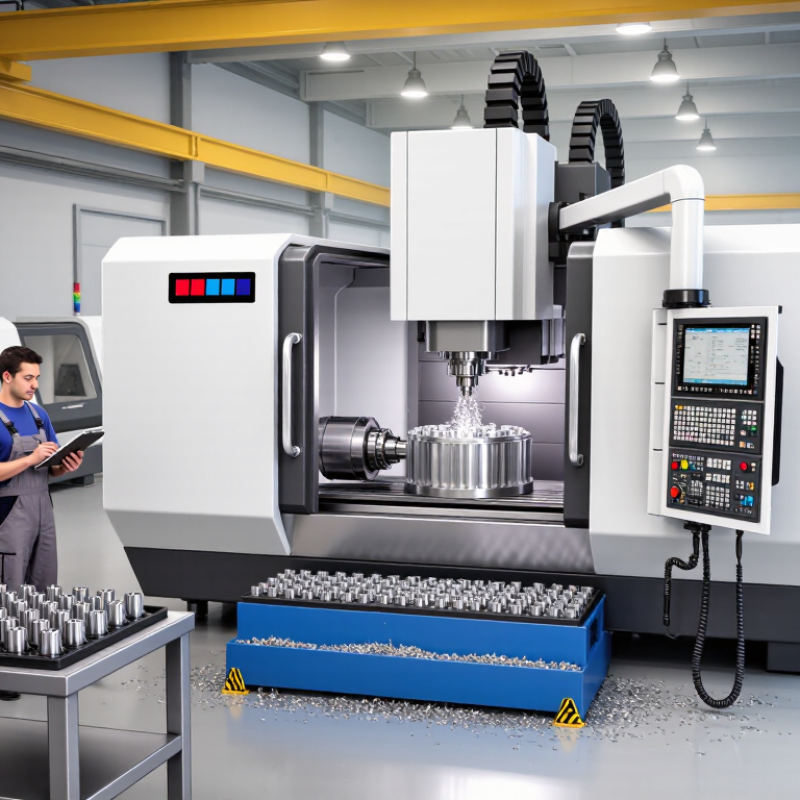
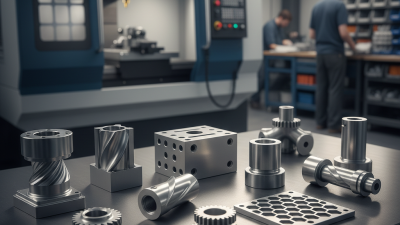
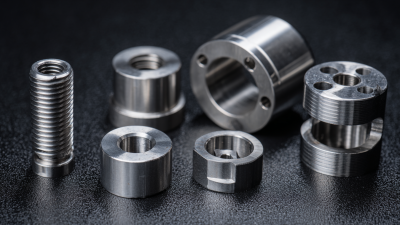
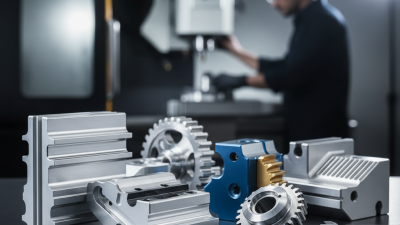
CNC milling parts are components shaped from metal or engineering plastic by rotating cutters. The machine follows digital toolpaths to remove material from a solid block. This process can create housings, brackets, manifolds, fixtures, and close-tolerance mechanical interfaces. Common materials include aluminum, stainless steel, brass, titanium, and reinforced polymers. Each material affects cutting speed, tool wear, surface finish, and inspection requirements.
Global buyers need these parts when product performance depends on repeatable dimensions. A machined bore may guide a bearing, while a flat mounting face can prevent vibration. Tight tolerances also help assemblies fit across different production locations. CNC milling supports prototypes and controlled production runs without expensive forming dies. This flexibility can reduce development delays when engineers revise a hole pattern or wall thickness. It is not automatically cheap.
Reliable purchasing requires more than comparing unit prices. Buyers should review drawings, tolerances, datum references, material certificates, and inspection methods before production. Ask how operators control burrs, tool offsets, cleanliness, and batch traceability. A capable manufacturer can provide first-article measurements and explain deviations clearly. Sample checks matter. A polished sample may hide unstable production. In practice, rushed specifications often create avoidable rework, even when machining accuracy is acceptable. Clear feedback, realistic tolerances, and documented corrective actions support stronger supply relationships. Yet no process is perfect; buyers should review whether every tight tolerance truly improves function.
What Are CNC Milling Parts and Why Do Global Buyers Need Them?
The table below provides a practical, brand-neutral reference for comparing CNC milling part manufacturers and selecting a suitable production partner for international orders.
| Evaluation Dimension | Typical Industry Data | Why Global Buyers Need It | What to Verify Before Ordering |
|---|---|---|---|
| CNC Milling Process | 3-axis, 4-axis, and 5-axis milling are common process options. | The correct axis configuration can reduce setups, machining time, and alignment errors. | Confirm machine type, working envelope, spindle capacity, and simultaneous 5-axis capability where required. |
| Dimensional Tolerance | General CNC work may use drawing-defined tolerances; precision features can reach approximately ±0.005 mm under controlled conditions, depending on material, geometry, and inspection. | Accurate parts support interchangeability and reduce assembly problems in international supply chains. | Request a capability study, first-article report, inspection method, and clear tolerance interpretation for every critical feature. |
| Surface Roughness | Standard milling commonly produces Ra values around 1.6–6.3 µm; finer results require suitable tooling, feeds, speeds, and finishing operations. | Surface quality affects friction, sealing, appearance, fatigue performance, and coating results. | Specify Ra or another measurable surface requirement rather than using only terms such as “smooth” or “high quality.” |
| Common Metal Materials | Aluminum alloys, stainless steel, carbon steel, brass, copper, titanium, and tool steel are widely used. | Material selection determines strength, weight, corrosion resistance, thermal performance, and total cost. | Confirm material grade, mill certificate requirements, traceability, heat treatment, and country-specific documentation. |
| Engineering Plastics | POM, nylon, PTFE, PEEK, polycarbonate, and ABS are frequently machined for lightweight or electrically insulating components. | Plastic milling can provide low weight, chemical resistance, electrical insulation, or low-friction performance. | Check grade, moisture conditioning, thermal expansion, dimensional stability, and suitability for the operating environment. |
| Part Size and Geometry | Capability depends on machine travel, workholding, cutter reach, part envelope, wall thickness, and internal feature access. | Early geometry review helps prevent redesign, extra setups, tool collisions, and unexpected costs. | Submit native CAD files, 2D drawings, datums, critical-to-function dimensions, and required quantities for manufacturability review. |
| Surface Finishing | Available options may include anodizing, electroless nickel, passivation, powder coating, plating, polishing, and bead blasting. | Finishes can improve corrosion resistance, wear resistance, electrical performance, appearance, and cleanability. | Define finish type, color, thickness, masking areas, acceptable cosmetic limits, and required certification. |
| Quality Management | ISO 9001 is a widely recognized quality-management framework; additional sector requirements may apply to aerospace, medical, or automotive work. | Documented processes improve consistency, corrective action, supplier communication, and audit readiness. | Verify the certificate scope, issuing body, validity, manufacturing location, and whether it covers the supplied process. |
| Inspection Equipment | Typical equipment may include calipers, micrometers, height gauges, gauges, optical measurement systems, and coordinate-measuring machines. | Reliable inspection data supports objective acceptance decisions across different countries and facilities. | Ask for calibration records, measurement uncertainty where relevant, inspection reports, and sampling plans. |
| Prototype and Production Volume | CNC milling is suitable for prototypes, low-volume batches, replacement parts, and repeat production without dedicated molding tooling. | Buyers can validate designs quickly and scale quantities without immediately investing in hard tooling. | Compare prototype pricing, batch pricing, repeat-order controls, fixture strategy, and capacity commitments. |
| Lead-Time Planning | Lead time varies with material availability, part complexity, quantity, finishing, inspection, and shipping method. | Predictable schedules help global buyers coordinate assembly, inventory, customs clearance, and customer delivery. | Request a written production schedule with approval milestones, shipping terms, contingency planning, and change-control rules. |
| Export and Packaging Support | International orders may require export packaging, commercial invoices, packing lists, certificates of origin, and agreed Incoterms. | Correct documentation and protection reduce customs delays, transport damage, and receiving disputes. | Confirm packaging method, moisture protection, labeling, shipping responsibility, customs documents, and delivery terms. |
| Recommended Buyer Selection Score | Quality and technical fit: 30%; dimensional capability: 20%; total landed cost: 20%; delivery reliability: 15%; communication and documentation: 15%. | A weighted score prevents buyers from selecting solely on unit price. | Adjust the weighting according to safety risk, tolerance requirements, annual volume, delivery urgency, and regulatory obligations. |