How to Achieve High Precision Casting in Modern Manufacturing?
In the realm of modern manufacturing, achieving high precision casting is essential. Renowned industry expert Dr. John Roberts emphasizes, “Precision in casting defines the success of any manufacturing process.” His insight underscores the significance of accuracy in creating components that meet rigorous industry standards.
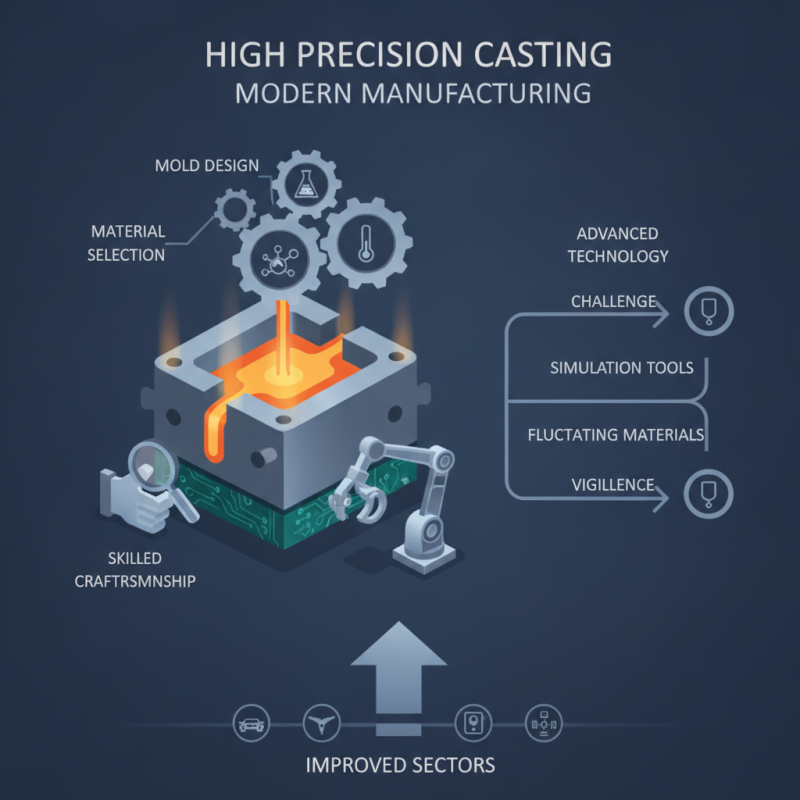
High precision casting is a complex blend of art and science. It requires not just advanced technology, but also skilled craftsmanship. Factors such as mold design, material selection, and temperature control play a pivotal role. Each step needs careful consideration. Even minor errors can lead to significant failures. Thus, casting professionals must continuously refine their techniques and embrace innovation.
Moreover, the industry faces challenges that warrant reflection. Implementing new technologies often leads to unforeseen issues. For instance, adapting to advanced simulation tools can be overwhelming. Additionally, ensuring consistent quality amidst fluctuating materials demands vigilance. Despite these hurdles, high precision casting remains a cornerstone of effective manufacturing, driving improvements across various sectors.
Understanding High Precision Casting: Definition and Importance
High precision casting is a critical process in modern manufacturing. It involves creating parts with exact dimensions and tolerances. This process is essential for industries such as aerospace, automotive, and medical devices. The accuracy of these castings impacts product performance and safety significantly.
Understanding high precision casting requires an appreciation of its techniques. Various methods, such as investment casting and sand casting, are used to produce intricate designs. Each method offers unique advantages and challenges. For instance, some techniques may lead to slight variances in dimensions, which could require further adjustments. This highlights the necessity for continual improvement and adaptation in the casting process.
The importance of high precision casting cannot be overstated. It ensures that components fit seamlessly together, promoting efficiency. However, achieving consistency in quality can be daunting. Manufacturers often face challenges with material properties and environmental conditions. These factors may lead to flaws that affect the overall integrity of the castings. Emphasizing quality control and skilled labor is essential, making ongoing training and feedback critical in this industry.
High Precision Casting Techniques and Their Adoption Rate in Manufacturing
Key Materials Used in High Precision Casting for Enhanced Accuracy
High precision casting relies heavily on the right materials to ensure accuracy and performance. One key material is high-grade aluminum alloys. These alloys are known for their lightweight and corrosion-resistant properties. They allow for intricate designs while maintaining structural integrity. With a careful blend of elements, manufacturers can achieve very tight tolerances.
Ferrous metals, especially stainless steel, are also crucial. They provide excellent strength and durability. However, they can be more challenging to cast precisely. The cooling process must be carefully controlled to prevent warping. Some may misjudge this step, resulting in defects. Proper temperature management is vital for high-quality outcomes.
Another interesting choice is ceramic materials, often used for molds. Ceramics provide a smooth surface finish, minimizing post-processing requirements. Despite their advantages, they can be fragile and require careful handling. Reflecting on these materials shows that even the best processes have room for improvement. Understanding the specific requirements of each material helps manufacturers enhance their precision casting outcomes.
Advanced Techniques in High Precision Casting: A Closer Look
Achieving high precision casting in modern manufacturing requires advanced techniques that enhance quality and efficiency. One significant method is the use of computer-aided design (CAD) and computer-aided manufacturing (CAM). According to a report by the American Foundry Society, employing CAD/CAM can improve dimensional accuracy by up to 30%. This precision reduces material waste and lowers production costs.
Another technique gaining traction is 3D printing for molds. Research indicates that 3D-printed molds can achieve tolerances of ±0.02 mm, significantly better than traditional methods. This technology allows for complex geometries that traditional casting cannot replicate. There’s a learning curve here, though; not all materials are suited for 3D printing, and post-processing can be labor-intensive.
Moreover, the role of quality control cannot be underestimated. Implementing real-time monitoring using sensors and data analytics enhances process control. Data from the foundry industry shows that companies that utilize these technologies report a 20% decrease in defects. However, integrating new technologies can face challenges, such as workforce training and initial costs. Embracing these factors is crucial for long-term success.
How to Achieve High Precision Casting in Modern Manufacturing? - Advanced Techniques in High Precision Casting: A Closer Look
| Technique |
Description |
Advantages |
Applications |
| Lost Wax Casting |
A process in which a wax model is covered in ceramic and melted away, leaving a mold for metal casting. |
High accuracy, smooth surfaces, complex geometries possible. |
Jewelry, art, aerospace components. |
| Die Casting |
Molten metal is injected into a mold under high pressure to create parts. |
High volume production, excellent dimensional accuracy. |
Automotive, electronics, and appliances. |
| Investment Casting |
A method where molten metal is poured into a mold made from a lost wax pattern. |
Highly detailed and complex parts, good surface finish. |
Aerospace, automotive, industrial machinery. |
| Sand Casting |
Molten metal is poured into a sand mold to create parts. |
Versatile, suitable for large parts, low cost. |
Heavy machinery, engine blocks, and art castings. |
| Shell Molding |
A variation of sand casting that uses a thin shell of sand to create the mold. |
Good surface finish, dimensional accuracy, faster production. |
Automotive parts, machinery components. |
Quality Control Measures for Ensuring Precision in Cast Products
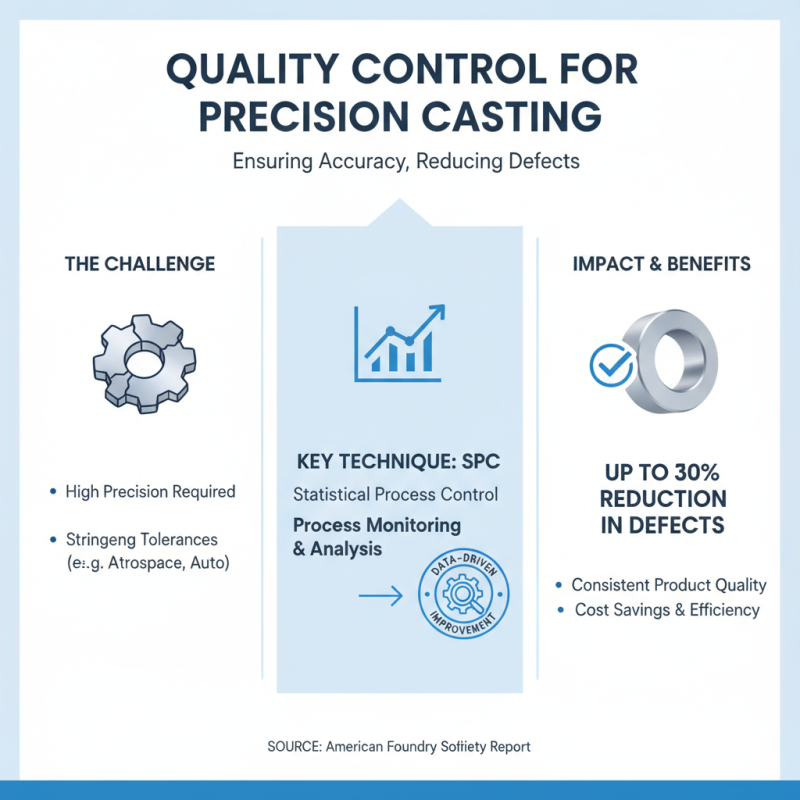
Achieving high precision in casting requires robust quality control measures. One popular technique is the use of statistical process control (SPC). A report from the American Foundry Society indicates that companies employing SPC in their casting processes achieve up to 30% reductions in defect rates. This is significant, especially for industries demanding stringent tolerances.
Another essential measure is employing advanced inspection technologies. Non-destructive testing (NDT) methods, such as ultrasonic or radiographic testing, help identify internal defects early. According to a survey by the International Journal of Advanced Manufacturing Technology, 70% of manufacturers noted improved quality with NDT integration. However, the initial costs for such technologies can be daunting.
Training personnel is equally vital. A skilled workforce can adapt to new quality control methods efficiently. Yet, many organizations overlook this aspect. A study revealed that nearly 40% of issues stem from inadequate training rather than equipment failure. This gap highlights the necessity to reflect on workforce development alongside technological advancements for sustained precision in casting.
Industry Applications and Performance Metrics in Precision Casting
Precision casting is essential in today’s manufacturing landscape. This technique is widely applied across various industries, including aerospace, automotive, and medical devices. Each sector demands high accuracy and repeatability. By minimizing tolerances, manufacturers can ensure components fit perfectly. Precision casting significantly reduces material waste, enhancing sustainability.
To achieve optimal performance, it’s vital to establish clear metrics. Key performance indicators (KPIs) can include dimensional accuracy, surface finish quality, and casting throughput. Regularly reviewing these metrics helps identify areas for improvement. Understanding the variations in material properties can also impact casting quality. Therefore, continuous education on new materials and casting technologies is crucial for professionals in the field.
Tips for successful precision casting: Maintain a robust quality control process. This includes monitoring equipment calibration and ensuring consistent raw material quality. Engage with the workforce to gather insights on challenges faced during casting. Their practical experience can provide valuable feedback. Regular training sessions can also enhance skills and update knowledge on the latest industry advancements. It’s important to embrace a culture of continuous improvement, where mistakes are viewed as learning opportunities.



 +86 180 0293 5268
 CONTACT Shixin
 CONTACT Shixin

 CONTACT Shixin