2026 Best Investment Casting Aluminum Techniques and Applications?
Investment Casting Aluminum has become a crucial technique in the manufacturing industry. Its ability to create precise and complex shapes makes it invaluable. According to a recent report from MarketsandMarkets, the global investment casting market is projected to reach $24.2 billion by 2026. This growth highlights a rising demand for advanced aluminum techniques in various applications.
The aerospace, automotive, and medical sectors are significant drivers of investment casting aluminum. Aerospace components require lightweight materials with high strength-to-weight ratios, while automotive parts benefit from increased efficiency and performance. However, the industry faces challenges, such as fluctuating aluminum prices and technical limitations in producing complex designs. Companies need to reflect on how to adhere to quality standards while adapting to these issues.
As we delve into the best techniques and applications in 2026, it is essential to evaluate innovations alongside these challenges. Investment casting aluminum can pave the way for future developments, but it also requires continuous assessment of methods and market needs. Emphasizing efficiency and sustainability will be key for manufacturers aiming to excel in this competitive landscape.

Overview of Investment Casting Process for Aluminum
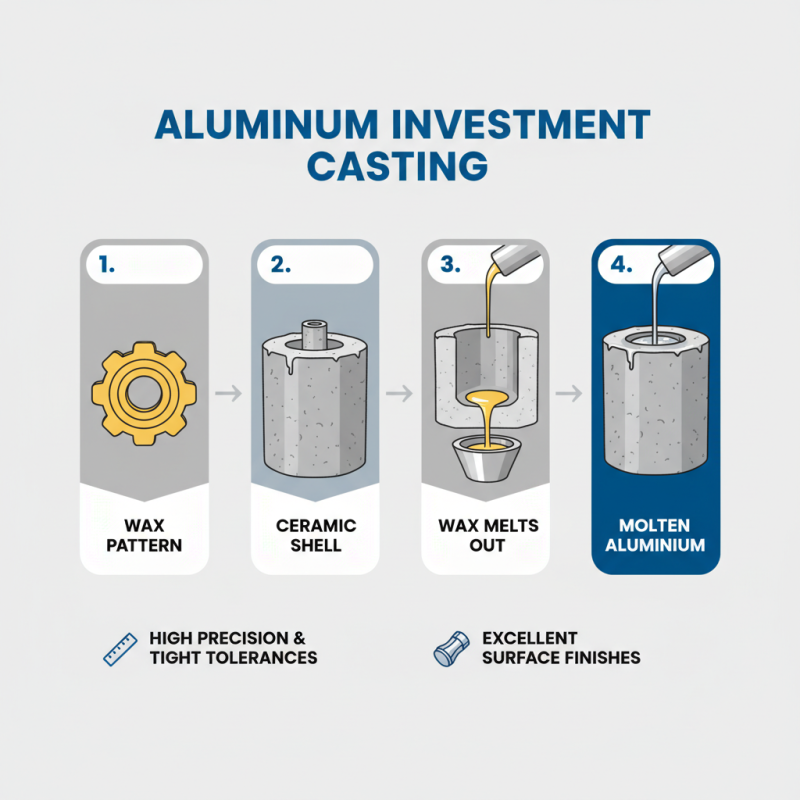
Investment casting for aluminum is a complex process that offers high precision and intricate designs. The technique begins with creating a wax pattern, which is then coated in a ceramic shell. After the shell hardens, the wax is melted away, leaving a cavity that will be filled with molten aluminum. This method can yield parts with excellent surface finishes and tight tolerances.
One critical aspect often overlooked is the temperature control during pouring. If the molten aluminum is too hot, it can lead to defects. If it’s too cool, it might not fill the mould properly. Another element to consider is the shell’s integrity. Cracks or imperfections in the shell can ruin the final product. While the process is generally streamlined, there are still challenges that require careful monitoring.
The applications of investment casting in aluminum are vast, spanning automotive to aerospace industries. Each sector has unique specifications. This complexity demands ongoing refinement in techniques. There's always room for improvement in equipment and practices to enhance efficiency and quality. Even the most experienced professionals encounter unforeseen issues that require creative problem-solving. This highlights the importance of adaptability in this ever-evolving field.
Key Techniques in Aluminum Investment Casting
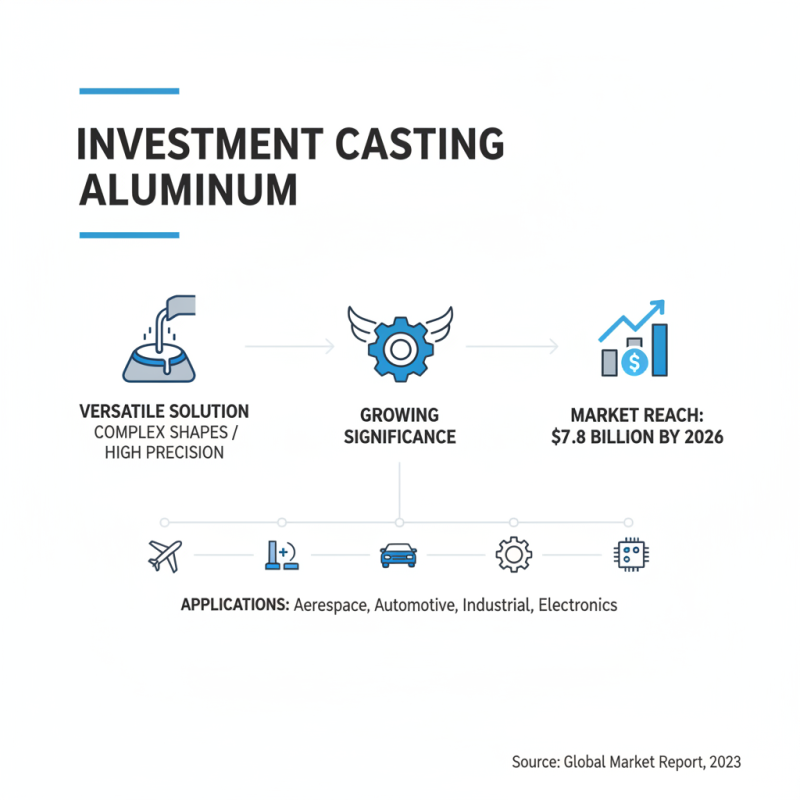
Investment casting aluminum has emerged as a versatile solution for various industries. This technique enables the creation of complex shapes with high precision. According to a recent market report, the global aluminum investment casting market is expected to reach USD 7.8 billion by 2026, reflecting its growing significance.
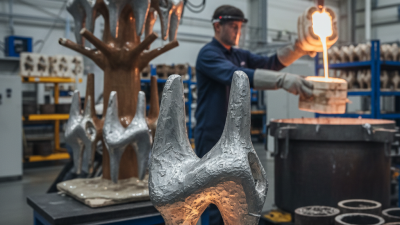
Key techniques include the shell mold process and the lost wax method. The shell mold process involves creating a ceramic shell around a wax pattern. Once heated, the wax melts away, leaving a cavity for molten aluminum. This method is efficient for high-volume production. In contrast, the lost wax method provides intricate patterns but requires more time and resources. Each technique has its merits and drawbacks, which should be carefully evaluated depending on project requirements.
Surface finishing remains a challenge in aluminum investment casting. The need for smoother surfaces often leads to additional processing steps, potentially increasing costs. While aluminum offers excellent corrosion resistance, achieving desired mechanical properties may require heat treatment. Continuous advancements in technology aim to tackle these limitations, but achieving perfect results is still a work in progress. Balancing quality and efficiency is critical as demand continues to rise.
Common Applications of Aluminum Investment Castings
Investment casting is a versatile process for creating aluminum components. It is widely used in various industries. Some common applications include automotive parts, aerospace components, and intricate machinery parts. Each application takes advantage of aluminum's lightweight and strong properties.
Automotive manufacturers often utilize aluminum investment castings. These parts reduce vehicle weight, improving fuel efficiency. Many engine components, brackets, and housings are produced this way. The precision of investment casting allows for complex shapes, which is vital for high-performance vehicles.
In the aerospace industry, aluminum castings are crucial. They play a significant role in manufacturing aircraft parts. The components need to withstand harsh conditions. Investment casting provides accuracy and durability.
Tips: Always consider design simplicity. Complicated designs can enhance costs. Keep tolerances in mind for better fitment and function. Testing prototypes can save time and resources. This process helps avoid costly mistakes later. Reflect on your design choices to find the best solutions.
Advantages of Aluminum in Investment Casting
Aluminum stands out in investment casting for several reasons. It is lightweight yet strong, making it ideal for various applications. This metal provides excellent corrosion resistance. In industries such as aerospace and automotive, reduced weight translates to increased fuel efficiency. Engineers appreciate aluminum's ability to resist oxidation and maintain structural integrity over time.
Casting techniques allow for intricate designs with precise tolerances. With aluminum, it is easier to create complex shapes compared to other metals. This can lead to more efficient production processes. However, challenges can arise. For instance, achieving the desired surface finish may require additional steps. This adds time and cost to the project.
Moreover, aluminum’s thermal conductivity is a double-edged sword. While it enables fast cooling during casting, this can lead to warping issues if not managed properly. It’s essential to strike a balance between speed and quality. Companies must continuously refine their processes. Learning from past mistakes is crucial in achieving optimal results in investment casting.
2026 Best Investment Casting Aluminum Techniques and Applications
Future Trends in Investment Casting for Aluminum Products
Investment casting for aluminum products is evolving. The industry anticipates significant growth, projected at a CAGR of 6.5% through 2028. This shift is driven by advancements in technology and growing demand in various sectors. Aerospace and automotive stand out as key markets. The lightweight nature of aluminum improves fuel efficiency and lowers emissions.
Future trends suggest an increasing focus on eco-friendly practices. A report by a leading market research firm indicates that 30% of manufacturers are integrating sustainable processes. Recycled aluminum is gaining traction, providing cost and environmental benefits. However, challenges remain. Ensuring quality and minimizing waste in the casting process requires careful management.
The rise of automation also shapes the industry. Smart technologies improve precision and reduce production times. Yet, transitioning to automated systems can be a hurdle for some businesses. Continuous training and adaptation are necessary. As companies invest in employees and technology, they must balance innovation with operational realities. These future trends signal a dynamic shift, with both opportunities and obstacles ahead.



 +86 180 0293 5268
 CONTACT Shixin
 CONTACT Shixin
 CONTACT Shixin