Best Investment Casting Metals for Optimal Production Efficiency?
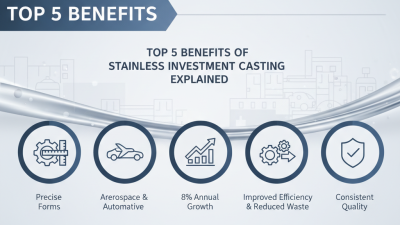
Investment Casting Metals play a crucial role in the manufacturing industry. They are known for their ability to create complex shapes with high precision. According to a report by the Investment Casting Institute, the global market for investment casting metals is projected to reach $19 billion by 2025. This growth highlights their significance in sectors like aerospace and automotive.
However, selecting the right metals can be challenging. Each type of metal offers distinct advantages and limitations. For example, stainless steel is renowned for its corrosion resistance but can be costly. In contrast, aluminum is lighter but may lack the strength needed for critical applications. Industry surveys reveal a strong preference for alloys that enhance durability and reduce production costs.
Investing in the right investment casting metals is more than just a financial decision. It requires a comprehensive understanding of their properties. Manufacturers must weigh performance against cost-effectiveness carefully. This strategic balance can significantly impact production efficiency and overall product quality.
Understanding Investment Casting: Key Concepts and Benefits
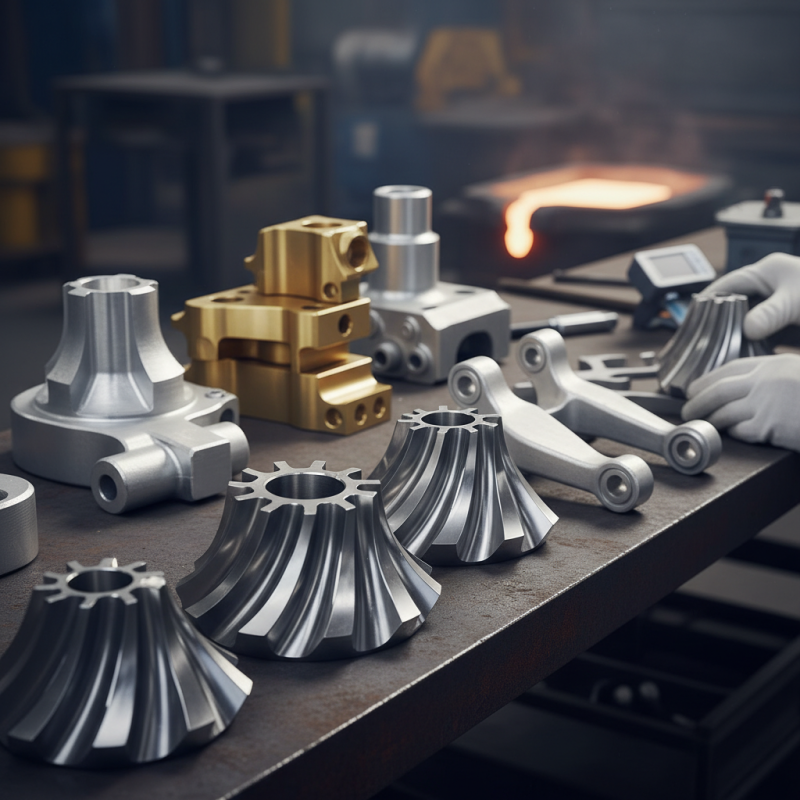
Investment casting is a versatile manufacturing process known for its precision and efficiency. This method allows for intricate designs that are difficult to achieve with traditional machining. By creating a wax pattern, manufacturers can produce complex shapes that maintain tight tolerances. This capability is essential in industries such as aerospace and automotive, where precision is critical.
The benefits of investment casting include reduced material waste and improved surface finishes. The process often requires fewer steps than other manufacturing methods, leading to faster production cycles. However, there are challenges, like the high initial cost of setup. Maintaining consistency and quality can be difficult if the process is not carefully controlled.
Understanding the principles behind investment casting is vital. Selection of proper metals is key to optimizing production efficiency. Different metals can affect the final product's strength, ductility, and overall performance. Experimentation and testing may be necessary, as each metal comes with its own set of properties. This ongoing evaluation helps in selecting the best materials for specific applications.
Overview of Common Metals Used in Investment Casting
Investment casting involves the use of various metals that impact production efficiency. Common choices include aluminum, steel, and bronze. Each metal offers unique properties that cater to specific production needs.
Aluminum is favored for its lightweight and excellent corrosion resistance. It is easy to mold and offers a smooth finish. However, its lower melting point can lead to distortion at high temperatures.
Steel, on the other hand, provides strength and durability, making it suitable for heavy-duty applications. Yet, it may require additional processes to prevent rust.
Bronze is renowned for its wear resistance and has a rich history in casting. It melts at a higher temperature, which can complicate the casting process. Not every project is suited for bronze despite its advantages.
Evaluating the right metal is crucial for optimal efficiency. Understanding these nuances can help manufacturers avoid costly mistakes.
Comparative Analysis of Metals for Production Efficiency
When considering investment casting, selecting the right metal is crucial for achieving optimal production efficiency. A comparative analysis of metals reveals significant differences in their properties. Aluminum alloys often rank high due to their lightweight nature and good fluidity, yet they may lack strength for heavy-duty applications. Conversely, stainless steel provides excellent corrosion resistance but can be more challenging to cast.
According to industry reports, the choice of metal affects cycle times, yield rates, and overall costs. Copper alloys, for example, display remarkable thermal conductivity, beneficial for fast cooling. However, this can lead to defects if not managed well. A careful understanding of these pros and cons is essential.
Tips: Evaluate the specifics of your project. Consider the metal’s thermal properties. Prioritize a balance between strength and weight for your design. Always test metal samples, since casting outcomes can vary significantly. Analyze your workflow to identify areas for improvement. Regular feedback from production teams can enhance the process, leading to better outcomes.
Best Investment Casting Metals for Optimal Production Efficiency
| Metal Type |
Melting Point (°C) |
Density (g/cm³) |
Thermal Conductivity (W/m·K) |
Cost (USD/kg) |
Production Efficiency (% Yield) |
| Stainless Steel |
1400 |
7.95 |
16 |
3.00 |
85 |
| Aluminum Alloy |
660 |
2.70 |
235 |
2.50 |
90 |
| Bronze |
950 |
8.96 |
50 |
5.00 |
80 |
| Carbon Steel |
1420 |
7.85 |
45 |
1.80 |
75 |
| Nickel Alloy |
1300 |
8.90 |
20 |
10.00 |
70 |
Factors Influencing Metal Selection in Investment Casting
When selecting metals for investment casting, various factors play a crucial role in ensuring optimal production efficiency. One key consideration is the metal's thermal properties. Metals with high thermal conductivity, such as aluminum and copper alloys, can promote faster cooling rates and shorter cycle times. This is essential for high-volume productions where efficiency is paramount. According to a recent industry report, aluminum alloys can reduce casting time by up to 30%, significantly impacting overall productivity.
Another important factor is the metal's fluidity. Higher fluidity allows better flow into molds, resulting in improved surface finishes and reduced defects. For instance, steel grades like A356 exhibit excellent fluidity, which helps maintain dimensional accuracy even in intricate designs. According to the Metal Casting Industry report, optimizing fluidity can lead to a 20% decrease in rework rates.
Tip: Always consider conducting small-scale trials with different metal compositions to identify the optimal choice for your specific application.
The environment can also influence selection. For projects requiring corrosion resistance, stainless steels and nickel-based alloys may be more appropriate despite their higher costs. Understanding the trade-offs between material properties and production demands is critical. Additionally, sourcing metals from reliable suppliers can ensure consistency in quality and performance, which is crucial for minimizing variations in production.
Tip: Review supplier certifications and past performance records to ensure reliability.
Best Practices for Optimizing Metal Performance in Casting Process
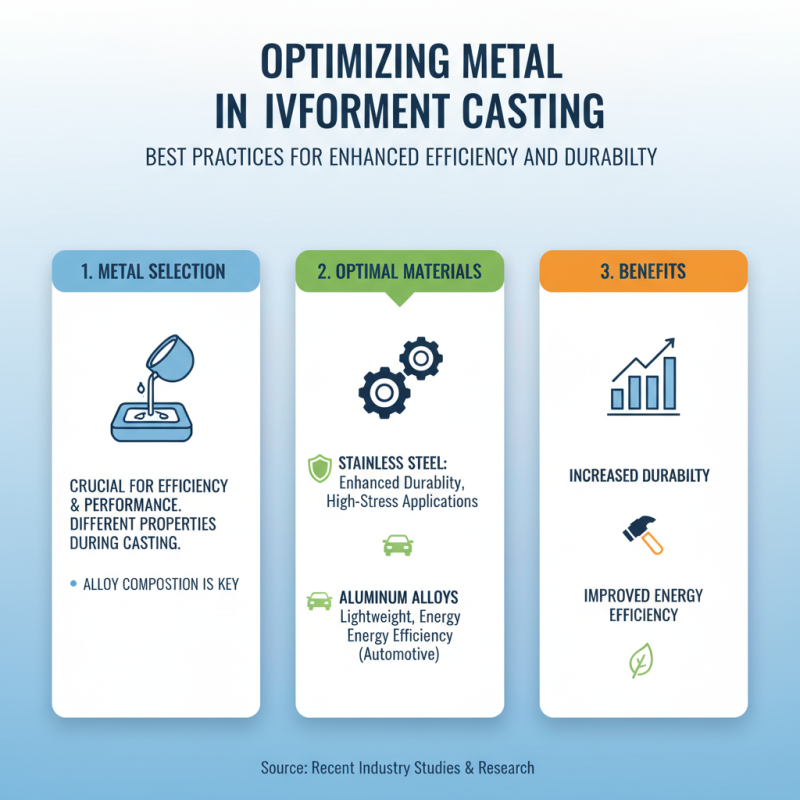
In the investment casting process, metal selection is crucial for efficiency and performance. Various metals display different properties during casting. For optimal results, alloy composition plays a significant role. Recent studies indicate that using stainless steel can enhance durability in high-stress applications. Aluminum alloys offer lightweight characteristics and improve energy efficiency, especially in automotive applications.
Tips: Consider your project requirements carefully. The right metal choice can lead to reduced production costs and improved product lifespan.
Heat treatment processes can also influence metal performance. For instance, hardening treatments can significantly enhance yield strength and toughness. However, improper heat treatment may lead to warping or cracking, highlighting the need for precise temperature control. Data from industry reports suggest that a well-optimized heat treatment can increase component life by up to 30%.
Tips: Stay informed about the latest heat treatment technologies. Regular training can help operators avoid common pitfalls leading to defects.
The casting environment matters too. A well-maintained atmosphere reduces contamination risks. Dust and moisture can weaken metal integrity. Maintaining the right temperature and humidity levels is essential. Ignoring these can result in subpar casting quality, affecting the final product's performance and reliability.



 +86 180 0293 5268
 CONTACT Shixin
 CONTACT Shixin
 CONTACT Shixin