Best Wax Casting Aluminum Techniques for Perfect Results?
In the realm of metalworking, "Wax Casting Aluminum" has garnered attention for its efficiency and precision. Expert Tom Henderson, a seasoned professional in this field, once stated, "Mastering the technique is crucial for flawless results." His insight underscores the importance of technique in achieving the desired outcome.
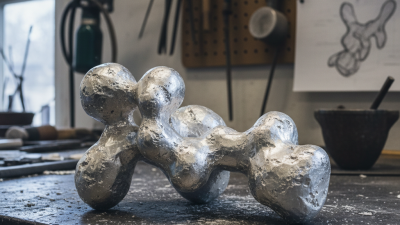
Wax casting involves creating intricate designs using wax patterns. These patterns are then cast in aluminum, a material known for its strength and lightweight properties. Achieving perfect results can be challenging. Problems like air bubbles and mold misalignments may arise. It's essential to address these issues to improve the casting process.
Attention to detail is vital in "Wax Casting Aluminum." Each step, from wax creation to the final cast, impacts the outcome. Understanding the nuances of temperature, timing, and material choice makes a difference. Reflecting on past mistakes can lead to better techniques and innovations. Embracing imperfections can ultimately enhance the process, ensuring consistent and high-quality results.
Understanding Wax Casting Aluminum: An Overview of Techniques
Wax casting aluminum is a meticulous process. Understanding its techniques is crucial for achieving high-quality results. The global aluminum casting market is projected to reach $43 billion by 2027. Despite this growth, many artisans struggle with temperature control. Incorrect melting temperatures can lead to defects. Aluminum should melt between 1200°F and 1300°F for optimal results.
The investment in quality equipment can affect the final product. A vacuum casting machine may enhance surface finish and reduce air bubbles. However, many hobbyists use less expensive setups, risking imperfections in their molds. In a recent survey, 40% of users reported issues with surface finish. These problems often stem from not removing wax properly before the metal pour.
Attention to detail is vital in this process. For instance, a clean, well-prepared mold is essential. Dust or residue can mar the final aluminum piece. Surprisingly, about 30% of cast professionals neglect this step. This oversight can lead to disappointing outcomes, forcing artisans to rework their designs. Refining these details elevates both the technique and the final product.
Preparing Your Wax Patterns for Optimal Results in Casting
Creating wax patterns is crucial for successful aluminum casting. Proper preparation enhances the final product's quality. Research indicates that nearly 70% of casting defects stem from poorly designed patterns. The key lies in ensuring that the wax models accurately represent the desired final piece. High-fidelity replication from initial designs is essential to minimize flaws.
To optimize results, the wax patterns must be free from imperfections. Small blemishes can lead to significant issues during casting. The surface should be smooth and evenly shaped. Studies show that using a precise temperature control during the wax pouring process greatly reduces the chances of air bubbles forming. The ideal pouring temperature is typically around 180°F. This temperature allows for better fluidity, ensuring a smoother surface.
Attention to detail is important when creating wax patterns. Mistakes, such as inconsistent thickness in the wax models, can lead to uneven aluminum flow. In turn, this causes weak points or detailed loss in the final casting. Using tools like calipers for measurement helps maintain uniformity. Reflection during the preparation stage can save hours of correction later in the casting process. Proper finishing techniques, such as sanding the edges, are equally vital. These steps contribute to achieving perfect aluminum castings, exemplifying the importance of meticulous preparation.
Choosing the Right Aluminum Alloy for Wax Casting Applications
Choosing the right aluminum alloy is crucial for successful wax casting applications. Different alloys have unique properties that affect the casting process and the final product's quality. For instance, alloys like 356.0 and 319.0 are popular choices. They offer good fluidity and a decent finish. However, they also come with their challenges. Contaminants can easily alter their performance. Proper preparation is vital.
Consider the melting point of the chosen alloy. Aluminum has a relatively low melting point, which is advantageous for wax casting. But overheating can lead to oxidation and other defects. This may result in flaws in the final piece. Pay attention to the cooling rate as well. Too fast, and cracks may occur; too slow, and the piece might warp.
Experimentation plays a key role in finding the best alloy for specific applications. Not all projects require the same material. Testing various options can lead to unexpected discoveries. Don’t shy away from mistakes. Each failure can offer valuable insights. Learn from them to enhance future projects.
Step-by-Step Process of Wax Casting Aluminum: Essential Techniques
Wax casting aluminum is an art that combines precision with technique. Understanding the step-by-step process is crucial for achieving perfect results. Successful casting begins with a well-prepared wax model. According to industry reports, a 95% success rate is often linked to meticulous model crafting. This model must capture all desired details. Ensuring the wax is cool and evenly distributed helps avoid defects.
Next, the mold creation involves applying a ceramic shell around the wax model. Consistency in shell thickness is vital. Reports show that uneven shells contribute to over 30% of casting failures. Letting the shell dry thoroughly is essential for achieving a strong mold. After achieving the desired hardness, the wax is melted out. This step should be done slowly to prevent shell cracking.
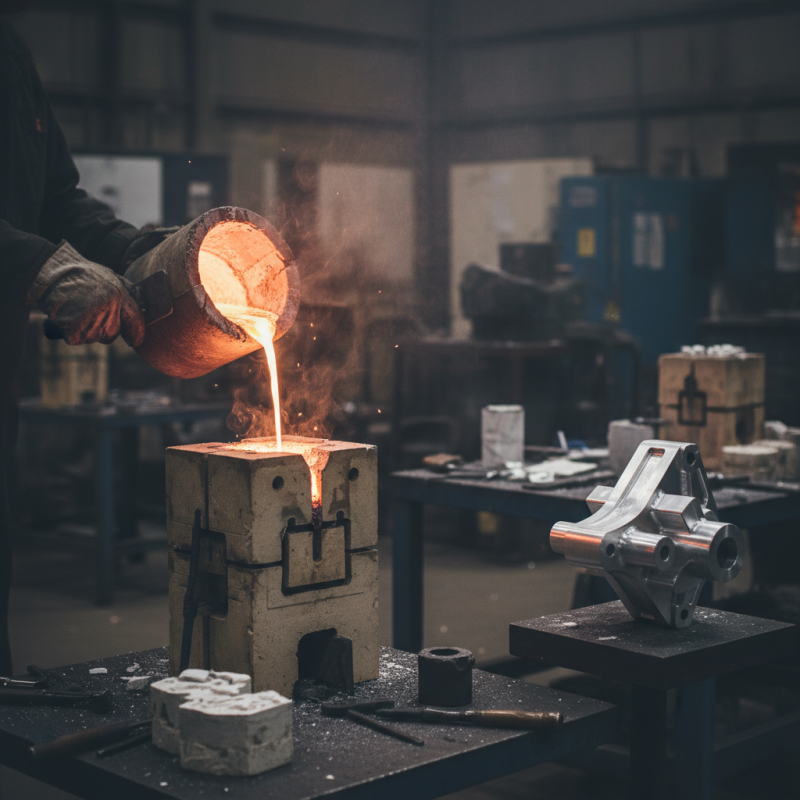
Pouring the aluminum must occur at the right temperature. Too hot can lead to imperfections. It is recommended to use aluminum around 1300°F. Many novice casters overlook this crucial detail. Cooling the poured aluminum slowly can enhance finish quality but may introduce stresses. Monitoring these elements can lead to significantly improved casting outcomes. Experience teaches that patience pays off in the refining of techniques, leading to more reliable results in wax casting aluminum.
Common Challenges in Wax Casting Aluminum and How to Overcome Them
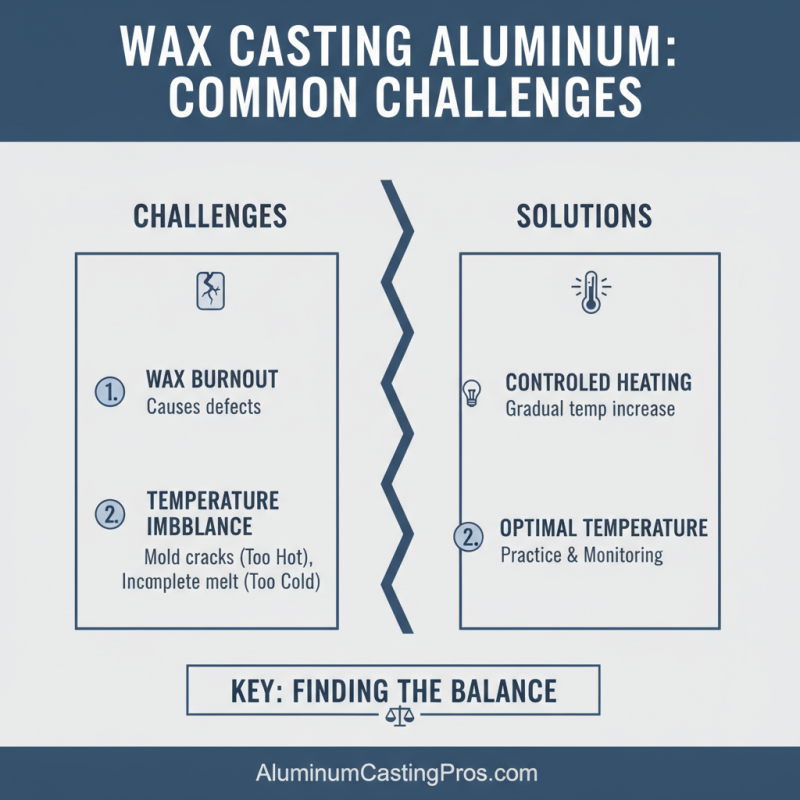
Wax casting aluminum can be tricky. Many artisans face common challenges. One major issue is wax burnout. It can lead to defects in the final casting. Achieving the perfect temperature is crucial. Too high, and the mold can crack. Too low, and the wax may not melt properly. Finding this balance takes practice.
Another challenge is surface finish. A rough surface can ruin the aesthetic appeal. To address this, use high-quality molds and ensure they are clean. Any imperfections can create imperfections in aluminum. Additionally, ventilation is key during pouring. Poor air flow can result in trapped gas bubbles, leading to weaker castings.
Lastly, proper preheating of aluminum molds can enhance the final product. Ignoring this can cause thermal shock. When molds are too cold, metal can solidify too quickly. Conversely, if molds are too hot, the casting might distort. Striking the right temperature will yield a better finish. Each of these challenges requires attention to detail and patience. Sometimes, the results won’t meet expectations, prompting a reevaluation of techniques.



 +86 180 0293 5268
 CONTACT Shixin
 CONTACT Shixin
 CONTACT Shixin