China Best Lost Wax Investment Casting Manufacturer?
China Best Lost Wax Investment Casting Manufacturer?
Choosing a China-based Lost Wax Investment Casting manufacturer requires more than comparing prices or browsing polished factory photos. Buyers must examine technical experience, material control, inspection systems, and communication discipline. A casting may look smooth outside yet contain hidden porosity, shrinkage, or dimensional variation.
John Campbell, a respected casting researcher and author of Complete Casting Handbook, states, “The quality of a casting is determined by the quality of the liquid metal.” This principle remains practical today. It connects furnace practice directly with product reliability. A capable manufacturer should document alloy composition, melting temperature, shell preparation, pouring conditions, and heat treatment records.
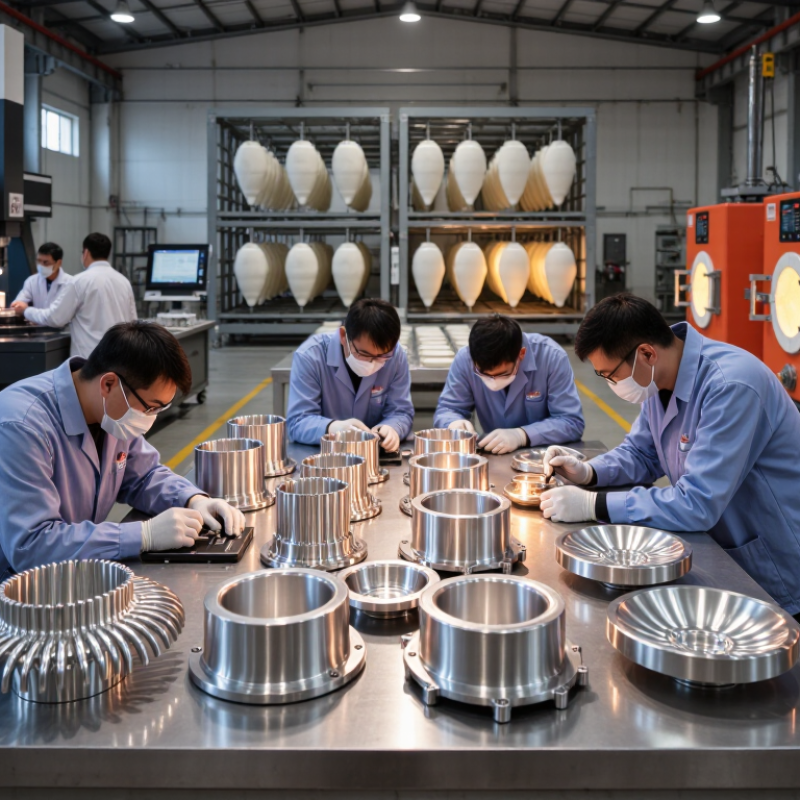
Look closely at the workshop. Are wax patterns measured before assembly? Are ceramic shells dried under controlled conditions? Do technicians inspect gates, vents, and thin sections after casting? These details often separate a dependable supplier from a temporary trading company. Laboratory tools also matter, including spectrometers, coordinate measuring machines, hardness testers, and industrial imaging equipment.
Experience is visible in small decisions. Skilled teams adjust shell thickness for complex passages and protect delicate edges during finishing. They also explain limitations instead of promising perfect results. That honesty matters.
Still, “best” is not absolute. A supplier successful with stainless steel pump parts may struggle with aerospace-grade titanium components. Tooling cost, annual volume, tolerance, surface requirements, and certification needs can change the answer. Buyers should request samples, inspection reports, process records, and references from comparable projects. One overlooked detail can become a costly lesson. A thoughtful evaluation creates a stronger basis for selecting the right China Lost Wax Investment Casting manufacturer.
What Makes a China-Based Lost Wax Investment Casting Manufacturer the Best?
A strong China-based lost wax investment casting manufacturer proves capability through repeatable work, not polished claims.
Its engineers should read drawings, question unclear tolerances, and recommend practical machining allowances. They understand wax injection, ceramic shell building, alloy melting, heat treatment, and finishing. Details matter. Shop-floor experience shows when thin walls distort or trapped air marks a casting.
The best supplier makes process evidence easy to inspect.
Ask for material certificates, furnace records, dimensional reports, and sample approval data. Traceability should connect each casting to its wax batch, melt number, operator, and inspection result. Independent testing can verify chemistry, hardness, tensile strength, or internal soundness when risk justifies it. Clear communication matters too. A reliable team confirms revisions in writing and reports deviations before shipment.
Production flexibility is another practical advantage in China.
A capable factory may support prototypes, small batches, and stable volume production without changing control discipline. It should protect tooling carefully and explain repair or replacement costs before approval. No foundry gets every trial perfect. The important question is how openly it investigates failures and prevents repeats. Sometimes, changing a radius, gate, or inspection point improves performance, even when the original drawing looks complete. A revised gate can matter more than a cheaper quote.
How Can Quality, Certifications, and Production Capacity Be Evaluated?
China Best Lost Wax Investment Casting Manufacturer?
How Can Quality, Certifications, and Production Capacity Be Evaluated?
A reliable investment casting manufacturer should show more than polished samples. Ask for material certificates, furnace records, and dimensional inspection reports. During a factory visit, inspect wax patterns, ceramic shells, and finished surfaces. Look for controlled temperatures, clean work areas, and clear lot identification. These details reveal daily discipline.
Certifications can support credibility, but they need careful checking. Confirm the certificate number, issuing body, validity date, and approved production scope. ISO 9001 may indicate a controlled quality system, yet it does not guarantee perfect castings. For demanding industries, request evidence of chemical analysis, tensile testing, radiographic inspection, or coordinate measuring machine reports. A professional supplier should explain results in practical language.
Production capacity requires real evidence. Review furnace size, mold-making resources, machining equipment, and monthly output records. Ask how many orders are running simultaneously and how urgent changes affect delivery. A large stated capacity may hide limited skilled labor or outside processing. No foundry is flawless. Small casting defects can still occur. What matters is transparent corrective action, traceable records, and repeatable improvement. Sample approval should include actual tolerances, surface requirements, packaging details, and a pilot batch before full production.
How to Evaluate a China Lost Wax Investment Casting Manufacturer
A practical supplier review should examine quality control, relevant certifications, production capacity, traceability, and engineering support. The suggested weighting below reflects common procurement priorities for industrial investment casting projects and can be adjusted according to part complexity, material, and industry requirements.



 +86 180 0293 5268