How to Choose Investment Casting Lost Wax for Your Projects?
Choosing the right technique for your manufacturing projects is vital. Investment Casting Lost Wax is a popular method among engineers and designers. As James Thornton, a renowned expert in the field, once stated, "The precision of Investment Casting Lost Wax can redefine your project outcomes."
This method involves creating detailed metal parts with minimal waste. When it comes to precision engineering, the choice of materials and designs is critical. Investment Casting Lost Wax allows for intricate designs that traditional methods cannot achieve. However, it comes with challenges. Not all wax materials will yield optimal outcomes.
Understanding these nuances is essential. Each project is unique, and solutions must reflect that. Factors like cost and time affect decisions too. It's important to ask the right questions and seek expert guidance when necessary. Balancing the benefits and potential pitfalls can lead to better outcomes.
Understanding Investment Casting and Its Applications
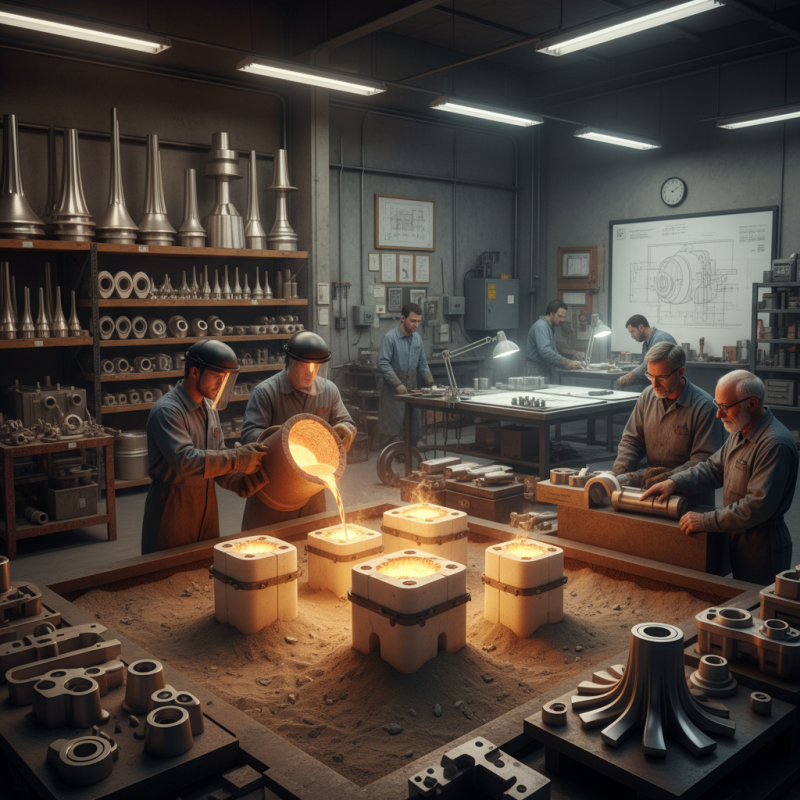
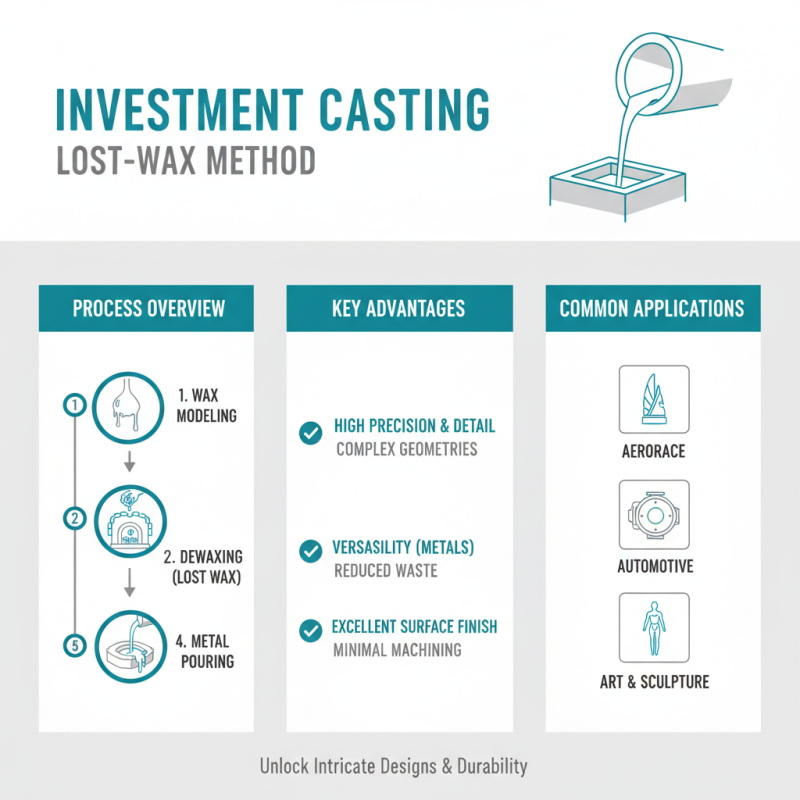
Investment casting, particularly the lost wax method, offers remarkable versatility and precision for various projects. This process involves creating a wax model, encasing it in ceramic material, and then melting away the wax to leave a cavity for metal casting. It is widely used in sectors like aerospace, automotive, and art. The high degree of detail it can capture makes it an ideal choice for intricate designs.
When considering investment casting, it's crucial to understand the specific applications. For example, complex geometries and fine details can be achieved, which is often not possible with other methods. This is why investment casting is preferred for components that require close tolerances and durable materials.
**Tip:** Always assess the design intricacies before choosing the investment casting process. Simpler designs might benefit from alternative methods.
Material selection also plays a key role. Different metals can affect the final properties of the product. Evaluate your project's requirements, such as strength or corrosion resistance.
**Tip:** Consult with experts to determine the best materials for your specific applications.
Reflect on the initial wax model. Any imperfections will be magnified in the final product. Investing time in the design phase can lead to better outcomes and fewer revisions later on.
The Basics of Lost Wax Casting Process
The lost wax casting process is an ancient technique with modern applications in various industries. It starts with creating a wax model of the desired object. This model is then coated with a ceramic shell, which hardens as the wax melts away during heating. NASA reported that over 50% of their aerospace components utilize investment casting techniques, underscoring the importance of this method.
One of the key advantages is the precision it offers. According to a report by Research and Markets, the investment casting market is projected to reach $24 billion by 2027, driven by high demand from various sectors. However, achieving optimal results can be challenging. Factors like temperature control and the choice of materials can heavily influence the final product. Inaccurate setups often lead to defects, requiring extensive post-processing efforts.
Selecting the right wax is crucial. Not all waxes are created equal, and the specific properties needed depend on the complexity of the design. Some manufacturers face difficulties in ensuring a uniform shell thickness, which can compromise the casting. It’s essential to test and iterate during the design phase. This reflection can help in avoiding costly mistakes later in the process.
Investment Casting Process Efficiency
Key Factors to Consider When Choosing Materials
When selecting materials for investment casting lost wax projects, a few key factors must be prioritized. The type of metal being cast plays a critical role in the final product's quality. Common choices include aluminum, stainless steel, and brass. Each offers unique properties that can affect durability, weight, and aesthetic appeal. Understanding these differences ensures your project meets specifications.
Another essential aspect is the wax material used in the process. Higher-quality wax provides a better surface finish and reduces defects. Lower-grade wax may lead to inconsistencies and extra work. Evaluating wax types according to your project's detail requirements can be pivotal.
Additionally, consider the environmental impact of the materials chosen. Sustainable options are becoming more important in manufacturing. A responsible selection may align better with modern ethics. Many companies seek to improve their practices, but challenges remain. Balancing quality with sustainability often requires careful thought and sometimes compromises.
Evaluating Quality and Precision in Investment Casting
When selecting investment casting lost wax for your projects, evaluating quality and precision is crucial. Investment casting is known for its accuracy in producing complex geometries. According to recent industry reports, the average dimensional tolerance for investment cast parts can be as tight as ±0.5%. Achieving this requires skilled artisans and state-of-the-art technology. However, quality varies significantly among suppliers.
Understanding the materials used is vital. Common alloys include stainless steel, aluminum, and bronze. Each material offers specific properties suitable for different applications. The American Foundry Society (AFS) emphasizes the importance of conducting thorough supplier audits. This includes checking their quality control processes and past project successes. Yet, not all manufacturers meet these standards. It's common to find discrepancies between stated capabilities and delivered results.
Precision in investment casting can impact project performance. High-quality castings minimize post-processing work, saving time and costs. In contrast, poor-quality parts lead to defects that compromise functionality. If you encounter issues, it’s important to reassess your choice of supplier. Sometimes, even well-regarded foundries can miss the mark. Stay informed and focused on the details to ensure your investment casting projects succeed.
How to Choose Investment Casting Lost Wax for Your Projects? - Evaluating Quality and Precision in Investment Casting
| Factor |
Description |
Importance Level |
Recommendation |
| Material Type |
The type of material used can significantly affect the final product quality. |
High |
Choose a supplier that offers a range of high-quality metals. |
| Precision |
The accuracy of the casting process to meet design specifications. |
Critical |
Investigate manufacturer tolerances and customer reviews. |
| Surface Finish |
The quality of the surface finish affects aesthetics and functionality. |
Medium |
Ensure the manufacturer provides finishing options to suit your project's needs. |
| Production Capabilities |
The ability of the manufacturer to accommodate different project scales. |
High |
Assess whether they can handle both small and large production runs. |
| Lead Time |
The time required to complete your order from start to finish. |
Medium |
Confirm timelines upfront to ensure alignment with project deadlines. |
Comparing Costs and Benefits in Investment Casting Projects
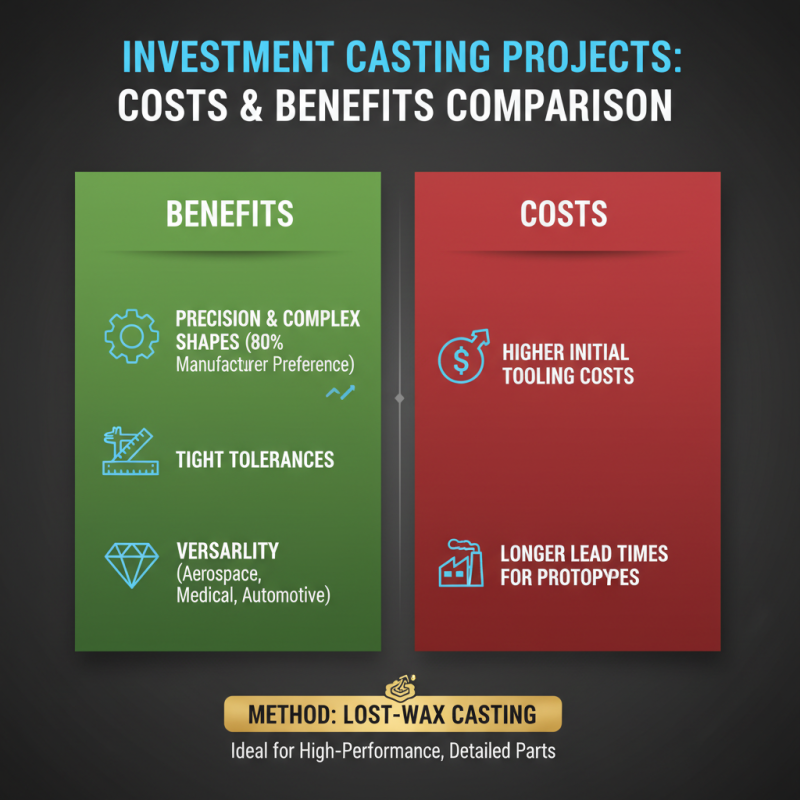
Investment casting, particularly the lost wax method, offers unique advantages for various projects. According to a recent industry report, around 80% of manufacturers prefer this method for its precision. This casting technique permits the creation of complex shapes with tight tolerances. However, the initial costs can be higher compared to other methods, such as sand casting.
On average, projects using investment casting see an increase in production costs of about 30%. Yet, this method often results in reduced labor costs during machining and assembly. A study highlighted that investment cast components require less post-processing, as they are closer to the final shape. This can lead to significant savings over time, despite the upfront investment.
Choosing the right alloy is crucial in investment casting. Different materials present varying price ranges and performance outcomes. For instance, stainless steel can be 40% more expensive than aluminum. Yet, stainless steel provides superior strength and corrosion resistance. Balancing these factors is essential when evaluating costs and benefits for your specific project needs.



 +86 180 0293 5268
 CONTACT Shixin
 CONTACT Shixin
 CONTACT Shixin