Top Investment Casting Foundry Trends for 2026 Buyers Guide?
The landscape of the Investment Casting Foundry industry is evolving rapidly as we approach 2026. Experts indicate that understanding these trends is crucial for buyers looking to make informed decisions. John Smith, a renowned authority in investment casting, states, “Adapting to change is vital for success in the foundry business.”
Investment casting provides unique advantages, such as precision and intricate designs. However, it often faces challenges like rising costs and sustainability concerns. Potential buyers must navigate these complexities carefully. The industry's reliance on skilled labor and advanced technology makes it essential to consider both efficiency and innovation.
As buyers explore trends for investment casting, keeping an eye on material advancements and automation techniques will be pivotal. The pursuit of quality and reliability remains an ongoing challenge. This exploration will ultimately shape the future of Investment Casting Foundries and influence industry choices. Decision-makers must remain adaptable and informed, ensuring they meet the demands of a dynamic market.
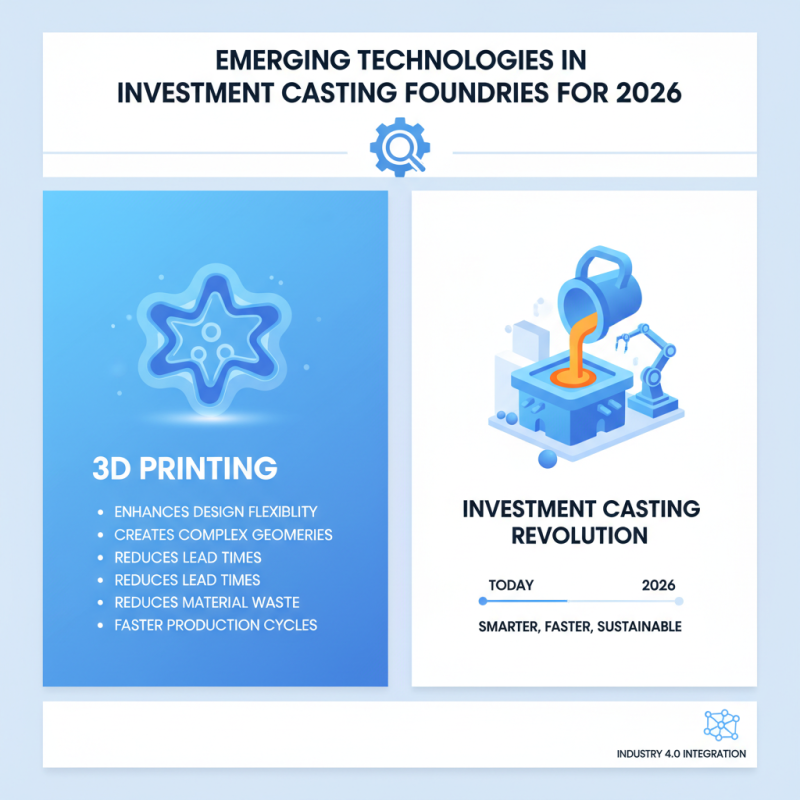
Emerging Technologies in Investment Casting Foundries for 2026
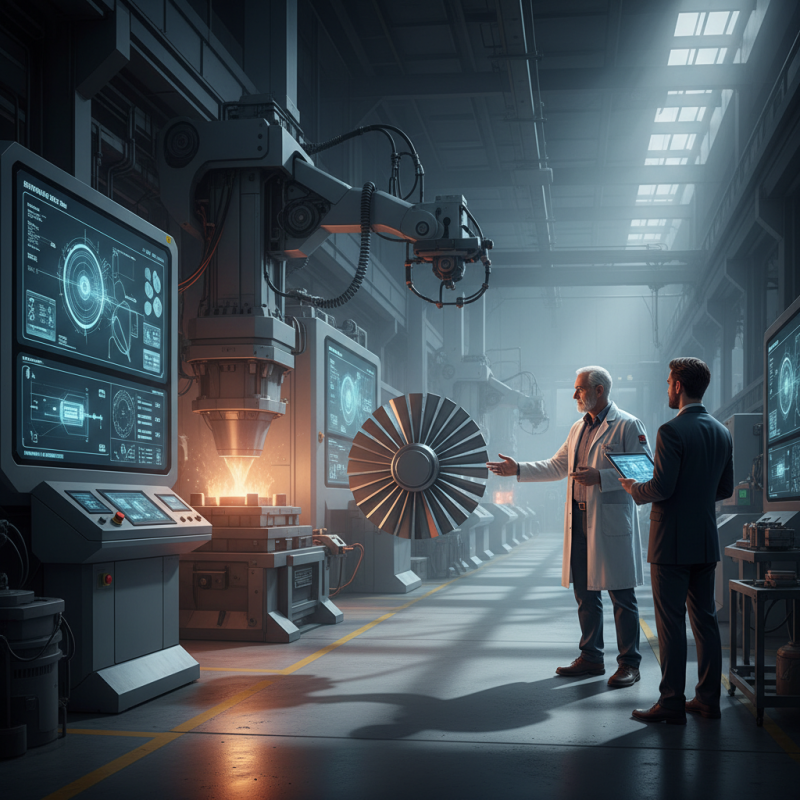
Emerging technologies are reshaping investment casting foundries as we look towards 2026. Among these, 3D printing stands out. This technology greatly enhances design flexibility. It allows for the creation of complex geometries that traditional methods struggle to achieve. The integration of 3D-printed patterns reduces lead times and material waste, enabling faster production cycles.
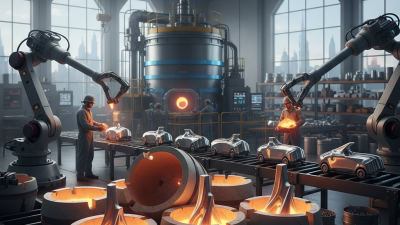
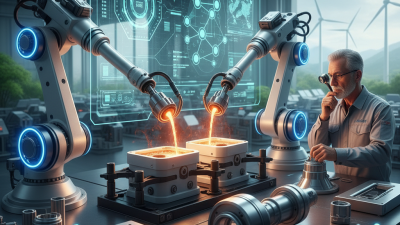
Automation is another critical trend. Automated processes streamline operations in foundries. Robotics can handle repetitive tasks, increasing precision and reducing human error. While this enhances efficiency, training staff to work alongside robots remains a challenge. Foundries must adapt to ensure that employees embrace these new technologies.
Artificial intelligence (AI) in quality control is gaining traction. AI algorithms analyze data in real-time to predict failures and ensure product integrity. However, reliance on AI poses risks if systems are not adequately maintained. Foundries must strike a balance between automation and human oversight to maintain quality. At the same time, introducing these technologies can create disruptions if not managed properly. Training will be essential, as the workforce must develop new skills to thrive in this evolving landscape.
Market Demand Forecasts for Investment Casting in Various Industries
The investment casting market is evolving rapidly, driven by increasing demand across various industries. According to recent market analysis, the global investment casting market is projected to reach USD 22 billion by 2026, growing at a CAGR of 6.5%. This growth reflects a heightened need for precision components in sectors such as aerospace, automotive, and medical devices.
Aerospace manufacturing is anticipated to be a significant driver of demand. The Federal Aviation Administration (FAA) projects a 4% annual growth in air travel. This surge will push aerospace manufacturers to seek high-quality castings. Additionally, the automotive sector is transitioning towards electric vehicles. This shift necessitates lightweight components, further increasing the need for investment casting methods.
Despite this positive outlook, challenges persist. Fluctuations in raw material prices can impact production costs. Moreover, the industry faces a skilled labor shortage, which may hinder growth. Companies must adapt to these obstacles by investing in training and technology. The future of investment casting is bright, but navigating these complexities will be crucial for sustained success.
Automating Processes: The Future of Efficiency in Foundries
In the evolving landscape of investment casting, automation is becoming a game-changer. Foundries are now investing in advanced technologies. These innovations improve efficiency and cut costs. Automated systems handle tedious tasks, which reduces human error. For instance, robots can manage patterns and molds with precision. This shifts the focus from manual work to strategic planning.
Training is essential in this automated world. Skilled workers must adapt to new machines. There can be a learning curve. Some employees may resist change. However, embracing automation can lead to growth. Foundries that invest in training will see better results. The future of foundries depends on the balance between automation and skilled labor.
Quality control is another area benefiting from automation. Automated systems can monitor the casting process in real time. This ensures consistency and reduces defects. However, reliance on technology may raise concerns. What happens if systems fail? Regular maintenance is crucial. This balancing act between efficiency and reliability will define the foundry's path forward.
Top Investment Casting Foundry Trends for 2026 Buyers Guide - Automating Processes: The Future of Efficiency in Foundries
| Trend |
Description |
Expected Impact |
Technological Focus |
| Robotics Integration |
Incorporating robotics for handling and assembly tasks. |
Increased production speed and reduced labor costs. |
Automation technology, AI |
| Advanced Materials |
Utilization of new alloy compositions for enhanced performance. |
Improved durability and weight-to-strength ratio. |
Material science, R&D |
| Smart Monitoring Systems |
Implementation of IoT devices for real-time monitoring of processes. |
Enhanced quality control and predictive maintenance. |
IoT, data analysis |
| Sustainability Practices |
Focus on recycling and waste reduction in foundries. |
Lower environmental impact and compliance with regulations. |
Sustainable technology, green energy |
| Enhanced Process Simulation |
Utilizing simulation software to optimize casting designs. |
Reduction in material waste and improved time efficiency. |
Simulation software, CAD |
Material Innovations Shaping Investment Casting Solutions in 2026
The investment casting industry is witnessing exciting material innovations that will shape solutions in 2026. Lightweight metals, such as titanium and aluminum alloys, are gaining traction. These materials offer enhanced performance and reduce the overall weight of cast components. This shift is crucial for sectors like aerospace and automotive, where weight reduction translates into increased efficiency.
Ceramic casting materials are also evolving. Advanced ceramics provide higher precision and improved surface finishes. They allow for intricate designs that were once challenging to achieve. However, the challenge lies in their brittleness and processing difficulty. Finding a balance between precision and durability is essential for manufacturers.
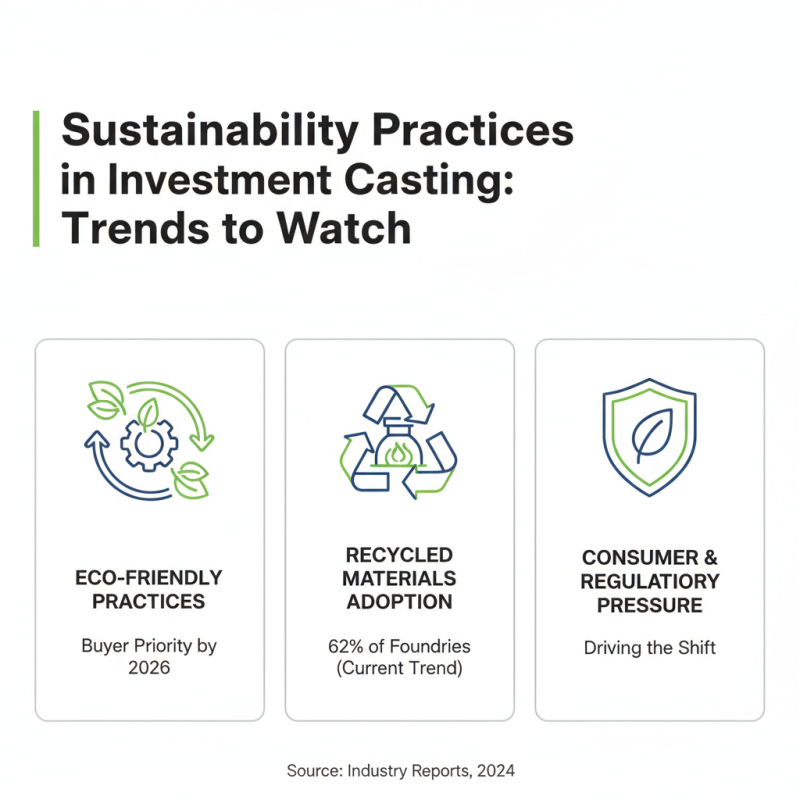
Another trend is the use of eco-friendly investment casting materials. Sustainable metals and recyclable composites are becoming more prevalent. While these materials are promising, their availability and performance can pose issues. The adoption of green solutions requires careful consideration. Manufacturers must weigh costs against environmental benefits. This balance will define industry standards moving forward.
Top Investment Casting Foundry Trends for 2026
This chart illustrates the anticipated investment casting trends for 2026, highlighting key areas such as materials innovation, production efficiency, sustainability, and automation advancements.



 +86 180 0293 5268
 CONTACT Shixin
 CONTACT Shixin
 CONTACT Shixin