How to Master Precision Investment Casting Techniques?
Precision Investment Casting is an intricate process that demands a high level of skill and expertise. Renowned industry expert Dr. Alice Chen once stated, “Mastering precision means understanding both the art and science behind casting.” This highlights the dual nature of its complexity.
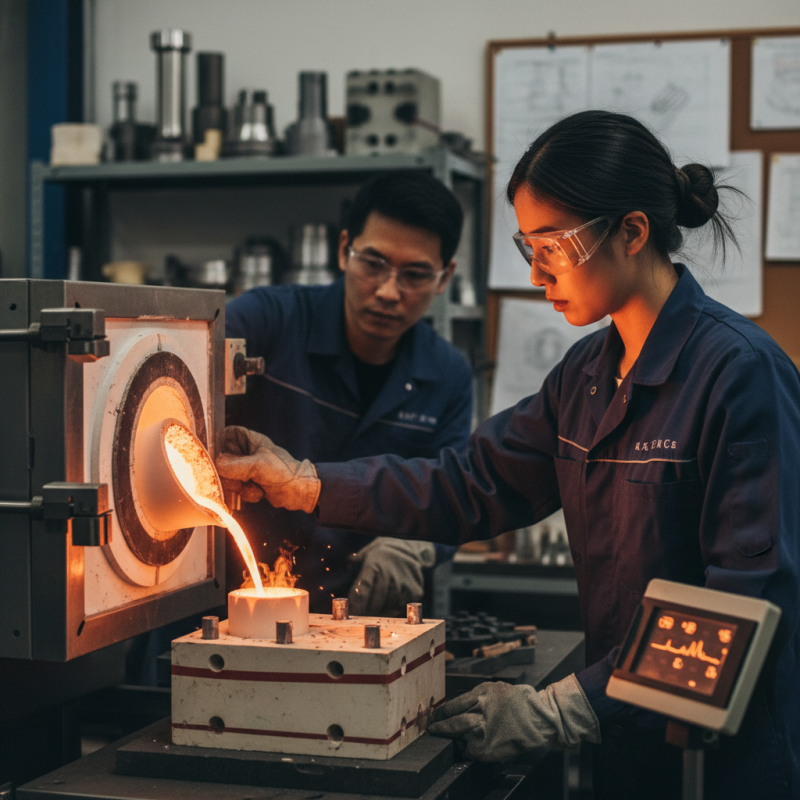
In this field, even small mistakes can lead to significant flaws in the final product. Attention to detail is crucial. For instance, the temperature of the molten metal must be meticulously controlled to prevent defects. Each step of the process, from mold preparation to finishing, requires precision and patience.
Yet, mastering Precision Investment Casting is no easy feat. Many newcomers struggle with the intricacies of this craft. Mistakes often become learning opportunities. Reflecting on these challenges can lead to better practices and improved outcomes. Emphasizing a growth mindset is vital for success in this field.
Understanding the Basics of Precision Investment Casting
Precision investment casting is a crucial technique in manufacturing. It allows for the creation of complex shapes and fine details with excellent precision. This process is widely used in various industries, including aerospace, automotive, and medical devices. According to a recent industry report, the investment casting market is projected to reach $20 billion by 2025, highlighting its increasing significance.
Understanding the basics of this technique involves grasping the importance of wax models and molds. The wax pattern is coated in a ceramic shell, which is then heated to remove the wax. The remaining mold allows for precise metal pouring. However, achieving the right balance during each phase is challenging. If the mold temperature isn’t controlled properly, defects can arise.
**Tips:** Pay attention to the cooling rate of your casting. Too fast or too slow can create issues. Ensure you inspect your molds regularly. Small flaws in the mold can lead to significant impacts on the final product. A meticulous approach is essential. Precision is key, but remember that manufacturing never goes perfectly. Learning from mistakes is part of the process.
Key Materials Used in Precision Investment Casting
Precision investment casting is a vital manufacturing method, known for creating complex geometries with high accuracy. The materials used in this process are crucial for achieving desired results. Typically, stainless steel, titanium, and nickel-based alloys are favored. Each of these materials offers specific advantages and drawbacks.
Stainless steel is renowned for its corrosion resistance and strength. However, it's not always easy to cast thin sections. A report by the American Foundry Society indicates that nearly 30% of casting defects arise from improper material selection.
Titanium is another excellent option. It has a high strength-to-weight ratio but is often more expensive. Its casting process requires high attention to detail, adding to the complexity.
Nickel-based alloys are prevalent in high-temperature applications. While they provide excellent mechanical properties, they can have issues with ductility. The foundry industry must continually evaluate material performance to minimize waste. Recent studies suggest that optimizing molten metal temperature is critical to reducing casting flaws. These challenges highlight the importance of material selection and processing techniques in achieving precision casting goals.
Step-by-Step Process of Precision Investment Casting
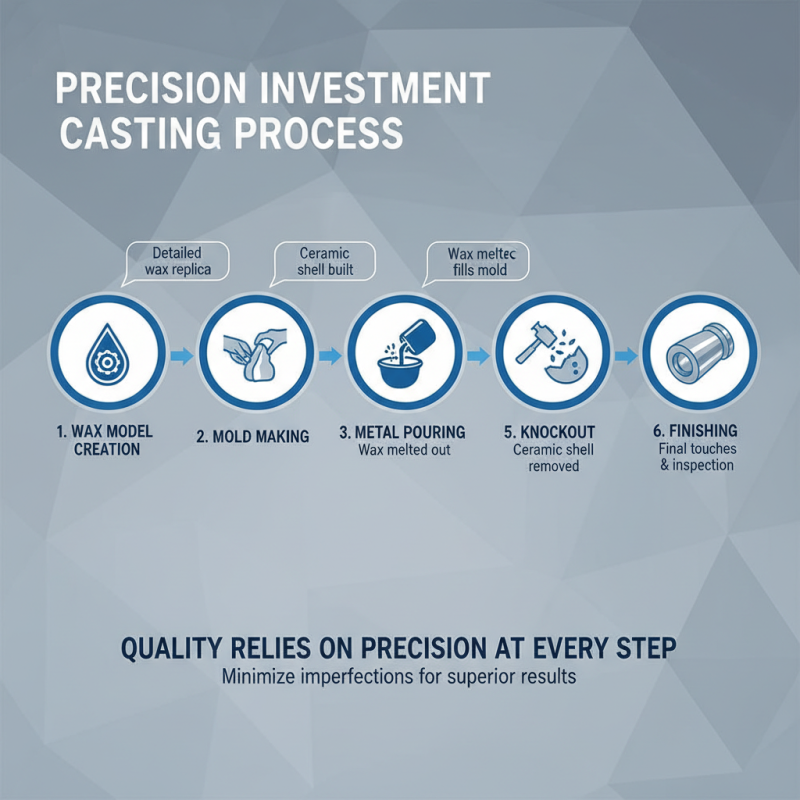
Precision investment casting is an intricate process that requires careful planning and execution. This method begins with creating a detailed wax model of the desired object. The quality of this model heavily influences the final product. Any imperfections in the wax can lead to defects in the casting, making attention to detail vital.
After the model is ready, it is coated with a high-temperature ceramic material. This shell hardens and forms the mold. The next step involves melting the wax to leave a cavity in the shell. It’s crucial to control the temperature precisely. Too high can cause cracks; too low may not eliminate all the wax.
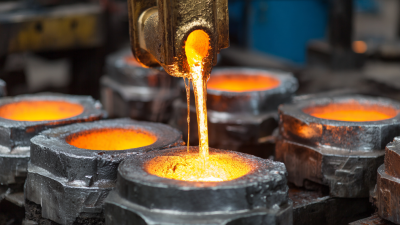
Finally, molten metal is poured into the mold. Here, timing is key. You have to allow the metal to cool just right. Rushing this process can affect the finish. Post-casting, each piece needs to be cleaned and inspected for quality. It’s easy to overlook small flaws, yet these can impact functionality. Precision is not just a goal; it’s a continuous journey.
Common Challenges and Solutions in Precision Investment Casting
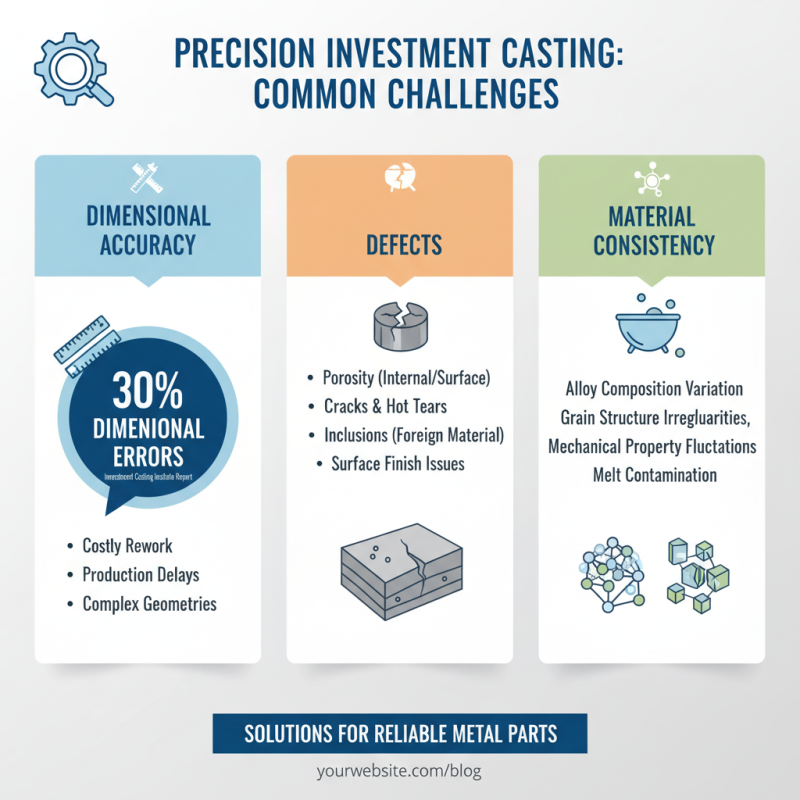
Precision investment casting is a process used to create intricate metal parts. However, it comes with its set of challenges. Common issues include dimensional accuracy, defects, and material consistency. According to a report from the Investment Casting Institute, 30% of all investment castings encounter dimensional errors. This can lead to costly rework and delays.
Another significant challenge is porosity. This flaw can undermine the strength of a component. Research shows that about 15% of cast parts experience porosity issues. Identifying the root cause can be tricky. Often, it requires thorough examination of the entire casting process. Operators must pay close attention to mold design and pouring techniques.
To address these challenges, adopting advanced technologies is vital. Implementing simulations can predict potential failures before actual production. Additionally, regular training for staff can enhance skills in handling equipment and materials. With ongoing investment in quality control and process improvement strategies, the industry can minimize these common challenges. It is a continuous journey and not devoid of hurdles.
Advancements in Technology for Enhanced Precision Casting Techniques
Precision investment casting has seen remarkable advancements in recent years. Technological improvements enhance the accuracy and efficiency of the casting process. According to a report by the Research Institute for Precision Casting, the global market for precision casting is expected to grow by 10% annually through 2025. This growth is fueled by increased applications in industries such as aerospace and automotive.
One significant advancement is the introduction of 3D printing technology. 3D printing allows for complex mold designs that were previously impossible to achieve. This leads to better material utilization and reduced waste. A study by the International Journal of Advanced Manufacturing Technology indicates that 3D-printed molds can decrease lead times by 30%, dramatically improving productivity.
Still, challenges remain. Not all materials are suitable for 3D printing when it comes to casting. Some nuances in material properties can lead to unforeseen defects. These imperfections require careful examination. Companies must adapt and refine their processes to achieve optimal results. Precision investment casting continues to evolve, but growth requires constant innovation and critical assessments of current techniques.



 +86 180 0293 5268
 CONTACT Shixin
 CONTACT Shixin
 CONTACT Shixin