+86 180 0293 5268


Choosing a dependable Investment Casting Aluminum supplier is rarely a simple ranking exercise. Price matters, but it cannot reveal everything.
Casting expert John Campbell has emphasized, “The quality of a casting is determined before the metal is poured.” That principle remains highly relevant. It directs attention toward tooling accuracy, alloy cleanliness, shell preparation, and process control.
This guide examines ten leading Investment Casting Aluminum suppliers worldwide. The comparison considers technical experience, production capacity, dimensional consistency, surface finish, certification practices, and global delivery capability. It also considers less visible details, such as how a supplier handles engineering changes, first-article approval, and traceability from furnace charge to shipment.
Real manufacturing evidence matters. A capable supplier should explain its aluminum alloy range, casting size limits, heat-treatment methods, inspection equipment, and machining support. Photographs of thin-wall aerospace parts, automotive brackets, or corrosion-resistant marine components can reveal more than polished marketing language. Still, photographs are not proof. Audit records, sample reports, and customer references deserve greater weight.
No supplier is perfect.
A factory may offer excellent casting quality but limited tooling flexibility. Another may provide fast quotations but struggle with complex internal cavities. Some companies advertise worldwide service while relying heavily on external finishing partners. That is not automatically a weakness, but it should be disclosed clearly.
The suppliers discussed here are therefore assessed with practical caution. Readers should verify current certifications, lead times, material standards, and export capabilities before placing an order. Market positions can change. Production realities change faster.
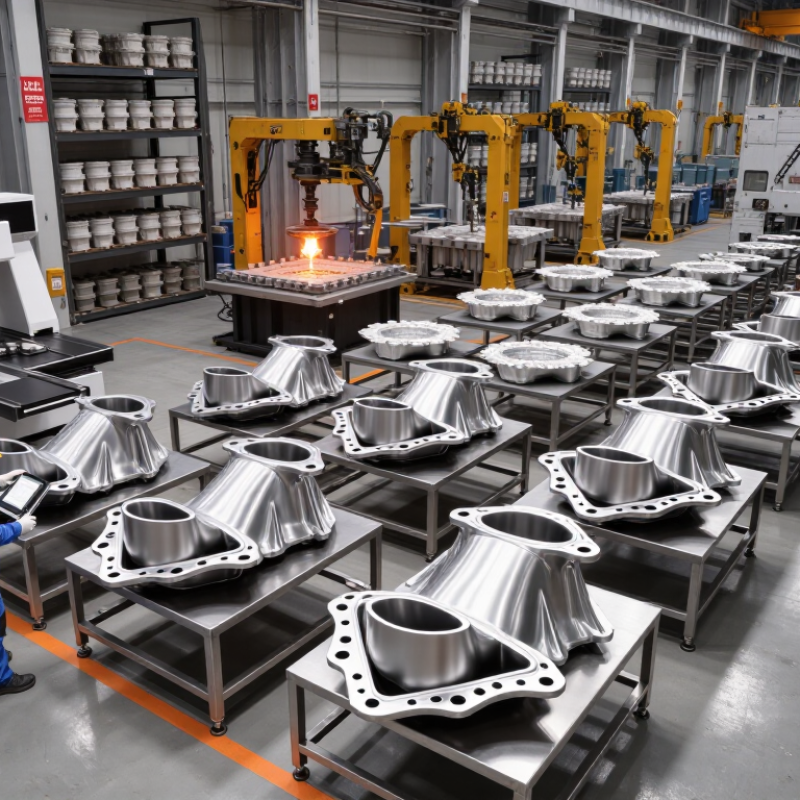
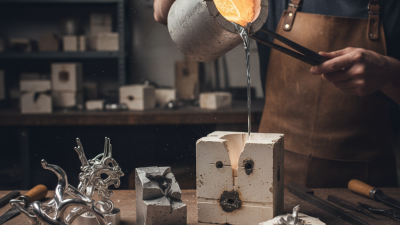
Investment casting aluminum begins with a wax pattern that reproduces the final component. Ceramic slurry and fine sand build a shell around it. After drying, the wax is removed, usually through controlled heating. Molten aluminum then fills the cavity and solidifies into a detailed shape. In production trials, shell temperature strongly affects surface quality and dimensional stability. Small changes matter.
This process suits aerospace brackets, medical housings, industrial valve parts, and lightweight machine components. It can produce thin walls, internal passages, and complex curves with limited machining. Aluminum alloys offer low density, corrosion resistance, and useful thermal conductivity. However, casting performance depends on alloy selection, melt cleanliness, and heat treatment. A visually clean part may still hide porosity. That risk deserves testing.
Global supplier comparisons should examine tooling control, alloy traceability, inspection equipment, and engineering support. Coordinate measurement, X-ray inspection, and tensile testing improve confidence in critical parts. Suppliers with stable shell-making procedures usually provide more consistent batches. Cost alone can mislead buyers. Lower tooling prices may reflect weaker process control or limited technical records. Industry demand is expanding through electric transport, renewable equipment, robotics, and compact automation. The market is broad, but not every supplier handles every geometry equally well. Sample validation remains essential.
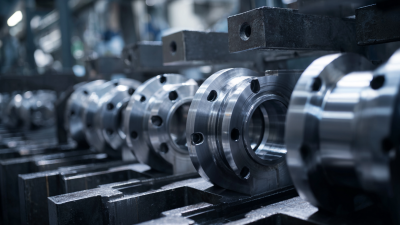
Aluminum investment casting uses wax patterns and ceramic shells to produce complex, lightweight components for aerospace, medical, industrial, automotive, and energy applications. The chart compares typical room-temperature densities of representative cast aluminum alloy grades. Actual values may vary slightly by specification and composition.
Lower-density alloys can support weight reduction, while alloy selection for investment casting also depends on strength, corrosion resistance, heat-treatment response, fluidity, and dimensional requirements.
Top 10 Investment Casting Aluminum Suppliers Worldwide
Ranking global aluminum casting suppliers requires more than comparing prices. Production quality should carry the greatest weight. We would examine dimensional accuracy, alloy consistency, surface finish, and defect rates. ASTM B618 compliance can support a credible evaluation of aluminum investment castings. ISO 9001 certification also indicates a structured quality system, but certification alone proves little. Audited process records matter more.
Capacity and delivery reliability deserve similar attention. The USGS Mineral Commodity Summaries 2025 estimated global primary aluminum production at about 72 million metric tons in 2024. This scale shows strong material availability, yet it does not guarantee casting expertise. Suppliers should disclose furnace capacity, inspection equipment, average lead times, and on-time delivery results. Traceability is essential, especially for aerospace, medical, and industrial components. Environmental performance also matters. The International Aluminium Institute reports that recycled aluminum requires roughly 5% of the energy used for primary aluminum production. However, recycled content must not compromise alloy control.
Tips: Request sample inspection reports, not only brochures. Compare five-year defect data when available. Visit the foundry if possible. A polished website is not proof. Our weighting may still be imperfect; smaller suppliers can outperform larger operations in complex, low-volume work. Customer references should therefore carry measurable evidence, including repeat orders, corrective-action speed, and field performance. Pricing deserves attention, but the lowest quotation can hide weak inspection practices or unstable tooling costs.
| Rank | Supplier Code | Primary Region | Aluminum Alloy Families | Typical Casting Weight | Typical Dimensional Capability | Maximum Component Envelope | Quality Systems | Main Served Sectors | Weighted Score |
|---|---|---|---|---|---|---|---|---|---|
| 1 | Supplier A-01 | North America | Al-Si, Al-Cu, heat-treatable aerospace alloys | 0.05–35 kg | Typically ±0.10–0.25 mm, depending on size | Up to approximately 600 mm | ISO 9001; aerospace-grade quality controls | Aerospace, defense, energy, industrial equipment | 94/100 |
| 2 | Supplier B-02 | Western Europe | Al-Si-Mg, Al-Cu, corrosion-resistant alloys | 0.03–30 kg | Typically ±0.10–0.30 mm | Up to approximately 550 mm | ISO 9001; automotive and aerospace process controls | Automotive, aerospace, robotics, medical equipment | 92/100 |
| 3 | Supplier C-03 | East Asia | Al-Si, Al-Si-Mg, high-strength aluminum alloys | 0.02–25 kg | Typically ±0.12–0.30 mm | Up to approximately 500 mm | ISO 9001; documented inspection and traceability systems | Automotive, electronics, industrial machinery | 90/100 |
| 4 | Supplier D-04 | Central Europe | Al-Si-Mg, Al-Cu, wear-resistant alloys | 0.05–28 kg | Typically ±0.12–0.30 mm | Up to approximately 520 mm | ISO 9001; controlled heat treatment and non-destructive testing | Industrial automation, transportation, energy | 88/100 |
| 5 | Supplier E-05 | South Asia | Al-Si, Al-Si-Mg, general engineering alloys | 0.05–22 kg | Typically ±0.15–0.35 mm | Up to approximately 450 mm | ISO 9001; batch-level material traceability | Industrial equipment, pumps, valves, automotive | 86/100 |
| 6 | Supplier F-06 | North America | Al-Si-Mg, Al-Cu, specialized lightweight alloys | 0.03–20 kg | Typically ±0.15–0.35 mm | Up to approximately 400 mm | ISO 9001; digital process monitoring | Medical devices, robotics, aerospace components | 84/100 |
| 7 | Supplier G-07 | Southern Europe | Al-Si, Al-Si-Mg, heat-treatable alloys | 0.05–18 kg | Typically ±0.15–0.40 mm | Up to approximately 420 mm | ISO 9001; dimensional and metallurgical inspection | Automotive, marine, industrial products | 82/100 |
| 8 | Supplier H-08 | East Asia | Al-Si, Al-Si-Mg, low-porosity casting alloys | 0.02–16 kg | Typically ±0.15–0.40 mm | Up to approximately 380 mm | ISO 9001; in-process inspection and final quality auditing | Consumer equipment, electronics, industrial machinery | 80/100 |
| 9 | Supplier I-09 | Eastern Europe | Al-Si-Mg, Al-Cu, standard engineering alloys | 0.05–15 kg | Typically ±0.20–0.45 mm | Up to approximately 350 mm | ISO 9001; supplier and batch traceability procedures | Industrial machinery, transportation, hardware | 78/100 |
| 10 | Supplier J-10 | Southeast Asia | Al-Si, Al-Si-Mg, general-purpose casting alloys | 0.03–12 kg | Typically ±0.20–0.50 mm | Up to approximately 320 mm | ISO 9001; basic process and final inspection controls | General engineering, pumps, fittings, consumer products | 76/100 |
The ten suppliers profiled here represent different strengths in aluminum investment casting. An aerospace-focused foundry handles thin walls, internal channels, and strict dimensional checks. A medical-equipment specialist emphasizes clean processing and complete material traceability. An automotive supplier supports repeat production with automated wax handling and in-process inspection. An energy-sector foundry produces heat-resistant housings and pressure-related components. A precision pump supplier is known for smooth passages and leak testing. Details matter.
A supplier serving rail equipment focuses on impact resistance and stable machining allowances. Another supports electronic enclosures, using fine surface control for compact assemblies. A tooling-led manufacturer helps customers shorten development cycles through rapid pattern adjustments. A low-volume engineering foundry accepts difficult geometries and frequent design changes. Its engineers often solve problems beside the customer’s production team. That practical contact builds trust.
The tenth supplier combines casting, heat treatment, CNC machining, and inspection under one roof. This reduces transport risk and improves process feedback. Reliable suppliers usually provide alloy certificates, inspection records, sample approvals, and corrective-action reports. They also explain limitations before quoting. That honesty is valuable. Still, no supplier performs perfectly on every alloy or geometry. Some advertised capabilities need independent verification through trial orders, dimensional reports, and long-term delivery records. A strong profile should show evidence, not only polished claims.
The leading investment casting aluminum suppliers are distributed across North America, Europe, and Asia. Their regional strengths differ sharply. North American facilities often support aerospace, defense, and medical programs. They usually provide strict traceability, documented process controls, and close customer communication. European manufacturers commonly serve automotive, energy, and industrial equipment markets. Their plants emphasize engineering precision, material efficiency, and regulatory documentation.
Asian suppliers provide extensive production capacity and competitive tooling support. Several operate near major ports, reducing shipping delays for overseas buyers. Their capabilities may include wax pattern injection, ceramic shell building, vacuum melting, heat treatment, and computer-controlled machining. Some plants manage prototype orders beside high-volume production. That combination can shorten development cycles, but factory workloads may change quickly.
Regional distribution affects more than freight cost. It influences engineering response time, inspection access, tooling maintenance, and supply continuity. Buyers should examine furnace size, monthly output, alloy control, and non-destructive testing methods. On-site audits can reveal practical details, such as floor organization and temperature control. Certification documents help, but they never replace production evidence. Capacity figures can age quickly. No supplier is equally strong everywhere. A facility may deliver excellent castings yet struggle with urgent design changes. Another may offer fast communication but limited machining depth. Careful sampling, dimensional reports, and repeat-order reviews provide more reliable evidence than promotional claims.
Selecting an aluminum investment casting supplier requires more than comparing unit prices.
I would examine process control, not polished sales material. Ask for recent dimensional reports, chemical composition results, and nonconformance records. A capable supplier should explain wax injection, ceramic shell building, melting, heat treatment, and final inspection in plain language. ASTM B26/B26M compliance may support quality, but it does not replace part-specific validation.
Request evidence of traceability from ingot to shipment. Review furnace calibration, alloy verification, and inspection equipment records.
The International Aluminium Institute reports that recycled aluminum requires about 5% of the energy used for primary aluminum production. Therefore, a supplier’s scrap segregation and recycling data deserve attention. Environmental claims should include measurement boundaries. Vague promises are weak evidence.
Check capacity against your actual demand, including prototypes and seasonal peaks.
The U.S. Department of Energy reports that a 10% vehicle weight reduction can improve fuel economy by roughly 6% to 8%, showing why casting accuracy and lightweight design matter. Ask whether the supplier can hold thin walls, complex cavities, and stable tolerances over repeated batches.
Visit the facility if possible. Look at floors, furnace areas, and sample storage. They reveal habits.
A low quote can still be expensive.
I would compare tooling ownership, lead times, yield, rework, packaging, and warranty response. Do not rely on one approved sample. Run a pilot batch and measure it independently.
Some selection decisions remain imperfect, especially when suppliers provide incomplete data. That uncertainty should be recorded, not hidden.