


 +86 180 0293 5268






News
01
How to leverage the advantages of stainless steel investment casting in marine projects?
2026-03-03
Stainless steel castings offer certain durability in marine environments, but their performance varies with different materials. Generally, molybdenum-containing stainless steels, such as 316L, exhibit good corrosion resistance in marine settings. They can form a stable passive film in seawater, resisting chloride ion erosion, making them suitable for manufacturing marine vessel components like propellers and marine valves. These parts maintain excellent performance even under prolonged seawater immersion and wash. Duplex stainless steels also perform outstandingly in marine environments, combining high strength with good corrosion resistance, making them suitable for structural parts on offshore platforms. However, ordinary 304 stainless steel has slightly weaker durability in marine environments and may be prone to pitting corrosion over long-term exposure to seawater. Therefore, when using stainless steel castings in marine environments, it is essential to select materials with better marine corrosion resistance based on specific working conditions and service life requirements, and to adopt appropriate protective measures, such as coatings, to enhance durability.
Stainless steel investment castings play a critical role in marine projects, serving as key structural and functional components. They are widely used in hull main structures, propulsion systems, valves and piping, steering gear components, and core parts of marine equipment. Their high corrosion resistance, strength, and good weldability make them suitable for long-term service in seawater environments. Applications span civilian ships, military vessels, offshore platforms, and specialized engineering ships, with particularly outstanding performance in demanding conditions such as deep-sea operations and ocean voyages.
So, what are the application advantages of stainless steel investment castings in marine and offshore projects? Next, we will analyze from four perspectives:


-
-
1. Corrosion
Resistance: The Core Advantage Against Harsh Marine Environments
Marine environments, characterized by high salinity, humidity, and microbial activity, accelerate metal corrosion. Stainless steel castings (e.g., 316L, duplex stainless steel) enhance corrosion resistance by forming a passive film through elements such as chromium (Cr ≥ 16%) and molybdenum (Mo ≥ 2%). Data show that 316L stainless steel exhibits an annual corrosion rate of less than 0.1 mm in seawater, significantly lower than the 0.5–1 mm rate of carbon steel. Furthermore, duplex stainless steels (e.g., S32205) combine austenitic and ferritic structures, offering higher pitting resistance equivalent (PREN ≥ 35), making them suitable for applications like deep-sea pipelines and desalination equipment. -
2. Mechanical
Performance and Reliability: Meeting Complex Engineering Requirements
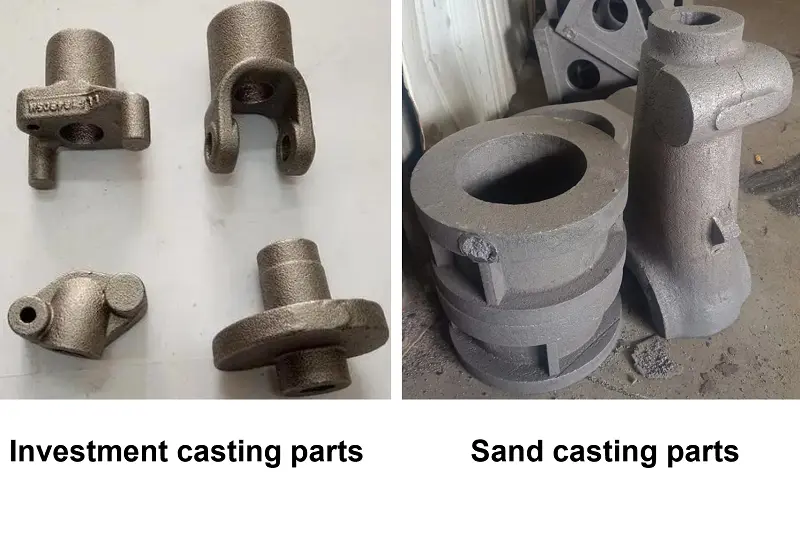
Stainless steel castings achieve tensile strengths of 520–750 MPa, surpassing ordinary carbon steel while maintaining excellent low-temperature toughness, making them ideal for offshore platforms. Precision casting processes ensure high surface finish and dimensional accuracy, effectively reducing media residue and leakage risks. These characteristics directly enhance operational reliability, enabling critical components to maintain long-term sealing in highly corrosive environments. This results in significantly lower maintenance costs due to corrosion, fully meeting the demands of marine projects for complex and demanding components. -
3. Design
Flexibility and Cost-Effectiveness
Through precision casting combined with heat treatment strengthening, complex geometric shapes can be integrally formed, reducing the number of welded joints and improving overall structural reliability while minimizing leakage risks. By controlling grain size and compositional uniformity, the mechanical stability of castings in low-temperature, high-pressure, and corrosive environments is ensured. For example, in seawater pumps, integrally cast impellers are 20% lighter and 8% more efficient than welded counterparts. Although stainless steel castings have a higher initial cost (approximately 2–3 times that of carbon steel), they offer lower lifecycle costs. -
4. Environmental
and Sustainability Advantages
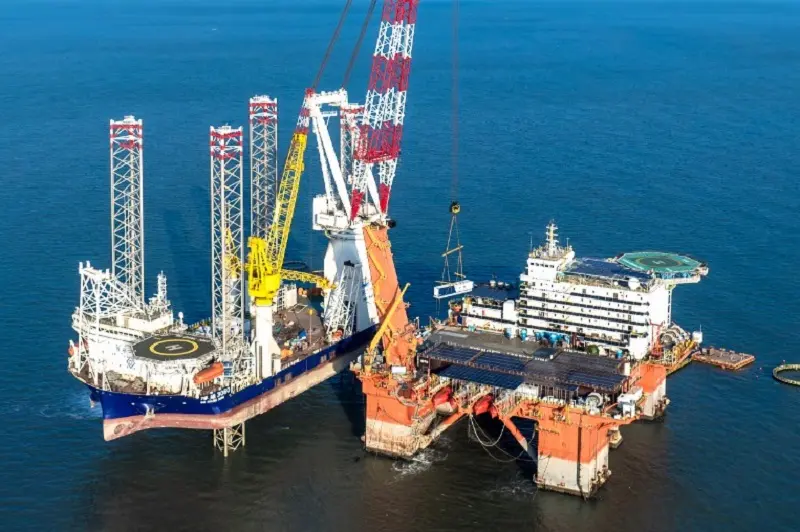
Stainless steel is 100% recyclable, reducing waste and saving costs. For instance, an offshore wind turbine installation vessel utilizing stainless steel castings can reduce maintenance waste by up to 30%.
-
1. Corrosion
Resistance: The Core Advantage Against Harsh Marine Environments
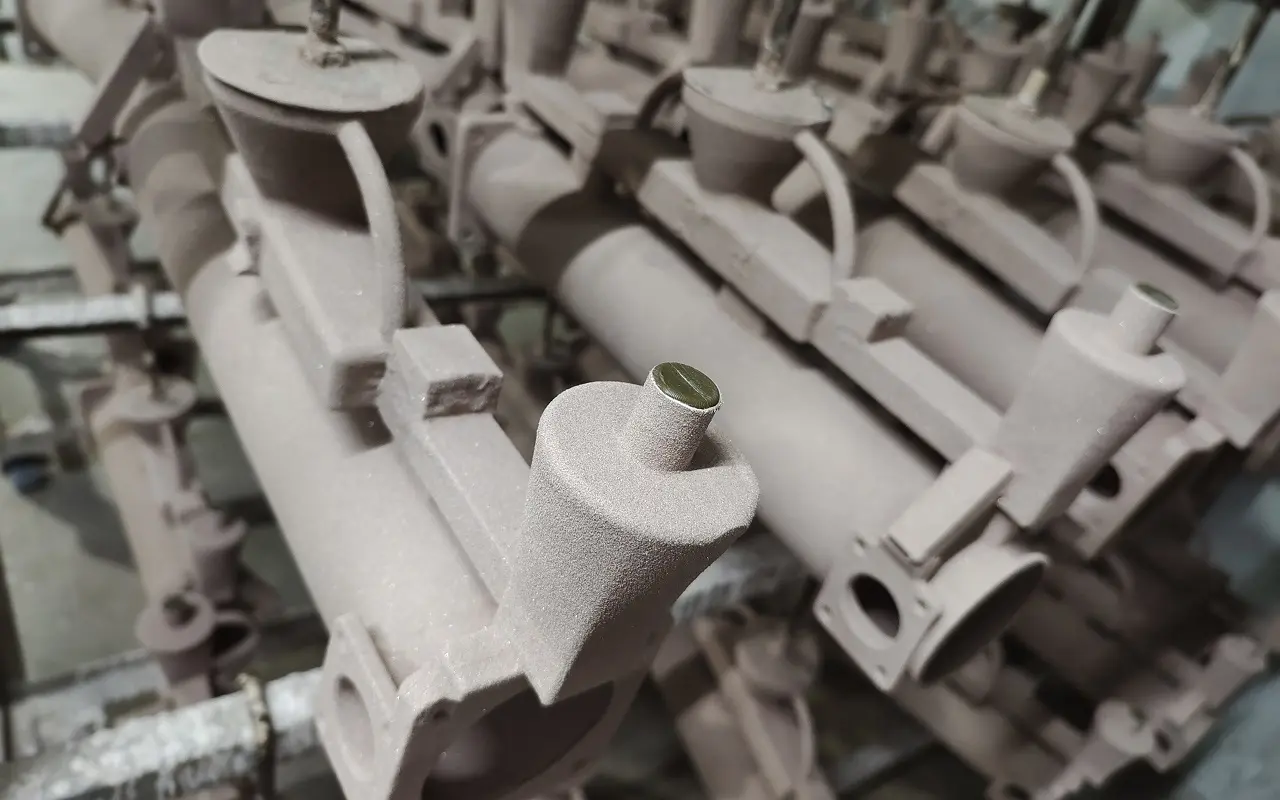
In summary, stainless steel investment castings have become an indispensable choice in marine engineering due to their material properties and process advantages. Stainless steel castings are widely used metal casting products, valued primarily for their excellent corrosion resistance, high strength, and good workability.
First, the corrosion resistance of stainless steel castings enables them to perform reliably over extended periods in various harsh environments. Marine project components, which must operate long-term in demanding marine conditions, align perfectly with this requirement. Additionally, stainless steel castings feature smooth surfaces that are easy to clean and maintain, along with an aesthetically pleasing appearance that meets certain decorative needs. This also satisfies the visual requirements for some components in marine applications.
Finally, stainless steel castings offer excellent workability, allowing the production of complex shapes through precision casting processes to meet diverse application scenarios. This aligns well with the demand for structurally intricate parts in shipbuilding and marine projects.
In conclusion, with their corrosion resistance, high strength, design flexibility, and appealing appearance, stainless steel castings serve as an essential and reliable asset in modern shipbuilding and marine engineering.