2026 Top Types of Steel Casting Parts for Global Buyers
Global buyers are entering 2026 with stricter demands for strength, traceability, and predictable delivery. Steel Casting Parts remain essential in mining, construction, energy, transportation, and heavy machinery. Their shapes can resemble simple blocks, but internal quality often decides service life.
John Campbell, a respected casting researcher and author, stated, “Casting is the only process which can produce a component directly from liquid metal.” This principle explains the process’s flexibility. Large valve bodies, crusher liners, pump casings, and railway components can be produced with fewer assembled joints. However, flexibility does not guarantee reliability. Poor feeding, trapped gas, shrinkage, or uncontrolled heat treatment can weaken a part beneath a clean surface.
This guide examines the top types of Steel Casting Parts expected to attract global purchasing attention in 2026. It considers carbon steel, alloy steel, stainless steel, heat-resistant steel, and wear-resistant grades. Each category serves a different operating environment. Stainless castings resist corrosion around wet process lines. Alloy castings handle impact and cyclic loading. Wear-resistant castings protect surfaces exposed to abrasive stone, sand, or ore.
Practical buying decisions require more than comparing prices. Buyers should review chemical composition, mechanical test results, dimensional reports, non-destructive testing, and heat-treatment records. ISO 9001 certification can support process confidence, but it is not proof of perfect production. That distinction matters.
No ranking fits every project. A cheaper casting may become expensive after premature cracking, machining delays, or replacement downtime. Global buyers should compare the drawing, service conditions, inspection plan, packaging, and supplier experience together. Small details matter. Sometimes, they decide everything.
What Steel Casting Parts Are and Why Global Buyers Choose Them
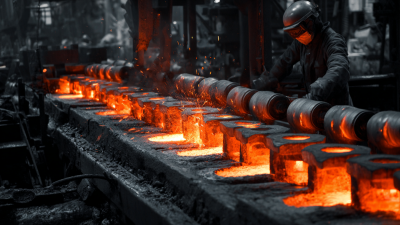
Steel casting parts are components formed by pouring molten steel into a prepared mold.
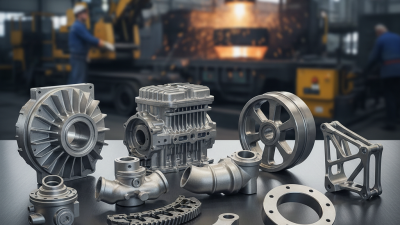
The method creates valve bodies, pump casings, impellers, rail fittings, mining teeth, and structural joints. Complex shapes become possible without assembling many welded pieces. That can reduce leak paths and stress concentrations.
Global buyers choose cast steel for demanding service. Its strength supports heavy loads, while alloy selection improves resistance to impact, heat, and abrasion.
The World Steel Association reported 1.892 billion tonnes of crude steel production in 2023, showing the material’s extensive industrial base. The USGS Mineral Commodity Summaries 2025 also identifies steel as a major foundation for construction, transport, energy, and machinery.
Those figures do not measure castings directly, but they show why steel remains widely available for engineered parts.
Procurement decisions need more than a low quotation.
Buyers often request chemical analysis, heat-treatment records, dimensional reports, and ultrasonic or radiographic testing. ISO 4991:2015 provides guidance for steel castings used under pressure, including inspection expectations.
That matters for a pump casing with a 40-millimeter wall or a railway bracket exposed to repeated shock.
The choice is not automatically right. Casting may require more machining, and poor gating can create internal defects.
Experienced buyers compare design, service conditions, inspection scope, and total lifecycle cost before approving a supplier.
Main Types of Steel Casting Parts by Shape, Function, and Industry
2026 Top Types of Steel Casting Parts for Global Buyers
Main Types of Steel Casting Parts by Shape, Function, and Industry
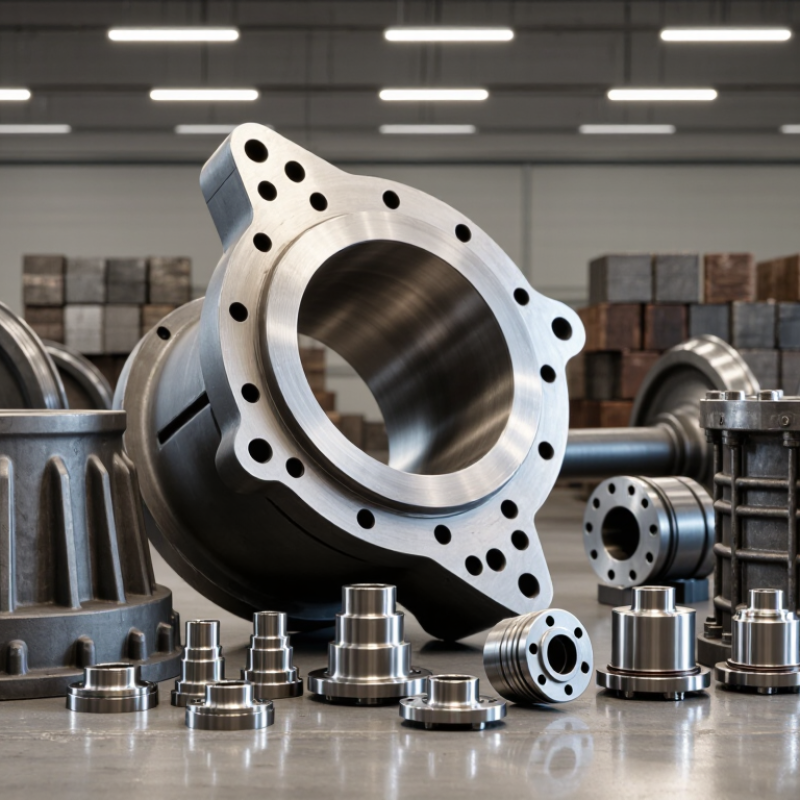
Steel casting parts differ by shape, duty, and operating environment. Common shapes include housings, brackets, impellers, valve bodies, frames, and wear plates. Housing castings protect gears and bearings inside mining equipment. Impellers guide fluids through pumps, while valve bodies control pressure in pipelines. These parts often need sound internal structures and accurately machined sealing surfaces.
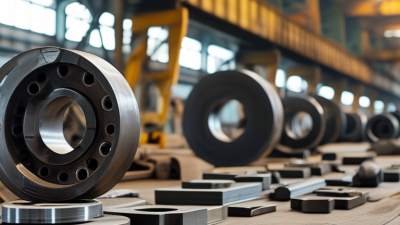
Function usually determines the steel grade and casting method. Heat-resistant castings serve furnaces and power equipment. Abrasion-resistant liners support crushers, chutes, and cement mills. Structural castings carry loads in rail, construction, and heavy machinery. The World Steel Association reported global crude steel production of about 1.88 billion tonnes in 2024. This scale reflects strong demand for durable steel components, although steel volume alone cannot predict casting quality. USGS Mineral Commodity Summaries 2025 also highlights iron and steel as essential industrial materials. Buyers should still verify chemistry, heat treatment, and inspection records.
Tips: Match the part to its failure mode. Check impact, abrasion, corrosion, and temperature exposure. Request dimensional reports and non-destructive testing for critical sections. A larger casting is not automatically stronger. Poor feeding can leave shrinkage inside thick hubs. This detail is easy to miss. Supplier experience, process control, and traceability deserve equal attention. Regional standards may also differ, so drawings should define material grades, tolerances, and acceptance criteria clearly.
2026 Top Types of Steel Casting Parts for Global Buyers
Main types of steel casting parts by shape, function, and industry
This chart compares representative steel casting part families by the specified minimum tensile strength of commonly used ASTM cast-steel grades. Valve bodies and bonnets are widely used in oil, gas, power, and process equipment; pump casings and impellers support fluid-handling systems; turbine casings serve power-generation equipment; and low-temperature valve bodies are designed for cryogenic or cold-service applications. The values are engineering grade minimums, not market-share estimates.
Source basis: ASTM A216, ASTM A217, and ASTM A352 grade requirements. Tensile-strength values shown in MPa and converted from ksi using 1 ksi = 6.895 MPa.
Key Materials and Grades Used in Steel Casting Components
Steel casting components serve demanding applications, from valve bodies to pump casings and structural machinery parts. Material selection affects strength, corrosion resistance, weldability, and service life. In practical sourcing, the grade should match the working temperature, pressure, fluid, and casting size.
Carbon steel grades remain widely used for economical, general-purpose components. ASTM A216 WCB suits many pressure-bearing castings, while ASTM A27 supports less demanding mechanical parts. For elevated temperatures, low-alloy grades such as ASTM A217 WC6 and WC9 offer improved resistance to heat and creep. They require controlled heat treatment. Small differences matter.
Stainless steel castings provide stronger protection against moisture, chemicals, and process fluids. CF8M is commonly selected for corrosion-resistant parts, while CF3M offers lower carbon content and better weldability. CA6NM can serve applications needing high strength and moderate corrosion resistance. Duplex grades may improve strength and chloride resistance, but their processing demands are higher.
A grade name alone is not enough. Buyers should verify chemical composition, tensile results, impact values, heat-treatment records, and dimensional reports. Visual inspection may reveal shrinkage, but it cannot confirm internal soundness. Radiographic or ultrasonic testing may be necessary. Standards also vary by market, and equivalent grades are not always identical.
This is where specifications can become unclear. A careful review with the foundry can prevent an expensive mismatch.
How Global Buyers Select Reliable Steel Casting Suppliers
In 2026, global buyers are sourcing steel casting parts for valve bodies, pump casings, impellers, brackets, and heavy equipment frames. Each part demands different control over strength, wear resistance, wall thickness, and machining allowance. A reliable supplier should explain these differences clearly, not offer one material for every application.
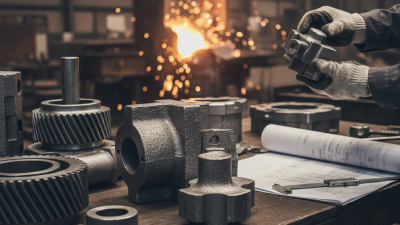
Ask for material certificates, heat-treatment records, and batch traceability. The supplier should also provide casting simulations or practical process notes for complex geometries. Check how workers inspect risers, surface defects, dimensions, and internal porosity.
Non-destructive testing, such as ultrasonic or magnetic particle inspection, can reveal problems hidden beneath a smooth surface. Request sample reports with actual values. Generic promises are weak evidence.
Visit the foundry when possible. Look at furnace records, pattern storage, machining equipment, and inspection areas. Ask how rejected castings are identified and separated. Communication matters too. A dependable supplier confirms drawing revisions, tolerances, packaging details, and delivery risks in writing. No supplier is perfect. Even experienced teams can misread a tolerance or underestimate shrinkage. That is why pilot orders and pre-shipment inspections remain valuable. A low quotation may look attractive, but repeated repairs, delayed tooling, or inconsistent hardness can cost much more. Some buyers focus too heavily on price. That mistake deserves review. Reliability is visible in records, process discipline, and honest responses when something goes wrong.



 +86 180 0293 5268