10 High Precision Casting Tips for Optimal Results in Manufacturing
High Precision Casting plays a crucial role in modern manufacturing. It ensures that components meet strict tolerances and precise specifications. In an industry where quality is paramount, achieving optimal results means understanding the nuances of the casting process. This requires both technical knowledge and practical experience.
Many factors can influence the success of High Precision Casting. These include material selection, mold design, and temperature control. Manufacturers need to be aware of the small details that can make a big difference. A minor error in any stage of the casting process can lead to defects. Each casting challenge offers an opportunity to refine methods and improve outcomes.
The journey toward mastering High Precision Casting is ongoing. Continuous learning and adaptation are necessary for staying ahead. By implementing effective tips and best practices, manufacturers can enhance their casting quality. This article aims to share valuable insights for achieving better precision and efficiency in your casting endeavors.
Understanding High Precision Casting in Manufacturing
High precision casting plays a pivotal role in manufacturing. This technique involves creating intricate shapes with high dimensional accuracy. The process requires a meticulous approach to ensure the final product meets exact specifications. Materials used in precision casting must be selected carefully. The wrong material can lead to defects, impacting the entire production line.
Understanding the parameters for high precision casting is crucial. Factors like temperature control, mold design, and cooling rates influence the outcome significantly. Maintaining optimal conditions can be challenging but is vital for achieving desired results. Manufacturers often face issues, such as shrinkage or misalignment, which need addressing. Regular audits of casting processes can identify areas for improvement.
In essence, high precision casting requires both expertise and attention to detail. While the process has evolved, imperfections still occur. Analyzing past projects allows for better strategies in future castings. Continuous learning and adaptation are essential for mastering this complex field. The pursuit of perfection in casting is ongoing, demanding both creativity and technical skill.
Key Factors Affecting Precision in Casting Processes
Precision in casting processes is influenced by several key factors.
Temperature control is critical. The melting point of the material must be closely monitored to avoid defects.
A 2021 industry report indicated that temperature variations can lead to a 30% increase in porosity levels.
This highlights the need for careful calibration during the casting process.
Another crucial factor is mold design. Poorly designed molds can result in irregular shapes or incomplete fills.
Research has shown that optimizing mold geometry can enhance accuracy by up to 25%.
Skilled technicians are essential in this phase. Their expertise can make a marked difference in achieving desired tolerances.
Consistently evaluating mold conditions is vital. Regular maintenance can prevent issues that arise from wear and tear.
Additionally, the quality of raw materials plays a significant role. Impurities can compromise the integrity of the final product.
An industry survey revealed that 20% of defects traced back to substandard materials.
Monitoring supplier performance is necessary. Inspections and certifications help ensure compliance with industry standards.
These aspects, if overlooked, can have a profound impact on production outcomes.
Best Materials for High Precision Casting Applications
High precision casting is essential in various manufacturing sectors, including aerospace, automotive, and medical equipment. Selecting the right materials significantly affects the final product’s quality and performance. Aluminum alloys, for instance, are known for their lightweight properties and excellent durability. According to a report by the American Foundry Society, aluminum castings reduce weight by up to 50%, which can lead to improved fuel efficiency in vehicles.
Steel is another popular choice for high precision casting. It offers superior strength and resistance to deformation. Data from the International Journal of Advanced Manufacturing Technology shows that steel castings can withstand extreme temperatures and pressures, making them ideal for critical applications in machinery. However, challenges remain in terms of production costs and time. Finding the right balance between material properties and manufacturing efficiency is often difficult.
Investing in advanced processes like investment casting or die casting can enhance precision but may increase initial costs. A report by the National Institute of Standards and Technology highlights that using advanced CAD software and simulation tools can reduce defects by nearly 30%. Nevertheless, achieving optimal results requires constant refinement and learning from mistakes, creating a continuous improvement cycle in manufacturing.
Techniques to Enhance Precision in Casting Operations
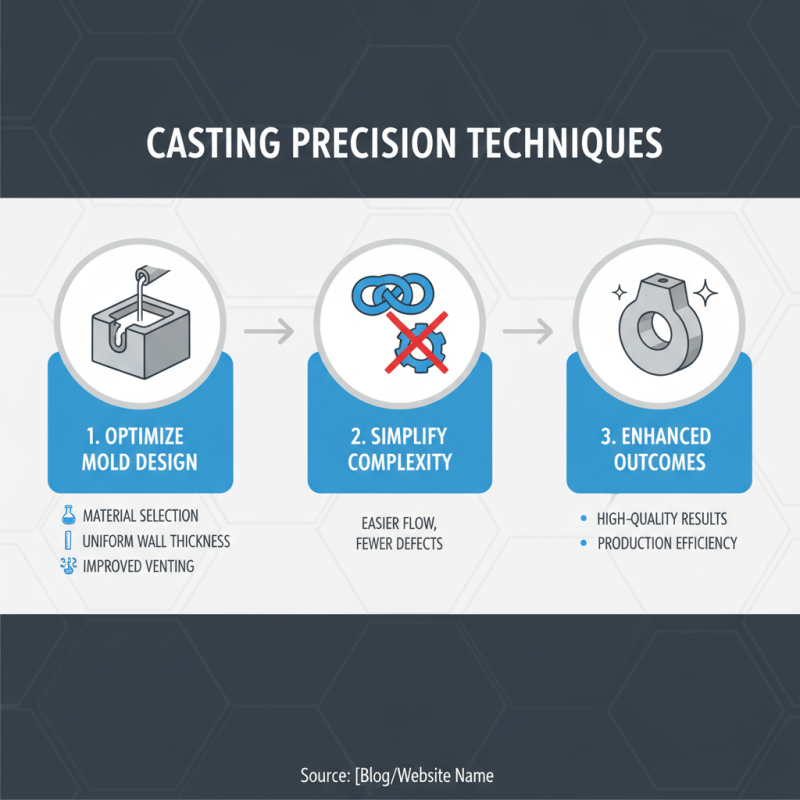
Precision in casting operations is crucial for achieving high-quality results. One technique is to optimize mold design. This includes considering materials, wall thickness, and venting. A well-designed mold ensures uniform flow and minimizes defects. Often, designs are overly complex. Simplifying them can enhance functionality and production efficiency.
Another effective method is to monitor temperature closely. Maintaining the right temperature during the melting process is vital. Inconsistent temperatures can lead to defects such as porosity. It's beneficial to use thermal imaging. This provides real-time feedback, allowing adjustments to be made quickly.
Additionally, proper training for staff is essential. Skilled operators can identify issues more easily during casting. In many cases, operators may skip routine checks, thinking they are unnecessary. Regular training sessions can remind them of their importance. Engaging teams in problem-solving fosters a culture of quality. Small improvements in daily operations lead to significant results over time.
Quality Control Measures for Optimal Casting Results
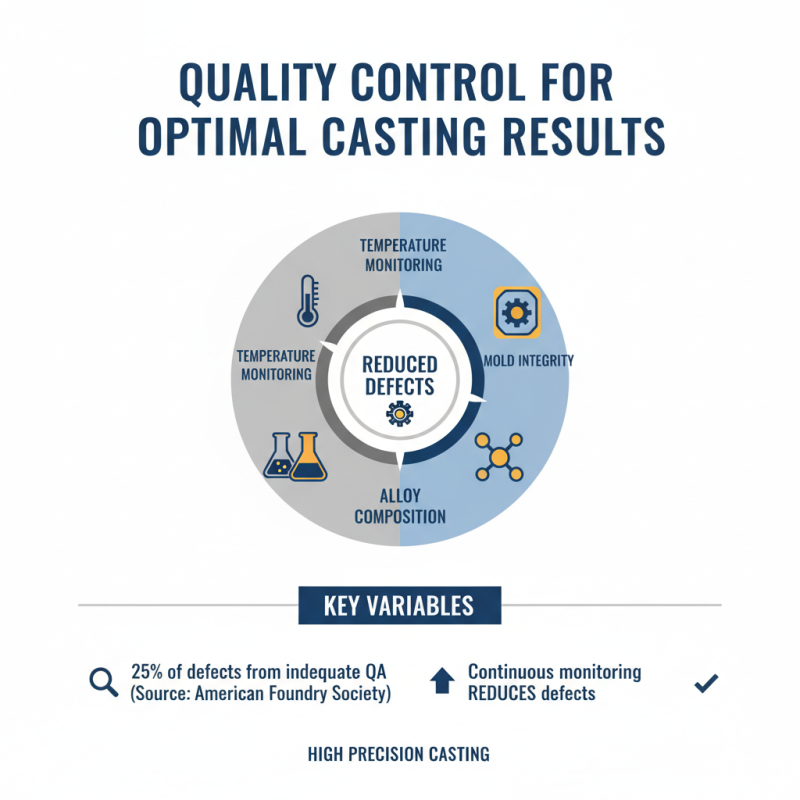
In high precision casting, quality control is paramount. A study by the American Foundry Society reveals that about 25% of casting defects arise from inadequate quality assurance measures. Monitoring variables during the casting process can greatly reduce these defects. This includes temperature, mold integrity, and alloy composition.
Regular inspections and proactive measures can enhance overall outcomes. Implementing radiographic inspection techniques can identify internal defects before they escalate. A report from the Metal Casting Industry states that employing these techniques can improve casting yield by 10%. Accurate measurements are vital; deviations can lead to significant quality loss.
Continuous training for staff on quality control procedures is essential. Many companies fall short in this area, leading to costly rework. According to the National Institute of Standards and Technology, up to 15% of manufacturing costs can stem from quality issues. Reflecting on these data points emphasizes the need for diligent quality control in casting processes.



 +86 180 0293 5268
 CONTACT Shixin
 CONTACT Shixin
 CONTACT Shixin