What Is Investment Casting Steel and How Is It Used?
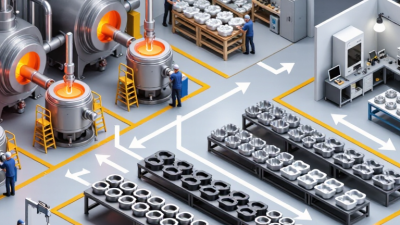
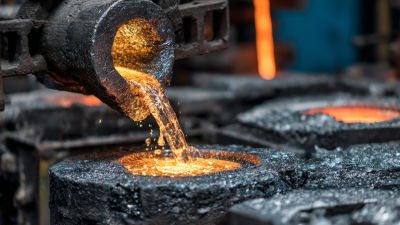
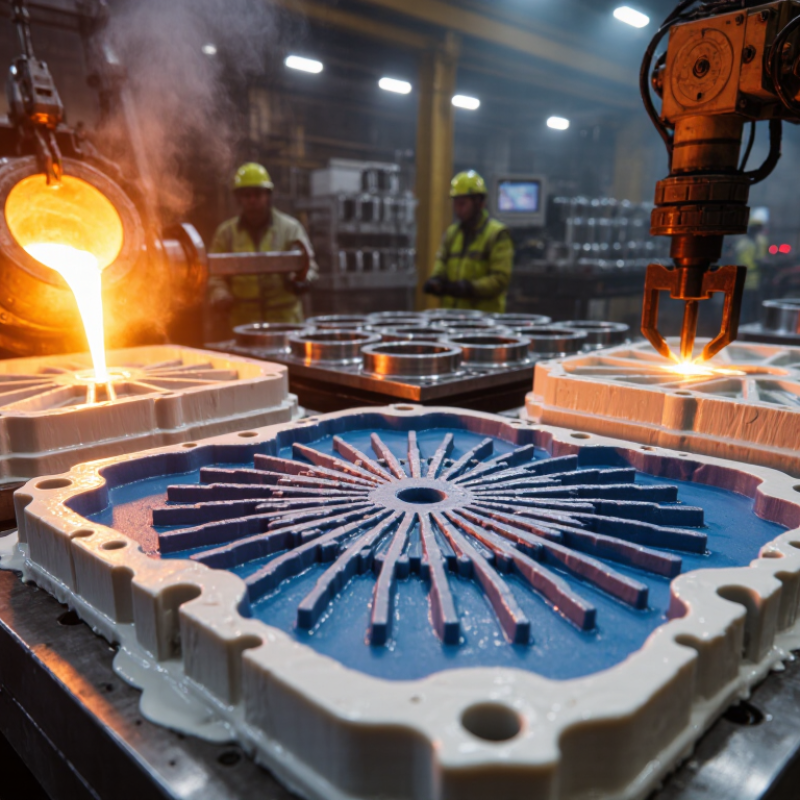
Investment Casting Steel is a precision alloy material shaped through the lost-wax casting process. Manufacturers create a wax pattern, surround it with ceramic slurry, and heat the mold until the wax drains away. Molten steel then fills the empty cavity, reproducing complex details with impressive accuracy. This method supports thin walls, curved passages, and integrated features that may require several operations when produced from solid stock. The result can reduce machining time, material waste, and assembly work.
Its value appears across aerospace, energy, medical equipment, automotive, and industrial machinery applications. Engineers select stainless, carbon, or alloy steel according to strength, corrosion resistance, temperature, and wear requirements. A pump impeller, for example, may leave the foundry with carefully formed blades and a smoother flow path. However, investment casting is not automatically the best choice. Ceramic shell quality, shrinkage control, pouring temperature, and heat treatment strongly affect the final component. Small defects can remain hidden without suitable inspection.
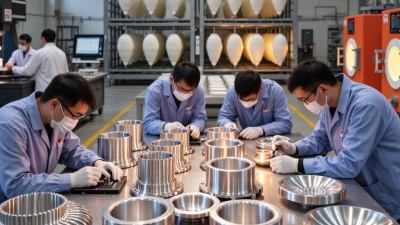
Experienced suppliers typically use dimensional checks, visual examination, hardness testing, and nondestructive testing when specifications demand it. Still, design assumptions need questioning. A drawing may appear practical but create weak sections or difficult shell removal. Good results depend on cooperation among designers, foundries, inspectors, and end users. This guide explains how Investment Casting Steel is made, where it performs well, and what limitations should influence material and process decisions. Real production varies. That matters.
Definition and Core Characteristics of Investment Casting Steel
Investment casting steel is steel shaped through a ceramic mold formed around a disposable wax pattern. The wax melts away, leaving a detailed cavity for molten steel. This method supports thin walls, complex curves, and near-net-shape components. Less machining is often required.
Its core characteristics come from alloy chemistry and controlled solidification. Carbon steel offers strength at a practical cost. Low-alloy steel improves toughness and wear resistance. Stainless steel supports corrosion resistance in damp or chemically aggressive settings. Engineers still need to check tensile strength, elongation, hardness, shrinkage, and heat-treatment response. Small chemistry changes matter.
A 2023 Grand View Research assessment valued the global investment casting market at roughly USD 17 billion in 2022. The report also projected continued growth through 2030, driven by aerospace, medical, energy, and industrial equipment demand. These figures suggest expanding use, not automatic quality. In production, ceramic shell cracking, gas porosity, and dimensional variation can still occur. My practical view is simple: investment casting steel is precise, but never magically perfect. Wax temperature, shell drying, pouring temperature, and inspection discipline decide the final result. A component may look smooth while hiding internal defects. Radiographic or ultrasonic testing may therefore be necessary for safety-critical parts.
How the Investment Casting Process Works Step by Step
Investment casting steel begins with a detailed wax pattern. Engineers usually create it by injecting wax into a reusable metal die. The pattern must capture thin walls, sharp edges, and internal channels. Small defects here often become expensive defects later.
Workers attach wax patterns to a runner system, forming a tree-like cluster. They dip this cluster into ceramic slurry, then coat it with fine refractory sand. Several layers build a hard shell. The Investment Casting Institute’s process guidance notes that shell strength depends on slurry control, drying time, and ceramic grain size. These variables are easy to underestimate.
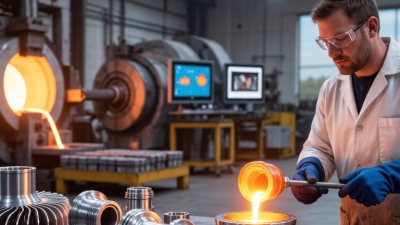
After drying, the shell enters an autoclave or flash-dewaxing unit. Heat removes the wax and leaves a hollow mold. The shell is then fired, commonly above 1,000°C, to improve strength and remove moisture. Molten steel fills the heated cavity under controlled pouring conditions. Operators monitor temperature, turbulence, and solidification. The U.S. Geological Survey reported global crude steel production at about 1.89 billion tonnes in 2023, showing the scale of steel use behind these specialized castings. Yet investment casting serves precision needs, not simply volume.
Once cooled, workers break away the ceramic shell and cut off the parts. Heat treatment can improve strength and toughness. Machining may finish holes or mating surfaces. Inspection commonly includes dimensional checks, dye penetrant testing, radiography, or ultrasonic testing. ISO 8062-3 provides casting-tolerance guidance, but real results still depend on geometry and process discipline. The honest weakness is shrinkage risk. A beautiful surface can hide internal porosity.
Common Steel Alloys Used in Investment Casting
Investment casting steel is poured into a detailed ceramic mold, producing components with complex shapes and smooth surfaces. The process suits valves, pump bodies, medical tools, and aerospace fittings. However, alloy selection controls much more than final appearance. It affects strength, corrosion resistance, heat treatment, machining, and service life.
Common carbon steels, such as low-carbon and medium-carbon grades, offer balanced strength and reasonable cost. Low-carbon steel is easier to weld and suits brackets, housings, and general structural parts. Medium-carbon steel can achieve higher hardness after heat treatment, but it may lose toughness if processed poorly. Stainless steel grades containing chromium resist moisture and many chemicals. Austenitic grades are valued for corrosion resistance and ductility, while precipitation-hardening stainless steel provides higher strength after aging. That added strength requires stricter heat-treatment control.
Low-alloy steels can improve wear resistance and fatigue performance through additions of elements such as nickel, chromium, or molybdenum. They often serve in gears, shafts, and high-load mechanical parts. Tool steels are harder, but their cost and casting complexity can limit practical use. No alloy is perfect. A stronger grade may machine poorly, while a corrosion-resistant grade may be too soft for impact loading. In real production, engineers compare load, temperature, fluid exposure, tolerances, and heat-treatment capability before approving a specification. A small chemistry change can alter casting quality, so test coupons and inspection records remain important.
Key Applications Across Industrial Manufacturing
Investment casting steel is shaped around a disposable wax pattern and a ceramic mold. The result captures fine edges, narrow passages, and complex curves with limited machining. This matters when industrial parts must fit tightly inside crowded assemblies. Engineers commonly select stainless or alloy steel for strength, heat resistance, and corrosion control. In production reviews, mold design often determines success more than material choice. Small errors can still create distortion.
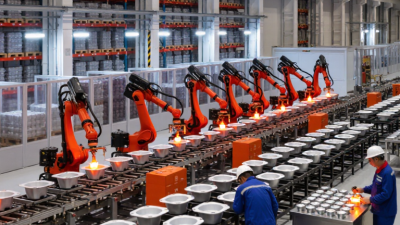
Across industrial manufacturing, investment cast steel supports pump housings, valve bodies, impellers, and flow-control components. These parts may handle hot water, chemical mixtures, or abrasive fluids. Energy equipment uses cast steel fittings near turbines and pressure systems. Transport machinery benefits from lightweight brackets with reinforced corners. Medical and laboratory equipment also uses small steel components requiring clean surfaces and repeatable dimensions. Robotic tooling uses them for compact grippers and joint supports. The process saves assembly steps, but inspection remains essential.
Tips: Confirm wall thickness before tooling begins. Keep drainage paths practical. Request dimensional checks after heat treatment. Review surface finish requirements with the foundry. A beautiful prototype can still fail during repeated loading. Leave room for honest design changes. That is often cheaper than repairing a mature production line.
Advantages and Limitations of Investment Casting Steel
What Is Investment Casting Steel and How Is It Used?
Advantages and Limitations of Investment Casting Steel
Investment casting steel produces complex components from a disposable wax pattern and ceramic shell. It can form thin walls, internal passages, and sharp details with limited machining. In controlled production, dimensional tolerances near ±0.1 millimeter may be achievable, although geometry and alloy selection affect results. A 2024 market report from Grand View Research estimated the global investment casting market at about USD 16.5 billion in 2023, with growth projected near 4.8% annually through 2030.
The main advantage is design freedom. Stainless and heat-resistant steels can support valve bodies, turbine components, pump parts, and medical instruments. ASTM A743/A743M provides requirements for several corrosion-resistant steel castings, helping engineers specify chemistry and mechanical performance. Smooth surfaces can also reduce finishing work. Clean surfaces matter.
The limitations deserve equal attention. Tooling costs are higher than sand casting, and wax pattern production adds time before metal reaches the mold. Ceramic shells may crack, causing inclusions, misruns, or dimensional variation. Large steel parts are especially difficult because filling and solidification become less predictable. I would not call the process economical for every batch size. Small quantities can lose the cost advantage quickly. Some design teams also underestimate post-casting inspection, heat treatment, and machining. That assumption needs review.
What Is Investment Casting Steel and How Is It Used?
Investment casting produces detailed steel components by forming a disposable wax pattern, building a ceramic shell, melting out the wax, and pouring molten steel into the mold. It is used for valves, pump parts, aerospace components, medical instruments, and other complex shapes.
The chart shows representative minimum ultimate tensile strengths specified for commonly used cast stainless steel grades in ASTM material specifications: CF8, CF8M, CB7Cu-1, and CA6NM. Investment casting offers excellent shape complexity, dimensional detail, and reduced machining, but tooling costs, size limitations, ceramic-shell handling, and slower production cycles can limit its use for very large or high-volume parts. Actual performance depends on heat treatment, section thickness, casting quality, and the applicable specification.



 +86 180 0293 5268
 CONTACT Shixin
 CONTACT Shixin
 CONTACT Shixin