+86 180 0293 5268


Cnc Milling Parts are no longer purchased on price alone. Global buyers now evaluate dimensional accuracy, material traceability, delivery stability, and supplier communication. The International Federation of Robotics reported 541,302 industrial robots installed worldwide in 2023, showing how quickly manufacturers are automating production. This shift increases demand for precisely machined components that fit automated lines without repeated adjustment.
The 2025 Deloitte Global Automotive Supplier Study also highlights continued pressure on suppliers to improve resilience, cost control, and digital visibility. These pressures affect aerospace, medical equipment, electronics, energy, and industrial machinery buyers. A capable supplier should provide clear drawings review, documented process controls, inspection records, and realistic lead times. ISO 9001 certification is useful, but it should not replace evidence from coordinate measuring machines, first-article inspection, and batch-level material certificates.
Details matter.
A reliable supplier can explain its tolerance strategy, surface-finish methods, tool-life monitoring, and response plan for nonconforming parts. Buyers should also verify machining capacity, export experience, packaging standards, and communication across time zones. Reports from the World Economic Forum consistently identify supply-chain visibility and advanced manufacturing as major competitiveness factors. Yet no supplier ranking is flawless. Factory claims may look impressive online, while production evidence remains limited. This guide, “2026 Best CNC Milling Parts Suppliers for Global Buyers,” therefore focuses on verifiable capability rather than attractive marketing. It compares technical expertise, quality systems, customization support, pricing transparency, production experience, and after-sales reliability, helping purchasing teams make a more informed and defensible decision.
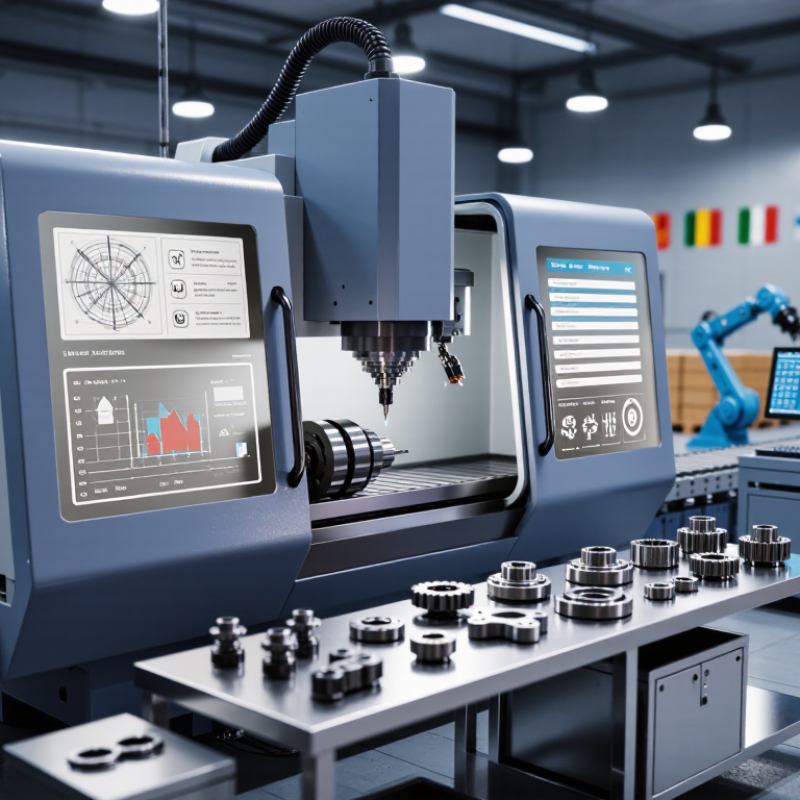
In 2026, a reliable CNC milling parts supplier proves capability through repeatable evidence, not polished promises. Experienced buyers examine material certificates, machine lists, tolerance records, and inspection reports before approving production. A supplier should explain how it holds ±0.01 mm tolerances, where variation begins, and how operators respond. Clear answers matter more than impressive equipment photos. Short trial runs reveal practical skill. Do dimensions remain stable after several hundred parts? Do tool wear and coolant changes appear in the records? These details expose process control.
Professional suppliers connect engineering, quality, and logistics from the quotation stage. They review drawings for unrealistic radii, thin walls, datum conflicts, and difficult surface finishes. They confirm alloy, hardness, coating, packaging, and revision status in writing. Coordinate measuring machines, calibrated gauges, and first-article reports support credible decisions. Traceability should follow each batch from incoming material to final inspection. Secure file handling also matters when buyers share proprietary designs. Reliability includes honest delivery dates, backup capacity, and prompt notice when risks appear. Silence is expensive.
Global buyers should test communication under pressure, not only during a smooth inquiry. Ask for a corrective-action report after a sample defect. The response shows maturity. Still, no supplier is perfect. I have seen excellent parts delayed by weak packing or unclear customs documents. That weakness deserves attention, not excuses. A dependable partner learns from nonconformities, documents the change, and checks whether the fix actually worked. Price remains relevant, but a low quote means little when rework, rejected batches, or missed assembly windows consume the savings.
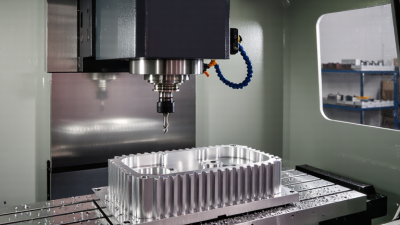
Choosing CNC milling parts suppliers requires more than comparing hourly rates. Global buyers should examine machining experience, process control, and evidence from completed production work. Ask for sample inspection reports, tolerance records, and material certificates before approving a supplier. Clear evidence matters.
A capable manufacturer should explain its machine range, including axis configuration, spindle capacity, and workable part dimensions. Confirm whether the supplier handles aluminum, stainless steel, engineering plastics, or harder alloys consistently. Review its quality system, calibration schedule, and use of coordinate measuring equipment. A good inspection report should show actual measurements, not only a pass statement.
Communication also affects manufacturing risk. Reliable suppliers provide drawings with marked tolerances, realistic lead times, and written answers to technical questions. Check how they manage engineering changes, surface finishing, packaging, and export documentation. Low pricing can hide extra costs from rework, damaged edges, or unclear shipping terms. Ask about production capacity during peak periods, because a small trial order may not reveal scheduling problems. This is where many comparisons become incomplete. A supplier may have excellent equipment but weak follow-up. Request a pilot batch, inspect several pieces, and compare consistency across the entire shipment. Teeth of a gear, a thin wall, or a deep pocket can expose weaknesses that a simple sample will miss. Reliability is proven through repeatable results, not polished promises.
In 2026, CNC milling buyers will compare regions as carefully as suppliers. Asia-Pacific remains the largest manufacturing base, supported by dense machining clusters and competitive production costs. Fortune Business Insights valued the global CNC machine market at about USD 88 billion in 2023. Its forecast also indicates steady growth through 2032. The figures vary between reports, so buyers should treat forecasts as directional, not absolute.
China, Japan, South Korea, and India offer broad supplier networks, from high-volume workshops to export-focused contract manufacturers. Europe is stronger in complex, tightly controlled components for aerospace, energy, and medical equipment. North America often suits rapid prototyping, low-volume production, and closer engineering communication. Travel distance still matters. A cheaper quote can lose value through freight, customs delays, or repeated sample revisions.
Supplier type matters as much as location. Integrated machine shops usually provide milling, finishing, inspection, and assembly under one quality system. Specialized workshops may deliver better results for five-axis parts, hardened steel, or miniature components. Sourcing platforms can widen access, but their quality depends on supplier audits and drawing control. ISO’s 2022 manufacturing data shows continuing concentration in major industrial economies, yet capacity alone does not prove reliability. A practical review should examine inspection records, material certificates, machine age, and first-article samples. I would not trust a polished website without measurable evidence. That remains an uncomfortable gap in many supplier evaluations.
Choosing CNC milling parts suppliers in 2026 requires more than comparing hourly rates. Global buyers should examine machining quality, material control, tolerances, and production capacity together. A clean surface is useful, but it does not prove dimensional stability. Request inspection reports, calibrated equipment records, and traceable material certificates for every critical order.
Material selection affects machining behavior and final performance. Aluminum machines quickly, while stainless steel demands stronger tooling and careful heat management. Engineering plastics may need support to prevent distortion. Experienced suppliers should explain these risks before production begins. Ask how they control burrs, tool wear, surface roughness, and internal stress. Small details matter.
Tolerance claims need practical evidence. A supplier may advertise tight limits, yet actual results can change across batches. Confirm datum references, measurement methods, and sampling frequency. Coordinate measuring machines, thread gauges, and in-process checks can improve reliability. Production capability also matters. A workshop suited to ten prototypes may struggle with ten thousand parts. Check machine capacity, backup equipment, lead times, and corrective-action records.
I have seen attractive first articles hide weak process control. That deserves reflection. A lower quote can become expensive after rework, delayed assembly, or rejected material. Strong suppliers communicate limitations clearly, even when the answer is inconvenient. Their quotations should identify tolerances, finishes, materials, packaging, and inspection scope without vague promises. Consistent records build more trust than confident sales language.
Anonymous supplier capability benchmark for international sourcing and technical prequalification
| Supplier Profile | Typical Manufacturing Region | Core Materials | Typical Milling Capability | Tolerances | Surface Finishing | Production Volume | Quality Documentation |
|---|---|---|---|---|---|---|---|
| Profile A High-volume production partner |
East Asia and Southeast Asia | Aluminum 6061 Aluminum 7075 Brass Stainless steel | 3-axis to 5-axis CNC milling; automated workholding; repeat production of prismatic parts and housings | Standard: ±0.05 mm Precision features: approximately ±0.01–0.02 mm when specified and verified |
Anodizing, powder coating, electroless nickel plating, passivation, bead blasting, polishing | From pilot lots of 10–50 parts to production runs above 10,000 parts | Dimensional inspection report, material certificate, first-article report, process capability data on request |
| Profile B Precision engineering specialist |
Central Europe and Western Europe | Tool steel Stainless steel Titanium Engineering plastics | 3-axis, 4-axis and simultaneous 5-axis machining; tight-feature work for medical, automation and aerospace applications | Standard: ±0.02–0.05 mm Critical dimensions may be controlled to approximately ±0.01 mm after process validation |
Passivation, heat treatment, PVD coating coordination, grinding, polishing and controlled deburring | Prototype quantities from 1–20 parts; low- to medium-volume production up to approximately 5,000 parts | Full material traceability, CMM report, inspection plan, nonconformance report and lot identification |
| Profile C Rapid prototyping supplier |
North America, Europe and Asia-Pacific | Aluminum alloys ABS and POM Nylon Brass | Fast-turn 3-axis and 5-axis milling for prototypes, fit checks, engineering validation and early-stage assemblies | Typical prototype tolerance: ±0.05–0. zehn mm depending on material, geometry and part size | As-machined, bead blasted, anodized, painted, polished and basic chemical finishing | 1–100 parts, with expedited schedules commonly available for simple geometries | Basic dimensional report, material declaration, photographs and inspection of customer-designated features |
| Profile D Certified aerospace-capable supplier |
North America and Europe | Aluminum 2024 Aluminum 7075 Titanium Nickel alloys | Multi-axis machining of lightweight structural parts, brackets, manifolds and complex contoured components | Standard: ±0.025–0.05 mm Critical dimensions are controlled according to drawing, datum scheme and inspection plan |
Alodine-type chemical conversion, anodizing, passivation, shot peening and approved external processing | Prototype, qualification and recurring batches from 10 to approximately 2,000 parts | Material and process traceability, CMM inspection, first-article inspection, calibration records and controlled revision history |
| Profile E Cost-efficient industrial supplier |
South Asia and Southeast Asia | Mild steel Stainless steel Aluminum Acetal | 3-axis and 4-axis milling for industrial equipment, fixtures, brackets, shafts and general mechanical parts | Common production tolerance: ±0.05–0.10 mm Tighter tolerances require additional inspection and process controls |
Zinc plating, black oxide, powder coating, anodizing, passivation and external heat treatment | Small batches from 20 parts to medium-volume orders of approximately 10,000 parts | Material certificate, sampling inspection report, basic gauge records and final visual inspection |
| Profile F Complex-part 5-axis specialist |
Europe, North America and advanced Asian manufacturing hubs | Titanium Inconel Stainless steel Aluminum | Simultaneous 5-axis milling for impellers, medical components, deep cavities, thin walls and complex freeform surfaces | Typical general tolerance: ±0.02–0.05 mm Surface profile and positional accuracy depend on geometry and inspection method |
Polishing, vibratory finishing, passivation, electropolishing, heat treatment and specialized coating coordination | Prototype and low-volume production, generally 1–1,000 complex parts | CMM and optical inspection, detailed inspection report, material traceability, tool-life records and process validation support |
| Profile G Integrated machining and assembly partner |
North America, Europe and East Asia | Aluminum Stainless steel Brass Engineering plastics | CNC milling combined with turning, laser marking, inserts, fasteners, subassembly and functional testing | Typical machined-part tolerance: ±0.03–0.05 mm Assembly tolerances managed through drawings, gauges and work instructions |
Anodizing, powder coating, plating, laser marking, engraving and cosmetic finishing | From 10-piece pilot builds to recurring production of approximately 20,000 assemblies | Incoming inspection, in-process inspection, final inspection, assembly records, packing specifications and traceability documents |
| Profile H Prototype-to-production supplier |
Global network with regional production options | Aluminum alloys Stainless steel Carbon steel POM and PEEK | Design-for-manufacturing feedback, prototype machining, process transfer and repeat production using qualified tooling | Prototype: approximately ±0.05 mm Production: approximately ±0.02–0.05 mm for suitable features |
As-machined, anodizing, plating, powder coating, painting, passivation and controlled deburring | 1–10,000+ parts depending on geometry, material and production route | Drawing review, manufacturability feedback, inspection report, material documentation and change-control records |
For global buyers, the best CNC milling parts supplier is not always the cheapest. Start by matching equipment to the part. Ask for machine travel, spindle accuracy, tolerance history, material experience, and inspection capacity. Request sample CMM reports, material certificates, first-article inspection records, and photographs of packed parts. A serious supplier should explain how it controls burrs, surface finish, tool wear, and revision changes.
The ISO Survey 2023 recorded about 1.4 million ISO 9001 certificates worldwide. That figure shows quality systems are widespread, but certification alone proves little about milling performance. The number is useful, not decisive. Review recent evidence from comparable parts. Check whether inspection results include actual measurements, not only pass-or-fail statements. For critical dimensions, agree on sampling rules and corrective-action timing before production begins.
Work with a supplier through a detailed technical agreement. Define tolerances, datums, materials, coatings, packaging, labeling, and acceptable deviations. A video audit can reveal practical details, such as tool storage, coolant condition, and inspection-room discipline. Also test communication with one small pilot order. It exposes delays early. I have seen capable workshops lose trust through vague updates, while modest facilities performed well with disciplined documentation. Buyers should challenge quoted lead times, especially when capacity depends on outside processes. Use milestone approvals, shared drawings, and written change control. Review delivery, defect rate, response time, and corrective actions after every batch. The right relationship is measurable, not merely friendly.