2026 Top Stainless Investment Casting Suppliers?
Choosing a Stainless Investment Casting supplier in 2026 means looking beyond a polished website or a broad list of alloys. Buyers need a partner that can turn drawings into repeatable parts, whether the component is a thin-walled pump housing, a valve body, or a small turbine part. The right choice depends on application, production volume, required tolerances, and the stainless grade’s performance in service.
A useful supplier review examines technical capability and practical evidence. Ask how the foundry manages tooling, wax patterns, shell building, pouring, heat treatment, and inspection. Request sample inspection reports, material traceability records, and details about non-destructive testing where relevant. Surface finish matters, too; a casting may look clean yet still need machining on sealing faces or threaded features. Small details count.
The “top” supplier is not automatically the largest or cheapest. Compare response quality, engineering support, lead times, defect handling, and the ability to scale from prototypes to production. Confirm current certifications and processes directly, since capabilities can change and claims should be checked against the needs of your part. A first sample can reveal more than a sales presentation, though one sample cannot prove long-term consistency. That judgment is imperfect—and worth revisiting after production data arrives. This guide introduces leading Stainless Investment Casting suppliers and the questions that help buyers assess fit with care.
Define Stainless Investment Casting and Its ASTM A351 Scope
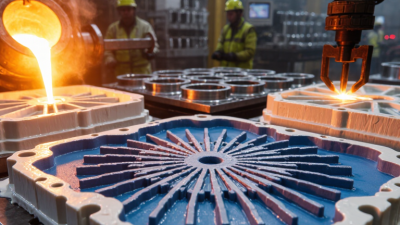
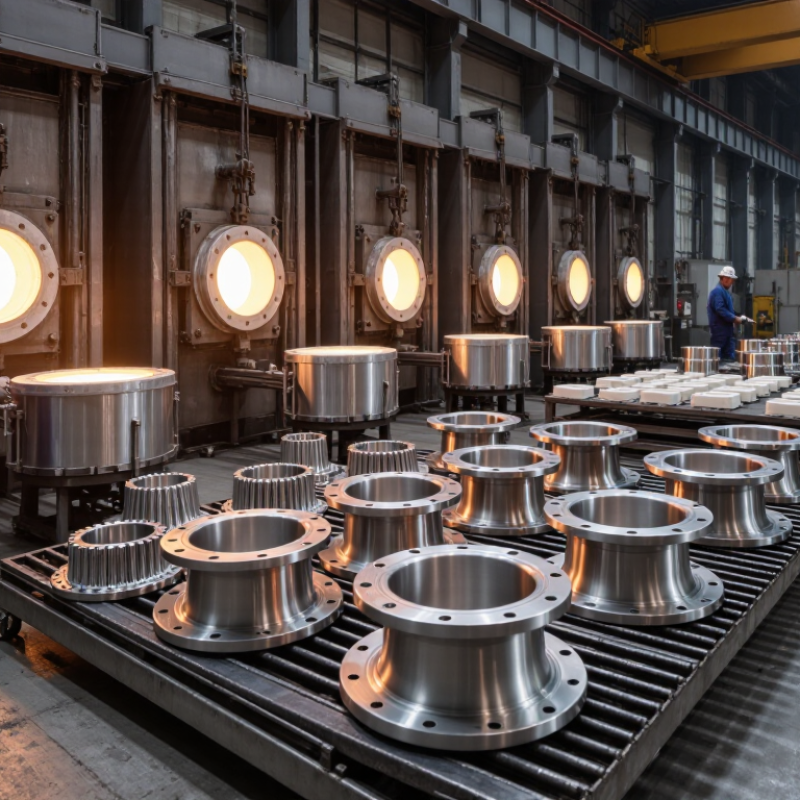
Stainless investment casting combines a precision moulding process with corrosion-resistant steel alloys. A wax pattern is coated with ceramic, then removed to leave a cavity for molten metal. The result can capture fine details, such as thin ribs, rounded corners, and complex internal passages. The process describes how a component is made; it does not, by itself, identify the alloy or guarantee pressure-service suitability.
ASTM A351/A351M covers austenitic stainless steel castings intended for pressure-containing parts. It sets requirements for specified grades, including chemical composition, heat treatment, and mechanical properties. Common grade designations include CF8 and CF8M. The exact grade and applicable requirements should appear on the purchase specification and material documentation. That distinction matters. Not every stainless investment casting falls within A351’s scope, and the standard does not require investment casting as the manufacturing route.
Scale helps explain why clear specifications matter. The International Stainless Steel Forum’s Stainless Steel in Figures 2024 reports worldwide stainless-steel production of 58.4 million tonnes in 2023; this is crude-steel production, not casting output. For buyers, the useful check is narrower: confirm the alloy grade, required tests, heat-treatment condition, and traceability against the drawing and service conditions. Paperwork can still be uneven. A standard citation alone is not proof that every requirement has been met.
Compare CF8 and CF8M: CF8M Contains 2–3% Molybdenum
For 2026 supplier comparisons, the CF8–CF8M distinction matters when cast parts face salty water or chloride-bearing process fluids. CF8 is broadly comparable to wrought 304 stainless steel; CF8M is similar to 316. The key addition is molybdenum: CF8M typically contains 2–3%, while CF8 generally does not. That small percentage can improve resistance to pitting and crevice corrosion. It does not make a casting corrosion-proof.
Look beyond the alloy name. Ask suppliers for the applicable material specification, heat-specific chemistry records, and traceability from melt to finished part. Positive material identification can help confirm molybdenum content on delivery. Check that the quote also defines surface finish, dimensional tolerances, and inspection requirements. A bright surface can look reassuring, but it cannot reveal every internal defect.
Application details still matter. Warm seawater, stagnant crevices, deposits, and cleaning chemicals may challenge CF8M, too. For a valve body with narrow passages, review the design and service conditions with a qualified materials specialist. Price comparisons can be misleading if one quote omits testing or machining. I would not choose CF8M by default; sometimes the extra alloy cost brings little benefit. And supplier paperwork deserves scrutiny. Chemistry is important, but it is only one part of a sound casting decision.
Evaluate Supplier Quality Systems, Alloy Traceability, and Casting Capabilities
2026 Top Stainless Investment Casting Suppliers?
Supplier Quality Systems, Alloy Traceability, and Casting Capabilities
Choosing a stainless investment-casting supplier means checking records, not just polished samples. The International Stainless Steel Forum reported 58.4 million tonnes of stainless-steel production in 2023, up 4.6% from 2022. That scale makes clear alloy identification essential. Ask whether each heat number links the mill certificate, charge records, poured batch, and finished parts. Keep the trail intact. A quality system aligned with ISO 9001 can support consistent controls, but certification alone does not prove casting performance. Review recent nonconformance reports, corrective actions, and inspection plans for the specific alloy and part.
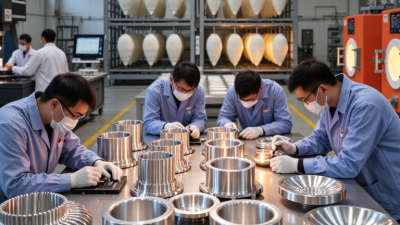
Check capability against the drawing and service conditions. Can the foundry control thin walls, dimensional variation, shrinkage, and surface inclusions? Ask for representative first-article results, chemical analysis, and agreed non-destructive testing records. For corrosion-resistant castings, compare material requirements with applicable specifications such as ASTM A743/A743M. Then verify the supplier’s actual process and test evidence; a standard citation is not a substitute. Request a sample traceability pack and follow one part from heat certificate to final inspection. It may expose gaps. Audit findings can also be untidy: unclear rework notes or mixed alloy returns deserve direct questions, even when delivery history looks strong.
Check Dimensional Tolerances Against Part Size and ISO 8062 Requirements
When comparing stainless investment casting suppliers in 2026, ask how they define tolerance for each part size. ISO 8062-3:2007 groups casting dimensional tolerances by nominal dimension and CT grade. It does not set one limit for every feature. Size matters.
A 12 mm bore and a 300 mm flange should not be judged by the same tolerance assumption. Request the drawing’s CT grade, measurement method, and inspection results for critical dimensions. ISO’s tables make clear that allowable deviations vary with nominal size and selected grade. Check the actual table values against your part; don’t rely on a generic “precision casting” claim. A polished sample proves little.
The 2023 World Foundry Census reported global casting output of about 109.6 million tonnes for 2022. That scale shows a mature industry, not uniform accuracy across suppliers. Ask for capability data from parts of similar size and geometry, plus reports showing measurement equipment and sampling frequency. For thin walls, deep cavities, or offset cores, request a first-article inspection. Suppliers may quote tight numbers. I would still verify them on the finished part, because setup, shrinkage, and measurement uncertainty can all shift the result.
Rank 2026 Suppliers by Quality, Lead Time, Capacity, and Total Cost
2026 Top Stainless Investment Casting Suppliers?
Rank stainless investment-casting suppliers on four measures: quality (35%), lead time (25%), capacity (20%), and total cost (20%). Treat these weights as a starting point, not a universal formula. Grand View Research’s 2024 investment-casting market report estimated the global market at about US$17.1 billion in 2023 and projected continued growth through 2030. That estimate signals demand, not supplier performance. Ask suppliers for three years of defect and rework records, plus first-pass yield by alloy and part family. Check sample-to-production results. These reveal more than a polished brochure.
Measure lead time from approved drawing to production-ready delivery, not from quotation to sample. Confirm monthly capacity against your actual part mix, including furnace availability, tooling limits, and inspection resources. Compare landed total cost, including tooling, scrap, inspection, freight, and inventory carrying costs; a low piece price can conceal costly delays. Request comparable quotes using the same drawing, tolerances, order quantity, and delivery terms. Then score each candidate against documented evidence, and verify claims with a facility audit. One caveat: supplier data may be self-reported, and audit depth is easy to underfund. Strong rankings still require periodic review when designs or volumes change.
2026 Stainless Investment Casting Supplier Evaluation
Suggested decision weights for comparing suppliers by quality, lead time, capacity, and total cost.
These are proposed evaluation weights, not measured supplier results or a verified ranking. Confirm quality records, quoted lead times, available capacity, and total landed cost directly with each supplier.


 +86 180 0293 5268
 CONTACT Shixin
 CONTACT Shixin

 CONTACT Shixin