

 +86 180 0293 5268






Industry News

IMTS 2026 Highlight: Agentic AI Brings Autonomous Programming Into CNC Machining
2026-10-29
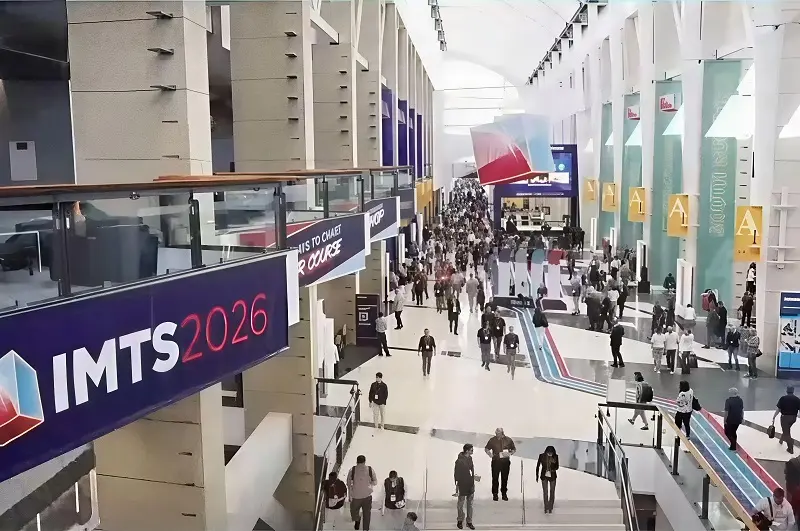
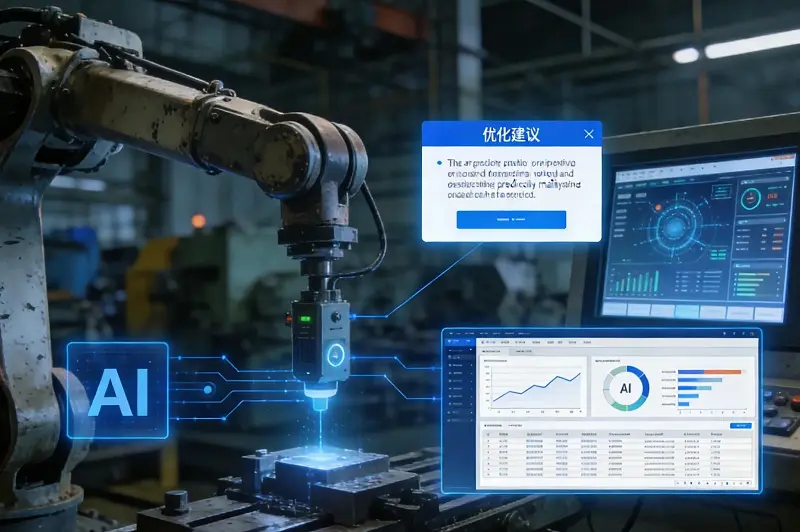
Every two years, the International Manufacturing Technology Show (IMTS) in Chicago shapes the roadmap for global CNC machining and precision manufacturing. At IMTS 2026, the most discussed innovation on the exhibition floor was not a new high-speed spindle or cutting tool coating. It was agentic AI for autonomous CNC programming, a transformative technology reshaping 5-axis CNC machining workflows for custom OEM manufacturers.
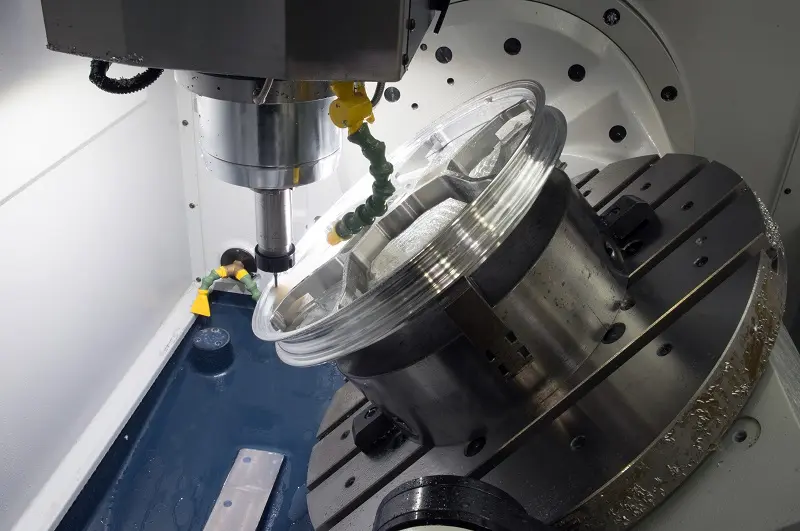
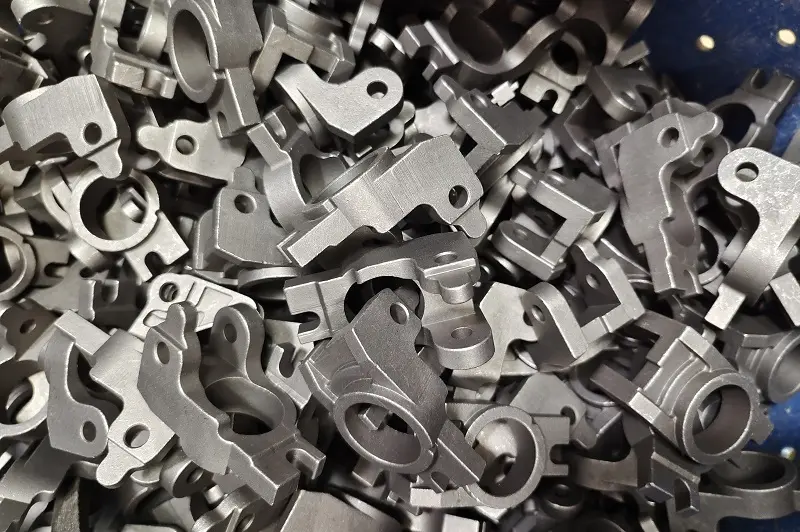
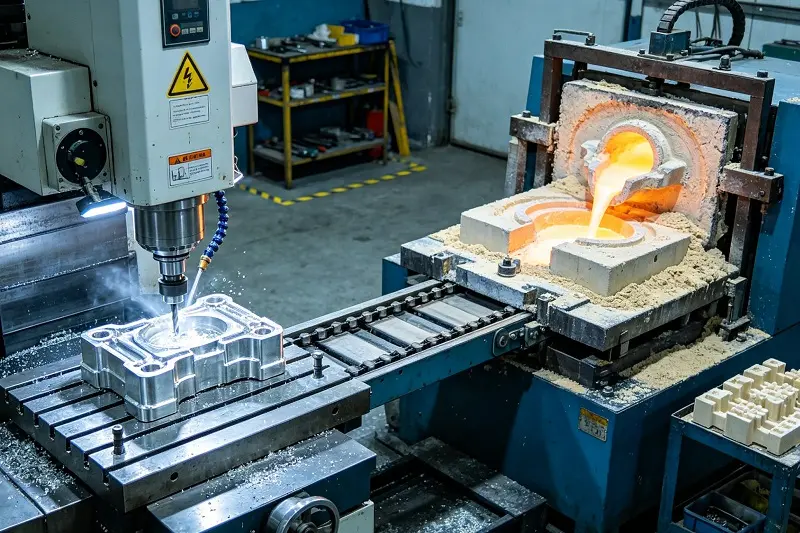
For years, CNC programming has been a major bottleneck for precision CNC machining jobs, especially high-mix low-volume orders that dominate aerospace, eVTOL and industrial component supply chains. Skilled CNC programmers receive CAD files, interpret engineering drawings, identify critical tolerance features, select cutting tools, calculate feeds and speeds, design fixturing, build roughing and finishing toolpaths, run simulation, and repeatedly adjust parameters to control chatter, thin-wall deflection and surface finish. For complex 5-axis parts, or blanks from investment casting that require secondary CNC finishing, this process can consume hours or even days for a single part. Even veteran programmers face recurring risks: missed undercuts, improper machining stock allowance, tool collision, unstable cutting conditions for hard alloys, and costly scrap after the first test cut.


-
Importantly, agentic AI does not eliminate the role of CNC programmers and manufacturing engineers. The AI generates process proposals, while experienced teams review, validate and fine-tune outputs. This frees talent from repetitive toolpath drafting work and shifts focus to higher-value DFM analysis, fixture design, quality planning and metallurgical problem-solving — particularly useful for shops offering integrated investment casting and CNC finishing.
technology delivers clear competitive advantages. Most OEM customers order prototype batches, pre-production samples and frequently revised designs, where fast quoting and short lead times win orders. With AI-powered CNC programming, engineering teams complete manufacturability assessments faster, calculate cycle times quickly and issue formal quotations sooner. When customers release revised CAD files, the AI can regenerate CNC toolpaths rapidly instead of requiring a full manual rebuild. This is a huge advantage for iterative aerospace CNC machining and eVTOL structural component projects
Procurement teams sourcing finished machined parts also benefit. Standardized AI-driven programming reduces inconsistency caused by different programmers’ personal habits. In traditional workshops, two engineers might produce noticeably different cycle times, surface finishes and dimensional results for the same drawing. AI-generated CNC strategies narrow this variation and improve batch repeatability. Proactive collision and deflection checking also cuts scrap rates, which is critical for expensive investment cast blanks and premium alloy raw material. Scrap on titanium or superalloy workpieces wastes not just machining hours, but also casting lead time and material batches, delaying customer project milestones. Optimized toolpaths extend cutting tool life and lower energy consumption, helping suppliers meet the ESG and carbon reporting requirements widely adopted by European and North American OEM buyers.
That said, agentic AI CNC programming has clear limitations. Its reliability relies entirely on accurate inputs: correct material properties, machine travel limits, spindle capacity, fixture constraints and clear tolerance callouts. Poorly defined drawings, incorrect casting machining allowance or ambiguous datum schemes will lead to flawed CNC plans. The AI also cannot inherently predict residual stress distortion after heat treatment, a common challenge for investment castings. This metallurgical expertise remains unique to seasoned process engineers. This is why the most reliable supply chain solution combines AI CNC programming with in-house casting, heat treatment, NDT and precision finishing.
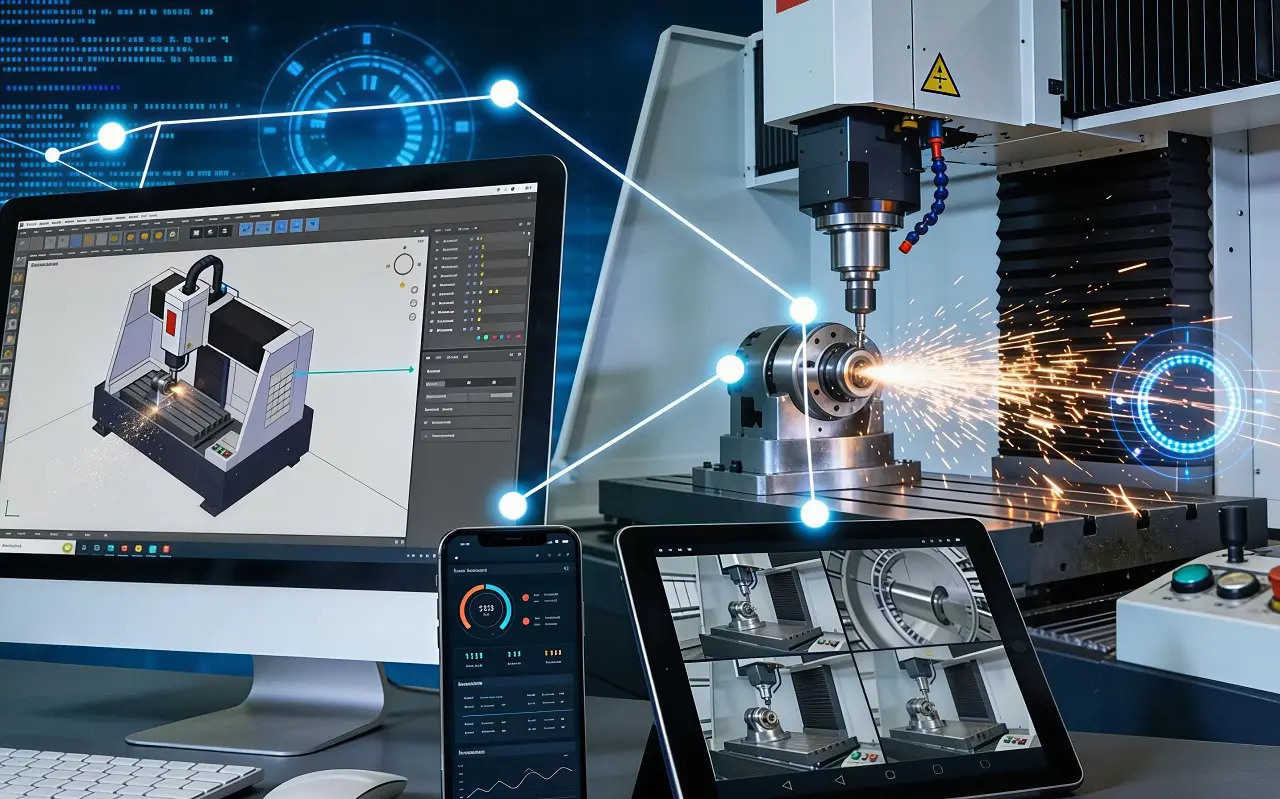
Many IMTS exhibitors showcased closed-loop integration: AI programming platforms connect directly to machine monitoring systems. After a trial cut, real-time spindle load, vibration and temperature data feed back to the agent, which learns and refines its CNC strategies for similar parts and materials. Over time, the system accumulates shop-specific process knowledge, building continuous improvement for recurring custom CNC machined parts.
Industry discussion focused heavily on adoption barriers. Large aerospace tier-one suppliers have budgets to deploy these digital tools at scale. Small and mid-sized precision manufacturers need to balance software cost, staff training and infrastructure against productivity gains. The return on investment is modest for simple 3-axis work, but highly attractive for complex 5-axis CNC machining, thin-wall aerospace components and finish machining of near-net-shape castings.
Looking
forward, autonomous AI programming will become one module in a larger digital
manufacturing ecosystem, working alongside 3D printed wax patterns for
investment casting, automated scanning inspection and full batch traceability
systems. Together, these tools shorten the cycle from customer CAD to first
article inspection.
The key takeaway from IMTS 2026 is straightforward: AI will not
replace skilled machinists or casting specialists. It amplifies what an
experienced engineering team can accomplish. For OEM buyers seeking flexible
suppliers that handle frequent design changes, tight tolerances and fast
prototype delivery, manufacturers adopting this new generation of CNC
automation are building lasting advantages. The future of precision
manufacturing belongs to teams that combine proven casting and machining
know-how with intelligent CNC digital tools.