+86 180 0293 5268


Investment Casting Steel supports parts that need intricate geometry, dependable strength, and a clean surface finish. You can see its value in pump impellers, valve bodies, and compact aerospace components, where machining every detail from solid stock may be inefficient. Still, a casting is not automatically a good casting. Alloy choice, mold design, melt control, and inspection all shape the result.
Metallurgist John Campbell is widely associated with the principle, “The quality of a casting is determined by the quality of the liquid metal.” It is a useful reminder, not a complete buying guide. Supplier capability also depends on process control, traceability, testing, and consistent delivery. Details matter.
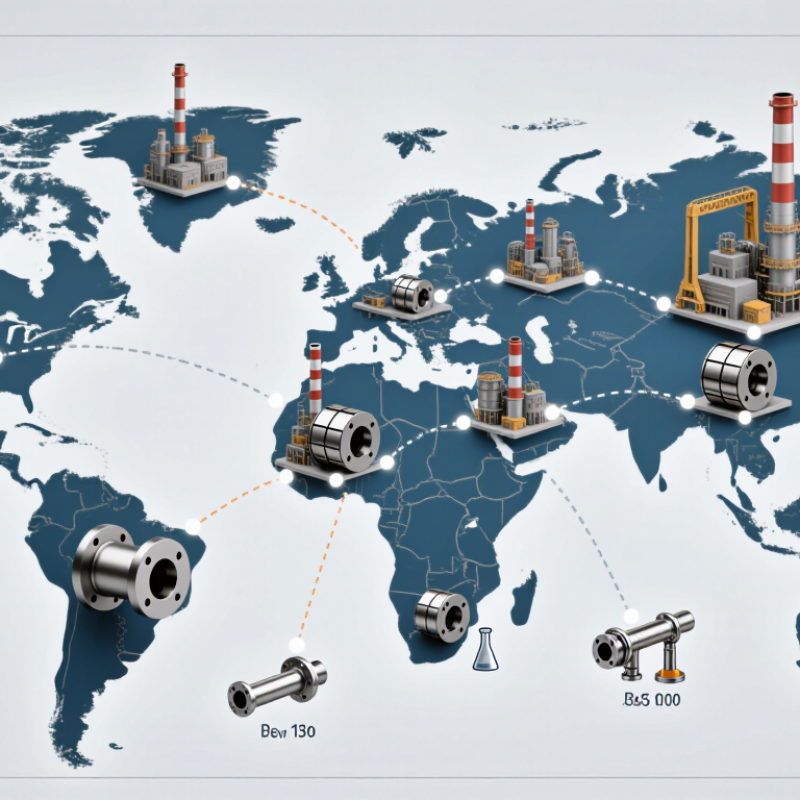
This guide introduces ten Investment Casting Steel manufacturers worldwide and the factors buyers can compare. Company presence alone does not establish quality. Consider alloy range, production capacity, dimensional control, certifications, and experience with your application. Where possible, verify these points through current technical documents and direct discussions with each supplier. Rankings can be imperfect; regional coverage and public information are not always comparable. That deserves scrutiny. Treat the list as a starting point, then assess samples, specifications, and service needs against your own project. A polished brochure cannot replace evidence from a real component.
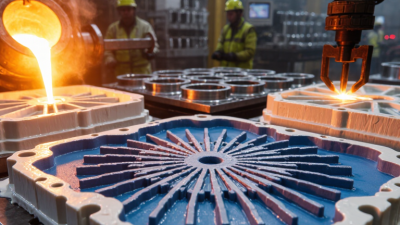
Investment casting steel forms components by replacing a shaped wax pattern with molten steel. The pattern is often attached to a wax tree, then dipped repeatedly in ceramic slurry and fine sand. Once the shell dries, heat melts out the wax and hardens the ceramic mold. Its cavity can reproduce fine ribs, curved surfaces, and lettering that may be difficult to machine from solid stock. Not magic. Small details still depend on careful pattern design and process control.
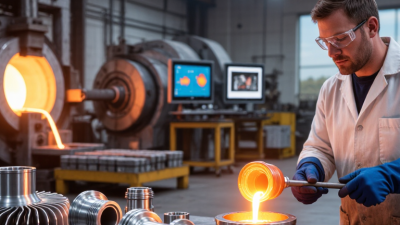
Workers pour molten steel into the preheated shell, where it cools and solidifies. They then break away the ceramic, remove the gates, and inspect the casting; heat treatment or machining may follow. The lost-wax route can reduce extensive cutting, but it does not make every part cheaper or defect-free. Steel grade should match the component’s strength, temperature, and corrosion requirements. Shell quality, pouring temperature, and cooling rate can affect dimensions and surface finish. In practice, a casting may need more machining than expected, so drawings should identify critical surfaces and tolerances early.
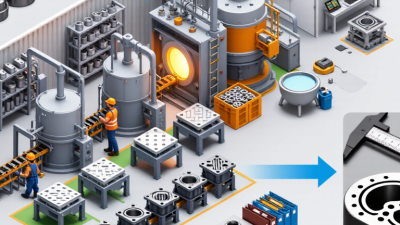
Wax patterns give investment casting its fine geometry. Manufacturers inject wax into a precision die, join patterns to a central runner, then coat the assembly with ceramic slurry and refractory grains. Each layer dries before another is applied. The finished shell must be strong enough to hold molten steel, yet release the part after cooling. Small details matter. The wax is melted out, and the ceramic shell is fired before pouring. After solidification, workers break away the shell, cut off gates, and finish the casting.
Grand View Research’s 2024 investment-casting market report valued the global market at USD 16.82 billion in 2023 and projected 5.8% annual growth through 2030. That forecast signals continuing demand, but it does not guarantee every design will cast cleanly. Ceramic shells can capture ribs, curved passages, and complex contours that would be difficult to machine from solid stock. This can reduce machining and material waste. Still, shell thickness, wax distortion, steel shrinkage, and pouring conditions affect accuracy. Near-net shape is a target, not a promise. Engineers typically allow machining stock on critical faces and verify dimensions after casting.
The awkward truth: a beautiful wax pattern can still produce a flawed steel part.
For investment castings, ASTM A216 and ASTM A351 define material requirements, not interchangeable quality labels. ASTM A216/A216M covers carbon-steel castings for pressure-containing parts at high temperatures; ASTM A351/A351M covers austenitic and related alloy steel castings for pressure service. Their specified grades, heat treatment, and mechanical tests help buyers assess whether a casting suits its operating conditions. Details matter. A material certificate alone does not prove that a finished component meets every drawing requirement.
ISO 8062-3 addresses general dimensional and geometrical tolerances, plus machining allowances for castings. It helps teams specify measurable features, such as a flange’s thickness or the stock left for machining. The tolerance grade should match the part’s function and production capability; tighter limits can add inspection and machining demands. That distinction is easy to miss when comparing supplier quotations.
The scale makes consistent specifications useful. Modern Casting’s 58th Census of World Casting Production reported approximately 109.5 million metric tons of castings produced worldwide in 2022. This industry figure does not measure investment castings alone, but it illustrates the breadth of casting supply chains. For a defensible comparison, buyers can check the required ASTM grade, review test and traceability records, and state the ISO 8062-3 tolerance class on critical dimensions. One caution: standards set acceptance frameworks; they do not replace application-specific engineering review.
| No. | Quality Dimension | Relevant Standard or Reference | What It Covers | Evidence to Review |
|---|---|---|---|---|
| 1 | Carbon-steel casting specification | ASTM A216/A216M | Carbon-steel castings for pressure-containing parts intended for high-temperature service. The standard includes grades such as WCA, WCB, and WCC. | Purchase specification, material grade, heat-treatment records, and test results required by the applicable grade and order. |
| 2 | Carbon-steel grade selection | ASTM A216/A216M | WCA, WCB, and WCC are distinct grades; the required grade should be selected to suit the design conditions and governing code. | Confirm the specified grade against the design documents. Do not treat one grade as interchangeable with another without engineering approval. |
| 3 | Stainless-steel casting specification | ASTM A351/A351M | Castings for pressure-containing parts made from austenitic, austenitic-ferritic, and martensitic stainless steels, as covered by the standard. | Specified grade, applicable heat-treatment condition, and grade-specific chemical and mechanical test records. |
| 4 | Stainless grade identification | ASTM A351/A351M | Common grade designations include CF8, CF8M, CF3, and CF3M. The required grade depends on the intended service and design specification. | Check the material certificate and product marking against the exact grade on the purchase order. |
| 5 | Dimensional casting tolerances | ISO 8062-3 | Provides a system of dimensional and geometrical tolerances and machining allowances for castings. Dimensional casting tolerance grades are selected for the specified dimensions. | Drawing notes or agreed inspection plan identifying the applicable tolerance grade and the dimensions subject to it. |
| 6 | Geometrical tolerances | ISO 8062-3 | Includes geometrical casting tolerance grades for controlling specified geometric characteristics of castings. | Confirm that the drawing defines the required characteristics and tolerance grades; the standard does not set one universal tolerance for every feature. |
| 7 | Machining allowance | ISO 8062-3 | Defines required machining allowance grades for applicable casting dimensions, helping provide material for subsequent machining. | Review the drawing and casting specification for the agreed allowance grade and machining surfaces. |
| 8 | Chemical composition and mechanical properties | Applicable ASTM material specification and grade | Composition limits and mechanical-property requirements are grade-specific. Requirements should be checked in the current edition of the applicable material specification. | Heat-specific chemical analysis and mechanical test reports, where required by the standard and purchase order. |
| 9 | Non-destructive examination | Purchase specification, design code, or supplementary requirements | Radiographic, liquid-penetrant, magnetic-particle, or other examination is not automatically required for every casting solely by citing ASTM A216, ASTM A351, or ISO 8062-3. | Verify the method, coverage, acceptance criteria, and reporting requirements in the contract or governing code. |
| 10 | Inspection records and traceability | Applicable material specification and agreed quality requirements | Traceability and documentation requirements depend on the applicable specification, order, and regulatory or project requirements; the three standards do not by themselves constitute a supplier ranking. | Review heat or lot identification, inspection records, certificates, and document-retention requirements stated in the purchase agreement. |
Across the ten leading worldwide investment casting steel manufacturers, capability means more than furnace capacity. Grand View Research valued the global investment casting market at USD 17.79 billion in 2023 and projected 5.9% annual growth from 2024 to 2030. The report points to a growing market, but buyers still need to compare suppliers part by part. Scale matters.
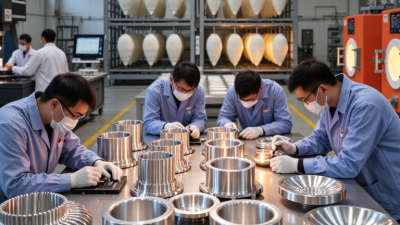
Strong manufacturers can pour stainless, carbon, and heat-resistant steel, while controlling chemistry and process variation. Look for practical evidence: sample inspection records, dimensional reports, and traceability from melt to finished component. For a turbine bracket, for example, thin ribs and a tight internal passage test both mold design and finishing skill. A polished brochure cannot prove that capability.
The most useful comparison weighs alloy range, achievable part size, tolerance control, non-destructive testing, and repeatability across production batches. Ask how suppliers manage scrap and corrective action, not only their best-case figures. A ranking is never perfectly tidy: published capacity rarely shows how reliably a plant handles difficult geometry or changing order volumes. That gap deserves scrutiny.
Investment casting steel manufacturers differ less by headline claims than by the alloys and production routines they can support. Some focus on carbon and low-alloy steels for pumps, valves, and general machinery. Others offer stainless or heat-resistant grades for corrosive fluids and elevated temperatures. A broad catalogue is useful, but confirm that the exact grade is regularly poured, not merely listed.
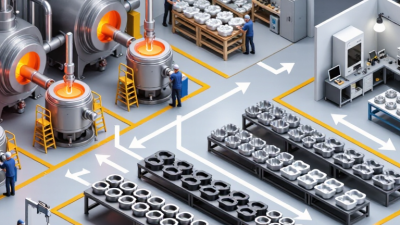
Capacity also needs context. A large facility may handle substantial annual tonnage, while a smaller foundry may better suit complex, lower-volume parts. Ask about typical batch sizes, mold-making methods, heat treatment, inspection, and delivery lead times. For comparison, request sample inspection records and clarify how dimensional tolerances are checked. A polished capability sheet is not the same as consistent production. Rankings can be imperfect, too; public data rarely compares every supplier on equal terms.
Tips: Match the supplier’s alloy experience to the service environment. Share a drawing, target quantity, and key operating conditions when requesting a quote. Ask what changes could reduce cost without weakening performance. Then compare total process fit, not price alone.