Leave Your Message

What Is High Tech Investment Casting and How Does It Work?

High Tech Investment Casting makes intricate metal parts by building a ceramic shell around a disposable pattern. The pattern may be wax or another suitable material. After it is removed, molten alloy fills the shell and takes its shape. The shell is then broken away. What remains is a near-net-shape component, often with fine details and a smooth surface. Small features matter. So does process control.

The method sounds straightforward. It is not forgiving. Pattern dimensions, shell quality, alloy temperature, and pouring conditions can all affect the final part. A tiny defect may mean rework or rejection, so inspection remains essential. Modern foundries may use digital design, controlled furnaces, and precise process monitoring, but skilled judgment still matters. As a process-focused perspective, materials scientist Dr. Diran Apelian’s work suggests a useful principle: “Reliable castings depend on control at every stage.” This sentence is an editorial paraphrase, not a verified verbatim quotation. That distinction matters when technical claims need checking. This introduction explains the method, its main production stages, and the choices that shape quality, cost, and repeatability. Expect practical details, not magic.
What Is High Tech Investment Casting and How Does It Work?

What High-Tech Investment Casting Is and How It Differs

High-tech investment casting is a modern version of the lost-wax process, not a completely different method. A pattern is made, coated in ceramic, and removed before molten metal fills the cavity. Digital models, 3D-printed patterns, process simulation, and sensor-based temperature control can improve how each stage is planned and monitored. Small details matter: a thin rib or narrow passage may need careful shell design. The basics remain familiar.

Compared with conventional casting, high-tech methods can make complex shapes more repeatable and reduce trial-and-error during development. Engineers may use simulation to spot likely shrinkage or filling problems before producing a mold. Some facilities also track furnace conditions and inspect finished parts with imaging tools. These additions can improve control, but they do not guarantee a flawless casting. I would not call every digitally modeled part “high-tech”; the label can be vague, and results still depend on sound process choices.

Tip: Share the alloy, wall thickness, and critical dimensions early. Ask how the foundry will verify them. A clear inspection plan helps, though it may need adjustment after the first trial.
What Is High-Tech Investment Casting and How Does It Work?

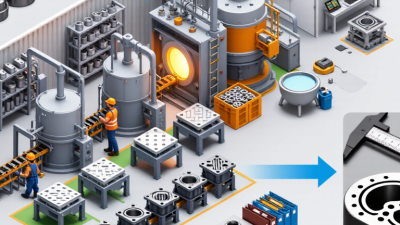
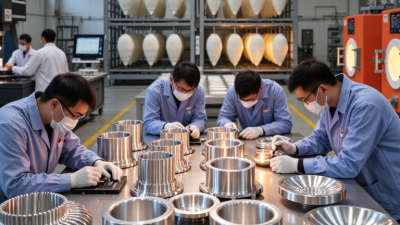
Investment casting forms a wax pattern, coats it with a ceramic shell, removes the wax, and pours molten metal into the shell. High-tech versions add tightly controlled processes—such as vacuum melting and directional solidification—to produce precise, complex components from demanding alloys.

The chart shows approximate melting points of pure metals used as base elements in investment-cast alloys: titanium, cobalt, and nickel. These are not alloy pouring temperatures; actual alloys have composition-dependent melting ranges, and casting conditions require additional process control.

How Patterns, Materials, and Ceramic Molds Are Prepared

High-tech investment casting begins with a pattern that matches the intended part. For many processes, this pattern is made from wax using a precision die. Its surface carries fine details, but even a small seam or dent can transfer to the final casting. The pattern is checked for dimensions, then joined to a wax runner and other patterns. This branching assembly is often called a tree. Simple, but not forgiving.

Material selection shapes the next steps. Engineers consider the alloy’s strength, temperature performance, and casting behavior, along with expected shrinkage. A stainless steel component and a heat-resistant alloy part may need different process settings. Pattern dimensions must account for metal contraction during cooling. That calculation is useful, though actual results still depend on part geometry and production conditions.

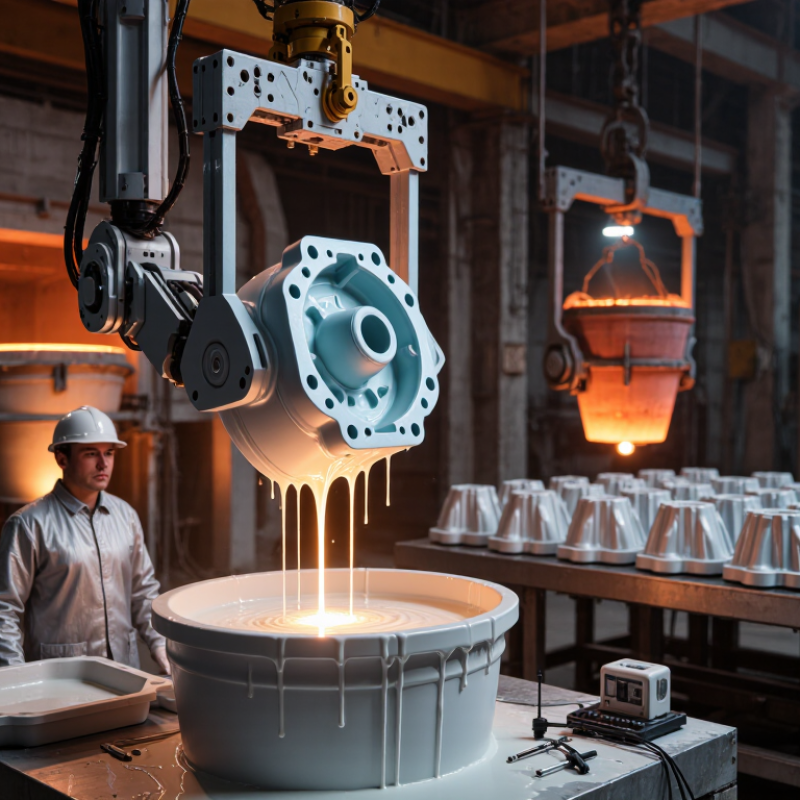
The ceramic mold forms through repeated dipping and coating. The pattern tree is immersed in ceramic slurry, drained, and covered with fine refractory grains. Each layer dries before the next is applied; rushed drying can cause cracks or weak spots. After the shell reaches the required thickness, heat removes the wax and strengthens the ceramic. The mold is then preheated before molten alloy is poured into it. Shell thickness and drying conditions need close control. A visually sound mold can still contain hidden flaws. That deserves attention.

How the Investment Casting Process Works Step by Step

Investment casting starts with a detailed pattern, usually made by injecting wax into a precision tool. For complex parts, digital design or a printed pattern can help verify thin walls and internal features. The pattern is checked for seams and surface marks. Small flaws can transfer to the final casting. Details matter.

Several patterns are attached to a central wax sprue, forming a cluster often called a tree. Workers dip the assembly in ceramic slurry, then coat it with fine refractory material. Each layer must dry before the next is applied, or the shell may crack. Once the shell is strong enough, heat melts out the wax. The ceramic mold is fired to remove residue and withstand molten metal. Timing and temperature need close control.

Molten alloy is poured into the preheated shell, sometimes under vacuum or a controlled atmosphere when the material requires it. After cooling, the ceramic is broken away, and each part is cut from the sprue. Gates are ground down; critical surfaces may need machining. Inspectors check dimensions and look for surface or internal defects using suitable inspection methods. The process is precise, but not automatic: a small wax seam or uneven shell can still affect the finished part.

What Is High Tech Investment Casting and How Does It Work? — How the Investment Casting Process Works Step by Step
Step Process Stage What Happens Key Data and Controls Typical Output or Quality Check
1 Part and Process Design The part geometry, alloy, gating system, and casting method are selected. Flow and solidification simulations may be used to assess filling and shrinkage risks before tooling is made. Design review considers wall thickness, draft, cores, machining allowance, and feeding paths. Simulation results are predictions and should be confirmed against production trials. A casting design and process plan suited to the required geometry, material, and inspection criteria.
2 Wax Pattern Production Wax or another pattern material is injected into a reusable die to create a replica of the part. Multiple patterns may be attached to a central wax runner. Injection conditions, die temperature, wax condition, and cooling are controlled to limit distortion and surface defects. Tooling includes allowances for pattern and metal changes during processing. A dimensionally checked pattern, or an assembled pattern tree ready for shell building.
3 Ceramic Shell Building The pattern tree is repeatedly dipped in ceramic slurry and coated with refractory stucco. Each layer is dried before the next is applied. Slurry condition, coating coverage, stucco grain size, drying conditions, and layer count affect shell strength and surface finish. The required shell thickness depends on the casting and alloy. A rigid ceramic mold with enough strength to withstand dewaxing and molten-metal pouring.
4 Dewaxing The ceramic shell is heated so the wax pattern melts or drains out. Steam autoclaves and other controlled heating methods are commonly used. Heating rate and equipment cycle are managed to reduce thermal shock and shell cracking. The wax is removed before the mold proceeds to firing. A hollow ceramic mold that preserves the negative shape of the pattern and its gating system.
5 Shell Firing and Preheating The shell is fired to remove residual pattern material, strengthen the ceramic, and prepare the mold for pouring. Firing and preheat temperatures depend on the ceramic system, alloy, and foundry procedure. Time, temperature uniformity, and shell condition are monitored. A clean, fired mold at a controlled temperature, ready for metal filling.
6 Metal Melting and Pouring The selected alloy is melted and poured into the heated mold. Depending on the application, filling may use gravity, vacuum assistance, or centrifugal force. Alloy chemistry, melt cleanliness, pouring temperature, atmosphere, and filling method are controlled. Melting temperatures are alloy-specific; for example, aluminum melts at about 660 °C, while many steels require substantially higher temperatures. Metal fills the mold cavity and solidifies into a casting connected to its runner and gates.
7 Cooling and Solidification The filled mold cools until the metal has solidified sufficiently for shell removal. Feeding design and cooling conditions influence shrinkage and internal soundness. Cooling time depends on casting size, alloy, and mold design. Process controls aim to reduce hot spots, distortion, and shrinkage-related defects. A solid casting within the ceramic shell, ready for knockout.
8 Shell Removal and Cut-Off The ceramic shell is broken away using mechanical or other controlled methods. Individual castings are separated from the runner system. Removal methods are selected to avoid damaging thin sections or critical surfaces. Gates are typically removed by cutting or abrasive processes. Individual rough castings, separated from the sprue and prepared for finishing.
9 Finishing and Heat Treatment Castings may be ground, blasted, heat-treated, straightened, or machined to meet drawing and material requirements. Finishing operations and heat-treatment cycles are alloy- and specification-dependent. Machining is applied where tighter dimensions or surface features are required. A cleaned casting with specified material condition and any required machined features.
10 Inspection and Verification The finished casting is checked for dimensions, surface condition, and internal or surface discontinuities as required by its application. Inspection may include visual examination, dimensional measurement, liquid penetrant testing, radiography, or computed tomography. The inspection plan depends on the drawing and acceptance criteria. Documented results showing whether the casting meets the applicable requirements.
Note: Process settings, achievable tolerances, surface finish, and inspection requirements vary with casting size, geometry, alloy, equipment, and the applicable specification. Values should be confirmed with the casting process plan and part drawing.

How Precision, Quality, and Surface Finish Are Controlled

In high-tech investment casting, accuracy starts before molten metal enters the mold. Engineers turn CAD geometry into wax patterns, then account for alloy shrinkage and ceramic-shell behavior. Small errors accumulate. Stable wax temperature, controlled injection pressure, and verified tooling dimensions help keep patterns consistent. Still, variation cannot be eliminated entirely; thin ribs and deep cavities are harder to reproduce.

Ceramic shells are built in measured coats, with drying time and slurry condition monitored between layers. Shell thickness matters. Too little may cause cracking during pouring; too much can soften fine details and slow heat transfer. After dewaxing and firing, technicians check shell integrity and preheat temperature. Melt temperature, pour timing, and alloy chemistry affect filling, shrinkage, and internal soundness. Recorded measurements make quality claims traceable, not merely reassuring.

Surface finish depends on the pattern, ceramic grain, metal flow, and post-cast cleaning. A smoother shell can reduce roughness, but it cannot hide every flow line or local defect. Inspection may combine visual checks, dimensional measurement, and suitable nondestructive testing. On a turbine blade, a small edge deviation may matter more than broad cosmetic uniformity. Context matters. Specify tolerances and finish requirements early; otherwise, polishing may remove material without addressing the real issue.

Where High-Tech Investment Castings Are Used and What They Offer

High-tech investment castings are used where complex shapes, heat resistance, and dependable performance matter. In aircraft engines, they form turbine blades and vanes with thin sections and intricate cooling passages. Power-generation equipment uses similar parts in hot gas paths. Medical devices, pumps, and industrial valves also benefit from precise, corrosion-resistant components. Fit matters.

Grand View Research’s 2024 investment-casting market analysis valued the global market at about $17.76 billion in 2023 and projected continued growth through 2030. The figure reflects diverse applications, not a guarantee of demand for any particular component. For engineers, the process can consolidate several pieces into one casting, reduce welds, and limit machining. That can save weight and simplify assembly, though tooling and pattern development take time.

The practical advantage is visible on a turbine blade: curved surfaces and internal passages can be cast in one piece, then inspected and finished to specification. Stainless steel and nickel-based alloys are common choices when strength, corrosion resistance, or high-temperature performance is essential. Yet casting is not automatically the cheapest route. Small design changes can affect yield, and tight tolerances may still require machining. A careful design review helps balance geometry, material, inspection, and cost.